Category: Uncategorized

The Alchemy of Anonymity: How Underground Music’s Creative Process Defies the Algorithm

The Laboratory Behind the Noise

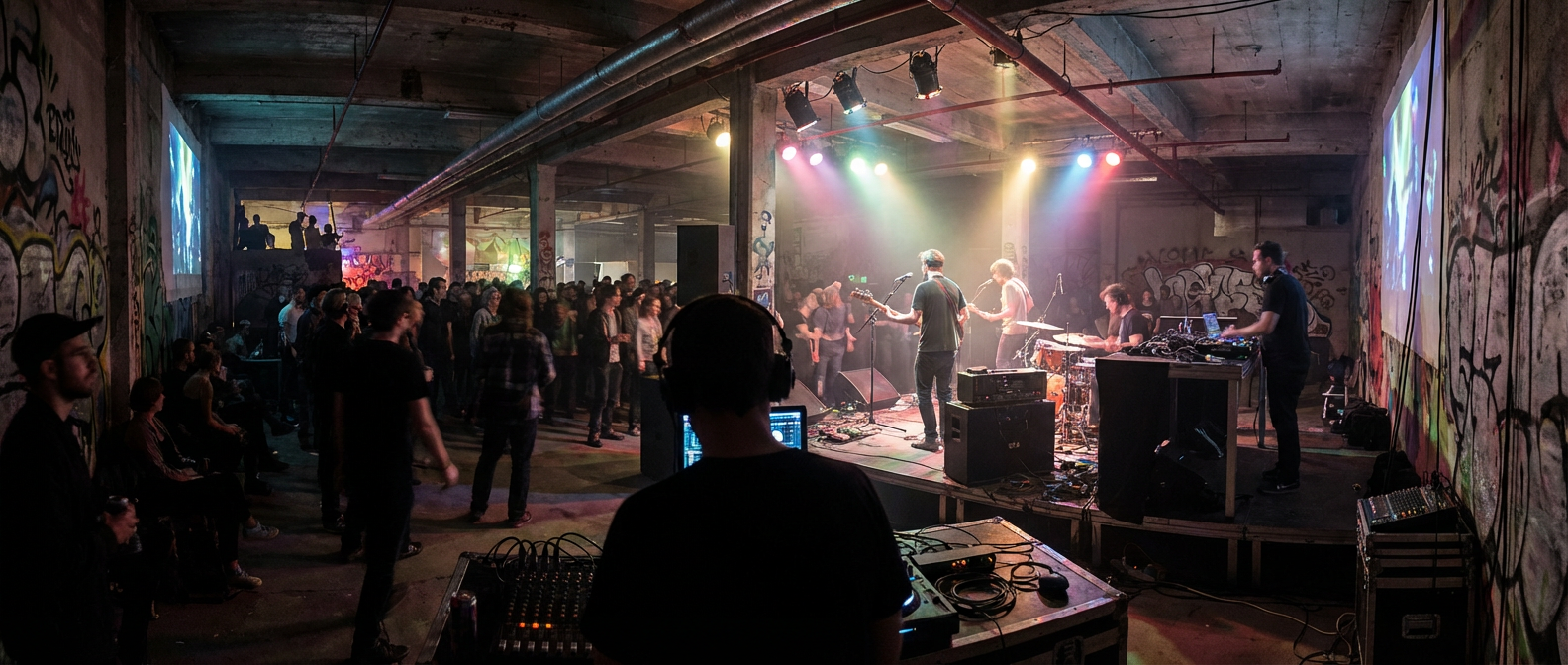
Walk into any proper underground recording space and you’ll immediately understand why the best music emerges from basements, abandoned warehouses, and repurposed storage units rather than pristine studios with gold records on the walls. The creative process happening in these spaces works on completely different principles than mainstream production. Where commercial music follows predictable templates (verse, chorus, bridge, repeat), underground artists are conducting sonic experiments that would make John Cage proud.
The Alchemy of Anonymity: How Underground Music's Creative Process Defies the Algorithm
The Alchemy of Anonymity: How Underground Music’s Creative Process Defies the Algorithm

Take the approach of Chicago’s industrial collective Sculpture Club, who record exclusively using found objects and broken equipment. Their process begins not with songwriting but with what they call “material archaeology.” Founder Maya Chen spends weeks collecting discarded electronics, metal scraps, and damaged instruments, then spends months learning the unique sonic properties of each piece. A dying amplifier doesn’t get repaired. It gets explored for the specific frequency distortions it produces in its death throes.

This methodology reveals something fascinating about underground music creation: it puts discovery over delivery. While mainstream producers chase proven formulas, underground artists chase accidents, malfunctions, and the spaces between intended sounds. The process becomes as much about unlearning conventional techniques as mastering new ones.

Illustration for The Alchemy of Anonymity: How Underground Music's Creative Process Defies the Algorithm
Illustration for The Alchemy of Anonymity: How Underground Music’s Creative Process Defies the Algorithm

Collaborative Chaos and Intentional Friction

The most compelling underground music rarely emerges from solitary genius but from collaborative processes designed to generate productive conflict. Portland’s experimental hip-hop collective Fractal Syntax has developed what they term “antagonistic composition.” Each member must actively work against the others’ musical instincts rather than harmonizing with them.

Their albums begin with individual members creating completely incompatible backing tracks in different time signatures, keys, and tempos. Then comes the real work: finding connection points not through compromise but through collision. Drummer Kenji Nakamura describes it as “forcing puzzle pieces from different boxes to somehow fit together.” The result is music that retains the tension of its creation process, where every resolution feels hard-won rather than inevitable.

This approach extends to recording techniques that deliberately introduce instability. Many underground artists have abandoned the clinical precision of digital recording in favor of methods that inject unpredictability into every step. They route signals through custom-built circuits that respond to room temperature, record onto deteriorating magnetic tape, or use software they’ve deliberately corrupted. The goal isn’t lo-fi aesthetics for their own sake but the integration of chance operations into the fundamental DNA of the music.

Tools as Co-Creators, Not Servants

The relationship between underground musicians and their tools reveals another key difference from mainstream production practices. Rather than using technology to realize predetermined visions, underground artists often allow their tools to become co-creators, equal partners in the compositional process. This represents a philosophical shift from technology as servant to technology as collaborator.

Berlin-based sound artist Petra Holz has spent three years developing a modular synthesizer system that she never fully controls. Her patches incorporate random voltage generators, chaotic oscillators, and feedback loops that ensure no performance can be exactly repeated. But this isn’t musical Russian roulette. It’s a highly disciplined practice of creating structures loose enough to accommodate the unexpected while tight enough to maintain artistic coherence.

The craftsmanship here lies not in technical perfection but in building frameworks for controlled chaos. Holz spends months programming complex probability matrices that determine how her system will respond to various inputs, then dedicates equal time to developing the listening skills necessary to hear potential music in whatever emerges. She’s crafting not just sounds but new ways of musical thinking.

This approach extends to software tools as well. Underground producers regularly modify, break, and rebuild their digital instruments, treating coding as another form of composition. They write custom algorithms that generate rhythmic patterns based on weather data, create virtual instruments that degrade over time like physical objects, or design effects that respond to the emotional content of input audio. The boundary between composition, performance, and instrument building dissolves entirely.

Time as Material, Patience as Technique

Perhaps the most radical aspect of underground music creation is its relationship to time. While commercial music operates under market pressures that demand rapid output and instant gratification, underground artists often work on geological timescales. They treat time itself as a compositional material to be shaped and manipulated.

Drone metal pioneers like Seattle’s Earth have elevated this to an art form, but the principle extends far beyond any single genre. Japanese sound installation artist Hiroshi Kumagai works exclusively on pieces designed to be experienced over multiple visits, with compositions that evolve so slowly that changes are barely perceptible in real time. His recording process mirrors this temporal expansion: sessions that last entire seasons, with microphones left running to capture the subtle acoustic changes as rooms age and weather patterns shift.

This extended temporality allows for creative processes impossible within commercial constraints. Ideas can germinate for years before finding expression. False starts become integral parts of the final work rather than waste to be discarded. The act of patient observation (of sounds, spaces, and one’s own creative impulses) becomes as important as any technical skill.

Documentation as Transformation

The final element distinguishing underground music creation is how documentation itself becomes a transformative act rather than mere preservation. Underground artists approach recording not as capturing performance but as creating entirely new works that exist only in documented form.

This manifests in practices like “studio composition,” where the final piece exists only as a studio construction, impossible to recreate in live performance. Artists layer incompatible elements, manipulate time through editing, and create spatial relationships that exist only in the stereo field. The recording becomes the composition, not its documentation.

Some artists take this further, treating post-production as primary creation. They record raw sessions with no predetermined structure, then spend months in editing, finding the hidden compositions buried within hours of improvisation. The craft lies in learning to hear potential music within apparent chaos, developing editorial instincts that can transform accident into intention.

These methodologies challenge fundamental assumptions about what music is and how it should be made. They suggest that the most vital creative work happens not in pursuit of predetermined goals but in the patient exploration of uncharted sonic territories. As mainstream music becomes increasingly predictable, these underground laboratories continue pushing into genuinely unknown creative spaces.

What underground processes are you most curious about exploring? The intersection of these experimental methodologies with emerging technologies promises even more radical departures from conventional musical thinking.
When TikTok Meets Rothko: How Pop Culture Is Secretly Reviving High Art’s Revolutionary Spirit

The False Binary That’s Stunting Our Cultural Vision

Walk into any contemporary art museum and you’ll witness a peculiar theater of discomfort. Visitors shuffle past Jackson Pollock’s drip paintings while scrolling Instagram, seemingly oblivious to the revolutionary chaos unfolding on both screens. The art world’s gatekeepers tut disapprovingly, as if digital culture represents some apocalyptic threat to serious aesthetic contemplation. This tired opposition between “high” and “low” culture reveals a remarkable historical amnesia about how transformative art actually functions.

When TikTok Meets Rothko: How Pop Culture Is Secretly Reviving High Art's Revolutionary Spirit
When TikTok Meets Rothko: How Pop Culture Is Secretly Reviving High Art’s Revolutionary Spirit

Pop culture isn’t corrupting fine arts. It’s fulfilling fine arts’ most radical promises. The same democratic impulses that drove Dada artists to create anti-art manifestos in 1916 Zurich cabarets are alive in today’s meme creators who deconstruct visual language with surgical precision. When Marcel Duchamp placed a urinal in a gallery and called it “Fountain,” he wasn’t just challenging artistic conventions. He was prophesying a world where anyone with a smartphone could remake reality through creative appropriation.

Consider how Kehinde Wiley’s portraits insert Black and Brown bodies into classical European painting traditions, subverting power structures through visual quotation. This same strategy animates the most sophisticated TikTok creators, who sample and remix cultural references to forge new narrative possibilities. Both operate through strategic cultural theft, transforming borrowed elements into urgent contemporary statements.

Illustration for When TikTok Meets Rothko: How Pop Culture Is Secretly Reviving High Art's Revolutionary Spirit
Illustration for When TikTok Meets Rothko: How Pop Culture Is Secretly Reviving High Art’s Revolutionary Spirit

The Warhol Prophecy Comes Full Circle

Andy Warhol predicted our current moment with uncanny accuracy when he declared that “in the future, everyone will be world-famous for 15 minutes.” Critics dismissed this as shallow celebrity obsession, missing Warhol’s deeper insight about democratized image-making. He understood that mechanical reproduction, whether through silkscreen printing or social media algorithms, would fundamentally alter how we create and consume visual culture.

Today’s influencer aesthetics directly descend from Warhol’s Factory experiments. The carefully curated feeds, the repetitive yet subtly varied content, the strategic deployment of personal mythology. These strategies echo Warhol’s systematic approach to fame as artistic medium. Instagram’s infinite scroll mirrors his obsessive serialization of Campbell’s Soup cans and Marilyn Monroe portraits. Both transform mundane repetition into hypnotic meditation on contemporary desire.

More provocatively, platforms like TikTok have realized Warhol’s dream of collapsing the boundaries between artist and audience. Every user becomes both creator and consumer, participating in a vast collaborative artwork that reshapes itself moment by moment. This is the ultimate extension of participatory art practices pioneered by Allan Kaprow’s Happenings and Yoko Ono’s instruction-based pieces.

Street Art’s Digital Evolution

The contemporary art establishment’s grudging acceptance of street art provides a perfect case study in how cultural hierarchies eventually bend to acknowledge innovative practices. What began as illegal vandalism transformed into a billion-dollar market, with Banksy and KAWS commanding museum exhibitions and auction house premiums. This trajectory mirrors how digital culture will inevitably reshape institutional art spaces.

Consider how street artists like Shepard Fairey and JR pioneered techniques now standard in viral content creation: bold visual hooks, rapid dissemination, context-specific adaptation. Fairey’s “Hope” poster for Obama’s 2008 campaign demonstrated how street art strategies could shape political discourse. Today’s meme creators employ identical tactics, crafting potent visual arguments that spread through networks faster than any gallery exhibition could reach audiences.

The temporary nature of both street art and social media content challenges traditional preservation models. These works exist in dialogue with their immediate context, gaining meaning through circulation rather than static display. Museums struggle to collect and exhibit such practices, forcing institutional evolution that parallels how photography and video art once disrupted conventional curatorial frameworks.

Digital artists like Rafael Lozano-Hemmer and Casey Reas now bridge these worlds explicitly, creating installations that respond to online data streams and social media interactions. Their work acknowledges that contemporary experience is fundamentally networked, requiring new aesthetic strategies that embrace rather than resist technological mediation.

The Algorithmic Unconscious

Pop culture’s algorithmic curation systems function as a new form of surrealist automatic drawing, generating unexpected juxtapositions that reveal unconscious cultural patterns. When YouTube’s recommendation engine creates bizarre video chains or Spotify discovers uncanny musical connections, these platforms operate like digital exquisite corpse games, producing meanings no human curator could deliberately construct.

This algorithmic surrealism influences how contemporary artists approach chance and spontaneity. Artists like Mario Klingemann and Helena Sarin collaborate with artificial intelligence systems to create works that emerge from human-machine dialogue. Their practice extends conceptual art’s investigation of systems and instructions, but with unprecedented scale and complexity.

Pop culture’s data-driven aesthetics also reshape how we understand artistic influence and originality. Sampling culture makes explicit what art history always knew but rarely acknowledged: all creative work exists in conversation with previous forms. Hip-hop producers like Madlib and J Dilla elevated sampling into high art decades ago, creating complex sonic collages that rival any avant-garde composition. Today’s visual artists increasingly adopt similar approaches, treating cultural imagery as raw material for transformation rather than sacred object for contemplation.

Beyond the Gallery Walls

The most vital contemporary art emerges from this productive tension between institutional frameworks and popular forms. Artists like Hito Steyerl and Trevor Paglen create works that exist simultaneously in galleries and online networks, acknowledging how digital circulation shapes artistic meaning. Their practice suggests that the future of fine arts lies not in resistance to pop culture but in strategic engagement with its possibilities.

This integration requires abandoning nostalgic attachment to obsolete cultural hierarchies. The same critical intelligence that recognizes Cindy Sherman’s photography as profound commentary on feminine performance should celebrate how drag performers on Instagram create equally sophisticated explorations of identity construction. Both practices deserve serious aesthetic consideration, not dismissive categorization as “high” or “low” culture.

What emerges from this synthesis isn’t the death of fine arts but its radical expansion. Pop culture provides new distribution networks, aesthetic vocabularies, and collaborative possibilities that could revitalize contemporary art practice. The question isn’t whether institutions will adapt to these changes, but how quickly they can evolve to support the most innovative work emerging from these hybrid territories.

This conversation demands more sophisticated critical frameworks that can recognize aesthetic intelligence regardless of its platform or pedigree. I’m curious about other surprising connections between pop culture and fine arts you’ve noticed in your own cultural consumption. The most revelatory insights often emerge from unexpected juxtapositions that challenge our inherited assumptions about where serious art can happen.

The Radical Domesticity of Pattern and Decoration: Why the Art World’s Most Maligned Movement Deserves Another Look

The Movement That Made Modernism Squirm

In 1975, while the art world was still genuflecting before the austere altars of Minimalism and Conceptual Art, a group of artists committed what the establishment considered an unforgivable sin: they made work that was beautiful, decorative, and unapologetically feminine. The Pattern and Decoration movement, dismissed by critics as “mere craft” and relegated to the footnotes of art history, was one of the most radical challenges to modernist orthodoxy ever mounted. Yet today, as we witness the art world’s belated reckoning with its exclusionary practices, P&D remains curiously overlooked.

The Radical Domesticity of Pattern and Decoration: Why the Art World's Most Maligned Movement Deserves Another Look
The Radical Domesticity of Pattern and Decoration: Why the Art World’s Most Maligned Movement Deserves Another Look

The movement emerged from the feminist consciousness-raising groups of the early 1970s, where artists like Miriam Schapiro and Joyce Kozloff began questioning why “decorative” had become synonymous with “inferior.” Their answer was to embrace the very qualities that high art had spent decades rejecting: pattern, ornamentation, color, and domestic craft traditions. This wasn’t capitulation to patriarchal dismissal but a frontal assault on the gendered hierarchies that governed artistic value.

What makes P&D’s critical neglect so perplexing is how thoroughly it anticipated many of contemporary art’s most celebrated tendencies. The appropriation strategies that made Jeff Koons and Damien Hirst household names? P&D artists were mining decorative arts traditions from across cultures decades earlier. The institutional critique that catapulted Andrea Fraser to art world stardom? Joyce Kozloff was already interrogating museum display practices in her site-specific installations of the late 1970s.

Illustration for The Radical Domesticity of Pattern and Decoration: Why the Art World's Most Maligned Movement Deserves Another Look
Illustration for The Radical Domesticity of Pattern and Decoration: Why the Art World’s Most Maligned Movement Deserves Another Look

Beyond the Orientalist Gaze: Cultural Appropriation or Radical Inclusion?

Critics often dismiss P&D as a parade of cultural appropriation, pointing to works like Kozloff’s Islamic-inspired tile installations or Robert Kushner’s kimono-influenced fabric pieces. This critique, while not entirely without merit, fundamentally misunderstands the movement’s political project. Unlike the superficial cultural tourism that characterizes much contemporary art’s engagement with non-Western traditions, P&D artists were making a deliberate argument about the artificial boundaries between “fine” and “decorative” arts that had been constructed to exclude entire categories of cultural production.

When Kozloff created her subway station mosaics in the 1980s, incorporating motifs from Islamic architecture, she wasn’t exoticizing the other but demonstrating how Western art’s obsession with originality had blinded it to the sophisticated visual languages already present in decorative traditions. Her work was a form of institutional critique, forcing viewers to confront why certain forms of beauty had been deemed unworthy of serious consideration.

The movement’s relationship to cultural appropriation becomes even more complex when we consider artists like Schapiro, whose “femmages” explicitly celebrated domestic craft traditions that had been devalued precisely because of their association with women’s work. By elevating needlepoint, quilting, and fabric arts to the status of high art, these artists weren’t appropriating so much as reclaiming cultural practices that had been systematically excluded from art historical discourse.

The Feminist Politics of Surface

Perhaps no aspect of P&D has been more thoroughly misunderstood than its relationship to feminism. Mainstream criticism of the movement often reduces it to “women making pretty things,” a characterization that reveals more about the critic’s assumptions than the art itself. The reality is that P&D artists were engaged in a sophisticated critique of modernism’s masculine coding, one that recognized decoration’s dismissal as symptomatic of deeper anxieties about feminine influence in culture.

Schapiro’s collaboration with Judy Chicago on “Womanhouse” (1972) provides crucial context for understanding how P&D’s decorative strategies functioned as political intervention. By transforming domestic spaces through elaborate decorative schemes, these artists weren’t celebrating domesticity so much as exposing how women’s creative labor had been rendered invisible through its classification as “craft” rather than “art.” The movement’s emphasis on pattern and decoration was a form of consciousness-raising, making visible the aesthetic sophistication that had always existed in feminine cultural spheres.

This political dimension becomes even clearer when we examine the movement’s collaborative ethos. Unlike the heroic individualism that dominated contemporary art practice, P&D artists frequently worked in groups, sharing techniques and collectively developing aesthetic vocabularies. This approach directly challenged the art world’s investment in the singular genius, proposing instead a model of creative practice rooted in community and shared knowledge.

The Market’s Revenge: Why P&D Disappeared

The art market’s hostility to Pattern and Decoration wasn’t merely aesthetic but economic. The movement’s emphasis on craft techniques and collaborative production posed fundamental challenges to the commodification structures that had come to dominate contemporary art. How do you assign authorship to a collectively created work? How do you establish scarcity for patterns that can be infinitely reproduced? These weren’t merely practical concerns but existential threats to an art world increasingly organized around speculation and investment.

The rise of Neo-Expressionism in the early 1980s provided the perfect antidote to P&D’s uncomfortable questions. Here was a movement that restored the primacy of individual genius, offered easily commodifiable objects, and conveniently ignored the feminist challenges that P&D had posed. Julian Schnabel’s broken plate paintings could be read as masculine, aggressive, and importantly, unique. The decorative strategies that P&D artists had developed to critique these very categories suddenly seemed quaint by comparison.

What’s remarkable is how thoroughly this market-driven amnesia has persisted. While feminist art from the same period has undergone significant critical reevaluation, P&D remains largely absent from major survey exhibitions and art historical narratives. This selective memory reveals how completely the art world has internalized the hierarchical distinctions that P&D artists sought to dismantle.

Reclaiming the Radical Legacy

Today’s art world loves to congratulate itself on its progressive politics, yet its continued neglect of Pattern and Decoration reveals the persistence of the very prejudices these artists sought to challenge. While we celebrate the “pattern paintings” of contemporary artists like Beatriz Milhazes or Kerry James Marshall, we rarely acknowledge the groundwork laid by P&D pioneers. This isn’t merely historical injustice but aesthetic impoverishment, as we continue to operate within the restrictive frameworks that P&D artists had already begun to dismantle.

The movement’s emphasis on beauty, decoration, and cultural synthesis offers crucial insights for contemporary practice. At a moment when the art world struggles with questions of cultural appropriation and institutional critique, P&D provides a model for how artists might engage with diverse aesthetic traditions without falling into the traps of either exoticism or essentialism. Their work suggests possibilities for a truly inclusive art practice, one that doesn’t merely add marginalized voices to existing structures but fundamentally transforms our understanding of what art can be.

The rehabilitation of Pattern and Decoration isn’t just a matter of art historical justice but contemporary necessity. As we grapple with the limitations of an art world still largely organized around masculine, Western, and elite cultural values, P&D’s radical domesticity offers alternative models for artistic practice and cultural engagement. The question isn’t whether these artists deserve recognition, but whether we’re finally ready to embrace the challenges their work continues to pose.

The Death of Discovery: How Film Festivals Lost Their Soul in the Streaming Wars

When Everyone’s a Curator, Nobody Is

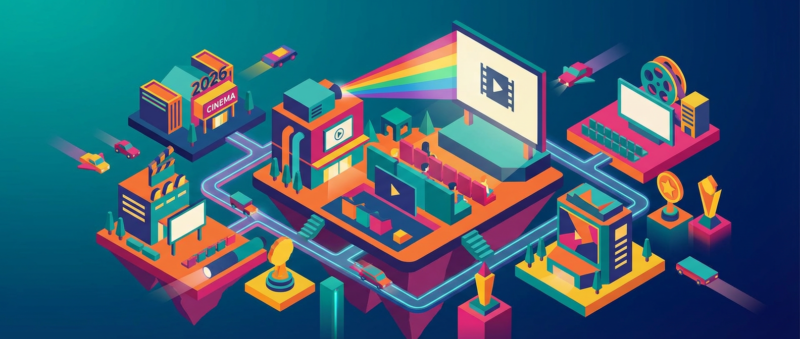
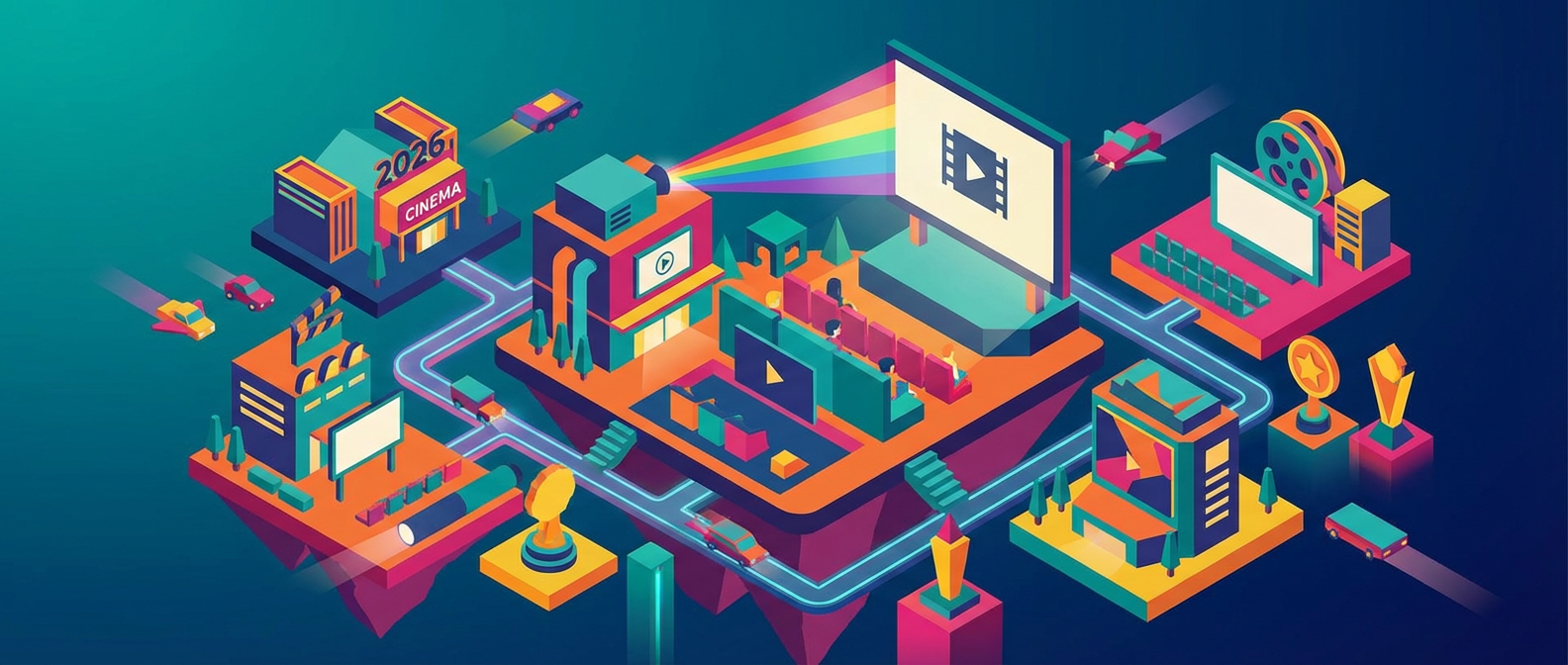
The Sundance Film Festival announced this year that they received over seventeen thousand submissions for their 2026 program. That number should terrify anyone who cares about independent cinema, not inspire them. When Robert Redford launched this festival decades ago, the magic lay in its ability to surface hidden gems from a smaller, more passionate pool of filmmakers. Now we’re drowning in content, and the festival circuit has become less about discovery and more about validation for an oversaturated market.

The Death of Discovery: How Film Festivals Lost Their Soul in the Streaming Wars

This volume reveals a fundamental problem plaguing independent cinema today. Every film school graduate with a smartphone thinks they’re the next Chloé Zhao. Every influencer with a Ring light believes they understand visual storytelling. The democratization of filmmaking tools has created an avalanche of mediocrity that even the most discerning programmers struggle to navigate. What emerges from this chaos isn’t necessarily the best work, but rather the loudest, most marketable, or most algorithmically friendly content.

Festival programmers now face an impossible task. How do you maintain artistic integrity when sorting through seventeen thousand hopefuls? Many of these filmmakers learned their craft not through rigorous study but through viral TikTok tutorials. The decline in traditional film school applications tells us everything we need to know about where aspiring filmmakers are turning for education. YouTube creators are bypassing decades of established cinematic language in favor of engagement metrics and shareability.

The Streaming Gold Rush Destroys the Festival Experience

Nothing illustrates the corruption of festival culture more clearly than the new practice of streaming platforms offering distribution deals on opening day of festival screenings. This isn’t celebration of cinema. It’s a feeding frenzy that reduces art to commodity before audiences even have time to process what they’ve witnessed. The festival experience once provided space for contemplation, discussion, and genuine critical engagement with challenging work.

When Netflix or Amazon representatives start bidding wars in theater lobbies, the entire ecosystem shifts from artistic merit to market potential. Filmmakers begin crafting their works not for festival audiences seeking transformative experiences, but for streaming executives seeking the next binge-worthy series or awards season contender. The result is a homogenization of independent voices, all chasing the same algorithmic approval that mainstream studios have been pursuing for years.

This immediate monetization also destroys the organic word-of-mouth that once drove festival successes. Films that might have gained passionate followings through gradual discovery now get swept up in corporate machinery before anyone can determine their actual cultural value. The careful cultivation of artistic reputations has been replaced by opening weekend streaming numbers and social media buzz.

The A24 Effect: When Independence Becomes a Brand

The widespread imitation of A24’s prestige independent cinema model across major studios represents perhaps the most insidious threat to authentic independent filmmaking. What began as a genuinely innovative approach to marketing and distributing challenging films has devolved into a cynical branding exercise. Every studio now wants their own “indie” arm, complete with minimalist posters and carefully curated social media presence.

This corporate co-optation of independent aesthetics creates a false marketplace where genuine independence competes with well-funded imitations. When Disney launches a subsidiary that mimics A24’s visual language and marketing strategies, they’re not celebrating independent cinema. They’re colonizing it. The result is a generation of filmmakers who unconsciously self-censor, creating work that fits predetermined “independent” templates rather than pushing genuine boundaries.

The A24 model’s success has also created unrealistic expectations for what independent cinema should achieve commercially. Not every challenging film needs to become a cultural phenomenon or spawn a thousand think pieces. Some of the most important independent works in cinema history were commercial failures that found their audiences over time through careful preservation and presentation.

The Documentary Bubble and International Cinema’s False Dawn

The current documentary renaissance, driven primarily by streaming platform demand, masks a deeper problem with how we consume non-fiction cinema. Platforms need content that can generate immediate engagement and social media discussion. This has led to a preference for documentary subjects that confirm existing beliefs or provide easily digestible outrage rather than challenging viewers with complex, ambiguous truths.

Similarly, the increased English-language audience interest in international cinema following “Parasite’s” Academy Award success represents more cultural tourism than genuine engagement. Most viewers seeking “the next Parasite” are looking for familiar themes dressed in exotic aesthetics, not genuinely foreign perspectives that might challenge their worldview. This surface-level internationalism actually reinforces cultural hierarchies rather than dismantling them.

The streaming platforms’ appetite for international content has created a new form of cultural imperialism where non-English filmmakers increasingly craft their work for American sensibilities. The result is a flattening of distinct national cinemas into globally palatable products that sacrifice specificity for broader market appeal. IndieWire film criticism has documented how this trend affects everything from narrative structure to visual design.

Reclaiming Festival Culture

The solution isn’t to abandon film festivals or independent cinema, but to recognize how current trends are undermining their essential functions. Festivals must resist the pressure to become content markets and return to their role as cultural laboratories. This means smaller, more curated selections that prioritize artistic risk over commercial potential.

Independent filmmakers need to reject the false choice between mainstream success and artistic integrity. The most vital independent cinema has always existed in tension with commercial expectations, not in service to them. This requires developing new distribution models that don’t rely solely on streaming platforms or festival validation.

The future of independent cinema depends on reclaiming the concept of independence itself. True independence isn’t about budget size or studio affiliation. It’s about maintaining creative vision in the face of market pressures. Whether that vision finds its audience through traditional festivals, alternative distribution methods, or entirely new platforms matters less than preserving the space for genuinely challenging work to exist and evolve.

What aspects of festival culture do you think are most worth preserving, and which current trends pose the greatest threat to authentic independent filmmaking?

The Bedroom Revolution: How Home Studios Transformed Music Production Forever

The Death of the Gatekeepers

Music production once lived behind velvet ropes. Studios cost hundreds per hour. Engineers guarded their secrets like ancient alchemists. The path from bedroom hum to Billboard chart required navigating a labyrinth of industry gatekeepers, each demanding their toll.

Those days are over. In 2025, nearly three-quarters of all music uploaded to Spotify comes from home recording setups. Spare bedrooms have become the new Abbey Road. Closets stuffed with winter coats work as vocal booths. The revolution happened quietly, one laptop at a time.

This transformation goes far beyond simple convenience. When production barriers collapse, creative barriers follow. Artists no longer shape their vision around studio limitations or budget constraints. Instead, they chase pure sonic imagination, limited only by their willingness to experiment.

The Software That Changed Everything

Digital Audio Workstations demolished the final fortress walls protecting professional production. Ableton Live, FL Studio, and Logic Pro turned thousand-dollar mixing boards into hundred-dollar software packages. What once required a team of specialists now fits inside a single application.

These tools democratized more than access. They completely reimagined the creative process. Loop-based composition encouraged experimentation over perfection. Infinite undo functions freed artists from the fear of mistakes. Suddenly, production became play rather than work.

The learning curve flattened dramatically. YouTube tutorials replaced expensive courses. Online forums answered questions that once required consulting expensive engineers. Knowledge that took decades to accumulate became available in weekend workshops. For deeper technical insights, resources like Sound on Sound production continue bridging the gap between amateur enthusiasm and professional technique.

Bedroom Pop’s Unlikely Billboard Conquest

Bedroom pop emerged as the perfect soundtrack for this home studio revolution. The genre embraces imperfection as aesthetic choice. Lo-fi recordings sound intentional rather than amateur. Intimate vocals recorded inches from cheap microphones become features, not bugs.

Since 2019, bedroom pop artists have consistently climbed Billboard charts, proving that polish no longer equals popularity. Clairo, Rex Orange County, and Boy Pablo built massive followings with music that sounds like it was recorded in, well, bedrooms. Their success inspired countless imitators, each adding personal touches to the dreamy, nostalgic formula.

The genre’s rise reflects broader cultural shifts toward authenticity over perfection. Audiences crave connection over production value. They want to hear the room, the breath, the human imperfection that expensive studios often eliminate. Bedroom pop delivers this intimacy by design.

Critics initially dismissed bedroom pop as amateur hour masquerading as artistry. Publications like Pitchfork music criticism gradually recognized the genre’s sophisticated emotional palette. What sounds simple often requires careful curation. Creating effective lo-fi means knowing exactly which imperfections to preserve.

The Sample Wars and AI’s Double-Edged Sword

Home production freedom comes with hidden costs. Sample clearance fees price independent artists out of using classic material. A two-second drum break from a 1970s funk record might cost more than an entire album’s budget. Major labels maintain their advantage through sample libraries that remain financially out of reach for bedroom producers.

Artificial intelligence offers both solution and new problem. Modern AI tools can separate individual instruments from existing recordings with remarkable precision. Bedroom producers can isolate that perfect bass line or vocal snippet without paying clearance fees. The technology enables creative sampling on an unprecedented scale.

This capability creates ethical gray areas. When AI can extract any element from any recording, traditional sampling law becomes unenforceable. Independent artists gain powerful creative tools while copyright holders lose control over their material. The music industry scrambles to adapt legal frameworks to technological reality.

Some artists embrace this chaos. They view AI-enabled sampling as creative liberation from corporate gatekeeping. Others worry about artistic authenticity when algorithms can manufacture any sound imaginable. The debate reflects broader tensions between technological possibility and creative ethics.

The Analog Paradox

Digital dominance sparked an unexpected counter-revolution. For the third straight year in 2025, vinyl sales outpaced CD purchases. Physical media thrives precisely because digital production became ubiquitous. When anyone can make music on laptops, physical artifacts gain special meaning.

Vinyl represents everything bedroom pop culture values. The format embraces imperfection through surface noise and dynamic limitations. Large album artwork creates space for visual storytelling. The physical ritual of playing records contrasts sharply with streaming’s ephemeral experience.

Bedroom pop artists particularly benefit from vinyl’s aesthetic appeal. The format’s warm sound signature complements lo-fi production techniques. Album covers showcase the intimate, handmade aesthetic that defines the genre. Vinyl sales provide crucial revenue streams for artists who struggle with streaming’s microscopic payouts.

This vinyl renaissance proves that accessibility and exclusivity can coexist. Digital tools democratize creation while physical formats preserve mystique. The most successful bedroom pop artists master both worlds, using home studios for creation and vinyl releases for monetization.

The bedroom revolution keeps evolving. Each new software update, each viral TikTok snippet, each basement show livestream adds another chapter to this ongoing story. Music creation has never been more accessible, more personal, or more connected to authentic human expression. Whether you’re sampling 1960s soul records or crafting dreamy synthesizer washes, your bedroom studio awaits. The only question remaining is what sounds will emerge from your creative sanctuary.

The Bedroom Revolution: How Home Studios Redefined Music’s Cultural Architecture

The Democratization of Sound Production

In 2025, nearly three-quarters of all music reaching Spotify’s vast catalog comes from bedroom studios, spare rooms, and converted closets rather than professional facilities. This statistic is more than a shift in recording practices. It signals the completion of a cultural transformation that started with four-track cassette recorders and has completely restructured how musical ideas travel from conception to global distribution.

Digital Audio Workstations have eliminated the economic barriers that once separated aspiring musicians from professional-grade production capabilities. Ableton Live, FL Studio, and Logic Pro now provide the same synthesis engines, effects processing, and mixing capabilities that defined landmark albums across multiple decades. The tools that shaped Pet Sounds or OK Computer are within financial reach of any teenager with a laptop and modest savings from summer employment.

This accessibility revolution goes beyond mere cost reduction. Modern DAWs have compressed the learning curve for complex production techniques into user-friendly interfaces that encourage experimentation over formal training. Where previous generations required apprenticeships in commercial studios to understand signal flow and mixing principles, today’s producers develop sophisticated approaches through YouTube tutorials and community forums dedicated to Sound on Sound production techniques.

Bedroom Pop’s Billboard Ascendancy

The genre that emerged from these democratized production environments has proven its commercial viability through sustained chart performance since 2019. Bedroom pop artists consistently secure Billboard positions without traditional industry infrastructure, proving that intimate, lo-fi aesthetics can compete with major-label production values in streaming algorithms and playlist placements.

This success challenges fundamental assumptions about commercial music production. The compressed dynamics, tape saturation, and intentional imperfections that define bedroom pop directly contradict the loudness wars and clinical precision that dominated mainstream production for decades. Artists like Clairo, Rex Orange County, and Boy Pablo have shown that audiences actively seek the warmth and authenticity that home recording naturally provides.

The genre’s commercial trajectory reveals broader cultural shifts toward valuing intimacy over spectacle. Bedroom pop’s aesthetic philosophy aligns with social media’s preference for authentic presentation over polished perfection. The same cultural forces that elevated candid photography over professional portraiture have positioned home-recorded music as more genuine than studio productions, regardless of technical sophistication.

The Sample Clearance Paradox

While production barriers have dissolved, legal obstacles continue restricting independent artists’ creative freedom. Sample clearance costs remain prohibitively expensive for musicians operating outside major-label systems, creating a two-tiered creative economy where established artists can freely incorporate musical history while independent producers face potential litigation for similar practices.

This restriction has profound implications for musical evolution. Hip-hop’s foundational practice of recontextualizing existing recordings enabled entirely new aesthetic frameworks, but contemporary independent artists cannot access these same creative strategies without significant financial risk. The legal architecture surrounding sampling rights essentially reserves certain forms of musical expression for artists with institutional backing.

Meanwhile, AI-powered stem separation tools enable unauthorized remixing and sampling at unprecedented scales. These technologies can isolate individual instrumental and vocal elements from existing recordings with remarkable accuracy, effectively democratizing access to musical raw materials while operating in legal gray areas that traditional sampling cannot navigate. The tension between technological capability and legal restriction continues reshaping how independent artists approach sample-based composition.

Physical Media’s Unexpected Renaissance

The third consecutive year of vinyl sales surpassing CD revenues in 2025 reflects deeper cultural desires that streaming platforms cannot satisfy. This physical media revival occurs alongside the bedroom recording boom, suggesting that audiences value both the accessibility of home-produced music and the tactile experience of analog playback systems.

Vinyl’s resurgence particularly benefits bedroom pop and independent artists, whose aesthetic sensibilities align naturally with analog warmth and surface noise characteristics. The format’s inherent limitations complement the genre’s intentional imperfections, creating synergistic relationships between production approaches and playback methods. Artists design their home recordings with vinyl pressing in mind, embracing dynamic range and frequency response characteristics that enhance rather than compromise their artistic vision.

This physical-digital hybrid economy enables independent musicians to monetize their work across multiple channels while maintaining creative control. Bedroom producers can distribute globally through streaming platforms while generating substantial revenue through limited vinyl pressings that command premium prices among collectors and enthusiasts. The combination provides sustainable income streams that were unavailable to previous generations of independent artists.

Cultural Implications and Future Trajectories

The bedroom recording revolution is more than technological advancement or genre development. It’s a fundamental restructuring of music’s relationship to cultural authority and institutional gatekeeping. When anyone can achieve broadcast-quality recordings from their living space, traditional hierarchies of artistic legitimacy require reevaluation.

This democratization parallels broader cultural movements toward decentralized creativity and direct artist-audience relationships. Social media platforms enable musicians to build substantial followings without radio programmers, record label executives, or Pitchfork music criticism validation. The same technologies that enable bedroom recording facilitate independent marketing, distribution, and community building.

The implications extend beyond individual career trajectories to reshape musical diversity and cultural representation. Previously marginalized voices can now access production capabilities and distribution channels that were historically controlled by demographic majorities. The bedroom recording revolution has generated more inclusive creative ecosystems where artistic merit rather than institutional connections determines visibility and success.

As we witness these transformations accelerating through 2025, the conversation shifts from whether bedroom production can compete with traditional methods to how established institutions will adapt to remain relevant in increasingly democratized creative environments. The revolution has already occurred. Now we observe its expanding cultural consequences.

What Contextual criticism Reveals About Independent art and the economics of making work

The standard take misses the more important signal underneath. Independent art economics deserves closer attention than most coverage gives it, and the reason isn’t complicated once you know where to look.

What makes this genuinely different from previous cycles is how Bandcamp and Patreon let artists sell directly to fans. The clearer read is also the more accurate one once you examine what the evidence actually shows.

The Criticism: Setting the Terms

Artist income from streaming platforms averages under $500 per year for the bottom 90 percent. This isn’t just a data point in the story of independent art economics — it’s the structural condition that makes everything else in this analysis make sense. Context like this doesn’t age quickly. The conditions that produced it have been building for years, and the convergence makes the current moment distinct from previous moments that looked similar from a distance.

Bandcamp and Patreon allow direct artist-to-fan economics while studio space costs in major cities price artists out of urban centers. When you look at both together, a pattern emerges that Artsy contemporary art has been covering from the inside: the conditions are more durable than they first appear, and the implications extend further than the immediate headline suggests.

To understand why this matters, look at what was true three years ago versus what’s true now. The change isn’t simply quantitative — it’s qualitative. The participants, the infrastructure, and the incentive structures have all shifted in ways that build on each other rather than cancel out. That compounding is the most important element to track.

What makes this moment worth examining carefully isn’t the novelty but the confirmation. The underlying dynamics have been visible for some time. What’s new is that they’ve reached a threshold where ignoring them requires active effort rather than simple inattention. That threshold crossing is the event, not the underlying movement that produced it.

And artist residency programs growing as an alternative to the commercial gallery system is part of that same picture. These elements don’t exist in separate silos — they’re reinforcing conditions in the same structural shift.

The Context Restorer: The Analysis

Artist residency programs growing as an alternative to the commercial gallery system is where the analysis gets more specific. The surface reading is accessible and not wrong — but it misses the mechanism, and the mechanism is where the practical insight lives. What makes this genuinely different from previous cycles is that NFT speculation collapsed but on-chain provenance tools remain useful. Understanding this changes what you do with the information.

Consider what the collapse of NFT speculation while on-chain provenance tools remain useful represents in context. It’s not a correlation that happened to appear — it’s a downstream consequence of structural factors that have been compounding. Previous readings of similar situations failed because they treated the symptom as the cause. The structural account is less satisfying as a headline but more useful as an analytical tool.

The comparison to prior cycles is instructive precisely because of where it breaks down. Similar-looking conditions resolved differently in previous iterations because the substrate was different. What AI image generation creating new conversations about originality and authorship represents is a substrate change — the kind that alters how the system responds rather than just its current value. Recognizing that distinction is what separates analysis from pattern-matching.

The skeptical counterargument deserves honest engagement: prior moments with similar surface characteristics didn’t produce the outcomes that seemed logical at the time. That history is real. What’s different now is AI image generation creating new conversations about originality and authorship, which isn’t a minor variable — it’s the infrastructure condition that previous cycles lacked. Infrastructure changes tend to persist in ways that sentiment-driven changes don’t. Hyperallergic art criticism is one source tracking this dimension with the rigor it requires.

There’s also a distributional question that often goes unaddressed in coverage of independent art economics: who captures the value created by these shifts, and who absorbs the disruption costs? The aggregate picture can be positive while the distribution is uneven in ways that matter enormously to specific participants. Keeping that distributional lens in view is part of reading the situation clearly rather than simply optimistically.

Implications: What This Means If You Care About Art history context

The implications of independent art economics extend beyond the immediate context. Artist income from streaming platforms averaging under $500 per year for the bottom 90 percent combined with the structural conditions described above creates a situation where adjacent fields, decisions, and communities get affected in ways that aren’t always visible from inside the primary story. The second-order effects are frequently more important than the first-order ones, and they’re where careful attention pays the highest returns.

The frame that matters here — and this is where the analysis departs from mainstream coverage — is that studio space costs pricing artists out of major cities is a leading indicator rather than a lagging one. The people positioned to respond to what this signals, rather than to what it confirms, are the ones who will be less surprised by what follows.

The practical response depends heavily on your position relative to the dynamics at play. For those closest to the core of independent art economics, the implications are immediate and operational. For those at greater distance, the implications are strategic — a matter of understanding which adjacent pressures are building and which assumed stabilities are more fragile than they appear.

The practical question isn’t whether to engage with these dynamics but how. The answer depends on context — on what role you occupy relative to independent art economics and what your actual decision horizon is. But the first step is the same regardless: accurate understanding of what’s actually happening rather than what the most available narrative says is happening.

A few concrete observations are worth separating out from the broader analysis. First: Bandcamp and Patreon allowing direct artist-to-fan economics isn’t a temporary condition — it’s a new baseline. Second: NFT speculation collapsed but on-chain provenance tools remaining useful suggests that the adjustment period isn’t over. Third, and most important: the organizations and individuals who are treating the current moment as a new steady state rather than a transition are making a categorization error that will be costly to unwind later.

The Case Against: What the Critics Get Right

Intellectual honesty requires acknowledging the strongest counterarguments, not just the weakest ones. The case against the optimistic reading of independent art economics isn’t trivial. There are structural vulnerabilities in the current picture that deserve direct engagement rather than dismissal.

The most serious objection is the one about sustainability. Studio space costs pricing artists out of major cities can be read not as a foundation but as a ceiling — a point beyond which growth becomes self-limiting because of the very dynamics that produced it. If the current state has already incorporated most of the available supply of early-adopting participants, the remaining growth curve may be structurally shallower than the recent trajectory implies.

There’s also the policy and regulatory dimension. Artist income from streaming platforms averaging under $500 per year for the bottom 90 percent describes a condition in a relatively permissive environment. Regulatory responses to the scale implied by these numbers aren’t inevitable, but they’re not implausible either. The organizations that are planning as though the current regulatory environment is permanent are making an assumption that the history of fast-growing sectors doesn’t support.

The rebuttal to these concerns isn’t that they’re wrong — it’s that they’re already partially priced into the current state of the field. AI image generation creating new conversations about originality and authorship reflects an environment where participants are already adapting to constraints rather than operating in an unconstrained space. The adjustment capacity of the ecosystem is higher than a purely top-down view of the risks suggests.

Looking Forward

The trajectory here is clearer than the pace. Making predictions about when specific thresholds will be crossed is genuinely difficult, and anyone claiming precision about timelines should be treated with skepticism. But the direction — toward artist income from streaming platforms averaging under $500 and continued development of the conditions described above — is supported by the evidence in a way that doesn’t depend on a single variable going right.

AI image generation creating new conversations about originality and authorship is the variable to watch as the leading indicator. Historical patterns suggest it moves first, with broader metrics following with some lag. This doesn’t make the outcome certain, but it makes it readable — and readability is the precondition for good decisions.

Three questions are worth holding as the story develops. First: are the structural conditions that enabled the current state durable, or are they cyclical? Second: who’s positioned to benefit from the next phase, and does that differ materially from who benefited in the current phase? Third: what would a clean falsification of the optimistic thesis look like, and is there any evidence of that signal emerging? These questions don’t need answers today — but having asked them changes what you notice in the months ahead.

The direction here is clear even when the pace isn’t. The current moment in independent art economics is one where the people who have built an accurate model of the underlying dynamics are better positioned than the people who are relying on the surface story. Building that model isn’t a quick task, but it’s a doable one — and this analysis is intended as one input into it.

What context am I missing? Add it below.

The Real Picture on Independent art and the economics of making work

The standard take is missing the more important signal underneath. The topic of independent art and the economics of making work deserves more careful attention than the typical coverage provides. The reason isn’t complicated once you know where to look.

What makes this genuinely different from previous cycles is how Bandcamp and Patreon let artists connect directly with fans economically. This is also the more accurate read once you examine what the evidence actually shows.

The Real Picture on Independent art and the economics of making work

The Craft: Setting the Terms

Artist income from streaming platforms averages under $500 per year for the bottom 90 percent. This isn’t just a data point, it’s the structural condition that makes everything else in this analysis make sense. Context like this doesn’t age quickly. The conditions that produced it have been building for years, and their convergence makes this moment different from previous ones that looked similar from a distance.

You have Bandcamp and Patreon allowing direct artist-to-fan economics plus the cost of studio space in major cities pricing artists out of urban centers. Look at both together and a pattern emerges that Artsy contemporary art has been covering from the inside: the conditions are more durable than they first appear, and the implications extend further than the immediate headline suggests.

To understand why this matters, look at what was true three years ago versus what is true now. The change isn’t simply quantitative, it’s qualitative. The participants, the infrastructure, and the incentive structures have all shifted in ways that compound rather than cancel out. That compounding is the most important element to track.

What makes this moment worth examining carefully isn’t the novelty but the confirmation. The underlying dynamics have been visible for some time. What’s new is that they’ve reached a threshold where ignoring them requires active effort rather than simple inattention. That threshold crossing is the event, not the underlying movement that produced it.

And artist residency programs growing as an alternative to the commercial gallery system is part of that same picture. These elements don’t exist in separate silos, they’re reinforcing conditions in the same structural shift.

The Process Piece: The Analysis

Artist residency programs growing as an alternative to the commercial gallery system is where the analysis gets more specific. The surface reading is accessible and not wrong, but it misses the mechanism. And the mechanism is where the practical insight lives. What makes this genuinely different from previous cycles is that NFT speculation collapsed but on-chain provenance tools remain useful. Understanding that changes what you do with the information.

Consider what this collapse-but-persistence represents in context. It isn’t a correlation that happened to appear, it’s a downstream consequence of structural factors that have been compounding. Previous readings of similar situations failed because they treated the symptom as the cause. The structural account is less satisfying as a headline but more useful as an analytical tool.

The comparison to prior cycles is instructive precisely because of where it breaks down. Similar conditions resolved differently in previous iterations because the substrate was different. What AI image generation creating new conversations about originality and authorship represents is a substrate change, the kind that alters the elasticity of the system rather than just its current value. Recognizing that distinction separates analysis from pattern-matching.

The skeptical counterargument deserves honest engagement: prior moments with similar surface characteristics didn’t produce the outcomes that seemed logical at the time. That history is real. What’s different now is AI image generation creating new conversations about originality and authorship, which isn’t a minor variable, it’s the infrastructure condition that previous cycles lacked. Infrastructure changes tend to be persistent in ways that sentiment-driven changes are not. Hyperallergic art criticism is one source tracking this dimension with the rigor it requires.

There’s also a distributional question that often goes unaddressed in coverage of independent art and economics: who captures the value created by these shifts, and who absorbs the disruption costs? The aggregate picture can be positive while the distribution is uneven in ways that matter enormously to specific participants. Keeping that distributional lens in view is part of reading the situation clearly rather than simply optimistically.

Implications: What This Means If You Care About Production Techniques

The implications of independent art and the economics of making work extend beyond the immediate context. Artist income from streaming platforms averaging under $500 per year for the bottom 90 percent combined with the structural conditions described above creates a situation where adjacent fields, decisions, and communities are affected in ways that aren’t always visible from inside the primary story. The second-order effects are frequently more important than the first-order ones, and they’re where careful attention pays the highest returns.

The frame that matters here, and this is where the analysis departs from the mainstream coverage, is that the cost of studio space in major cities pricing artists out of urban centers is a leading indicator rather than a lagging one. The people positioned to respond to what this signals, rather than to what it confirms, are the ones who will be less surprised by what follows.

The practical response depends heavily on your position relative to the dynamics at play. For those closest to the core of independent art and economics of making work, the implications are immediate and operational. For those at greater distance, the implications are strategic, a matter of understanding which adjacent pressures are building and which assumed stabilities are more fragile than they appear.

The practical question isn’t whether to engage with these dynamics but how. The answer depends on context, on what role you occupy relative to independent art and the economics of making work and what your actual decision horizon is. But the first step is the same regardless: accurate understanding of what’s actually happening rather than what the most available narrative says is happening.

A few concrete observations are worth separating out from the broader analysis. First: Bandcamp and Patreon allowing direct artist-to-fan economics isn’t a temporary condition, it’s a new baseline. Second: NFT speculation collapsed but on-chain provenance tools remaining useful suggests that the adjustment period isn’t over. Third, and most important: the organizations and individuals who are treating the current moment as a new steady state rather than a transition are making a categorization error that will be costly to unwind later.

The Case Against: What the Critics Get Right

Intellectual honesty requires acknowledging the strongest counterarguments, not just the weakest ones. The case against the optimistic reading of independent art and the economics of making work isn’t trivial. There are structural vulnerabilities in the current picture that deserve direct engagement rather than dismissal.

The most serious objection is the one about sustainability. The cost of studio space in major cities pricing artists out of urban centers can be read not as a foundation but as a ceiling, a point beyond which growth becomes self-limiting because of the very dynamics that produced it. If the current state has already incorporated most of the available supply of early-adopting participants, the remaining growth curve may be structurally shallower than the recent trajectory implies.

There’s also the policy and regulatory dimension. Artist income from streaming platforms averaging under $500 per year for the bottom 90 percent describes a condition in a relatively permissive environment. Regulatory responses to the scale implied by these numbers aren’t inevitable, but they’re not implausible either. The organizations that are planning as though the current regulatory environment is permanent are making an assumption that the history of fast-growing sectors doesn’t support.

The rebuttal to these concerns isn’t that they’re wrong, it’s that they’re already partially priced into the current state of the field. AI image generation creating new conversations about originality and authorship reflects an environment where participants are already adapting to constraints rather than operating in an unconstrained space. The adjustment capacity of the ecosystem is higher than a purely top-down view of the risks suggests.

Looking Forward

The trajectory here is clearer than the pace. Making predictions about when specific thresholds will be crossed is genuinely difficult, and anyone claiming precision about timelines should be treated with skepticism. But the direction, toward artist income from streaming platforms averaging under $500 and continued development of the conditions described above, is supported by the evidence in a way that isn’t contingent on a single variable going right.

AI image generation creating new conversations about originality and authorship is the variable to watch as the leading indicator. Historical patterns suggest it moves first, with broader metrics following with some lag. This doesn’t make the outcome certain, but it makes it legible, and legibility is the precondition for good decisions.

Three questions are worth holding as the story develops. First: are the structural conditions that enabled the current state durable, or are they cyclical? Second: who is positioned to benefit from the next phase, and does that differ materially from who benefited in the current phase? Third: what would a clean falsification of the optimistic thesis look like, and is there any evidence of that signal emerging? These questions don’t need answers today, but having asked them changes what you notice in the months ahead.

The direction here is clear even when the pace isn’t. The current moment in independent art and the economics of making work is one where the people who have built an accurate model of the underlying dynamics are better positioned than the people who are relying on the surface story. Building that model isn’t a quick task, but it is a tractable one, and this analysis is intended as one input into it.

What other process stories deserve this kind of attention?

Kastormag

Kastormag

Art, culture, and the conversations that matter.

We think culture writing should be as fearless as the work it covers. Our critics and contributors write about music, visual art, film, and performance with the attention and honesty these forms demand. No fluff, no jargon—just honest takes on what’s worth your time.

Topics we cover: Visual Art · Music · Film & TV · Performance · Photography · Criticism

Unveiling the Future: AI’s Breakthrough in Creative Arts

Is there anything more exciting than the feeling that a seismic shift is happening right under our noses? No, I’m not talking about the latest social media challenge or the fact that we’re all suddenly obsessed with making sourdough. I’m talking about an explosion of creativity that’s bubbling up from the intersection of technology and the arts. More specifically, the remarkable breakthroughs in Artificial Intelligence and how it’s changing creative arts. It’s like AI has finally discovered its inner Picasso!

The Age of AI-Driven Creativity

Remember the days when we thought AI was just a futuristic concept tied to robots plotting world domination or software bent on taking over your job? Yeah, me too. But the reality is way more intriguing, and way less sinister. AI’t here to replace human creativity but to boost it in ways that are changing our concept of art, music, and storytelling.

AI’s ability to generate art is nothing new. Anyone who’s been keeping up with projects like Google’s DeepDream and OpenAI’s DALL-E knows that. But there’s something different about the latest wave of AI-generated art. It’s grown up. Now, AI isn’t just copying styles; it’s creating genuinely original works that challenge our definition of art itself. It’s like AI is shedding its nerdy glasses and emerging as a hipster with an art portfolio.

The Picasso-Bot: AI in Visual Arts

Let’s look at visual arts first. AI is making waves with tools that work as a digital canvas for artists. Programs like DeepArt and Runway ML are giving artists superpowers, allowing them to blend, remix, and innovate like never before. Imagine feeding a neural network with images of Van Gogh’s Starry Night and watching it churn out a novel composition that’s both familiar and mind-blowingly unique.

The best part? AI does this at warp speed. The iterative process that might take a human months can be done by AI in mere seconds. Artists can now go on wild creative experiments without the fear of wasting time or resources. It’s like turning mistakes into masterpieces at the speed of thought.

Music to Our Ears: AI’s Sonic Symphony

Over in the music department, something magical is happening too. AI-equipped platforms like AIVA and Amper Music are co-composers, working with musicians on a thrilling creative journey. They’re crafting symphonies, scoring films, and generating catchy pop tracks that wouldn’t sound out of place on your favorite playlist. And get this—it’s not just background noise. AI is creating emotionally resonant music that can move people to tears or make them dance like nobody’s watching.

Musicians are now in this thriving partnership with AI, using the vast potential of neural networks to explore musical boundaries they couldn’t reach on their own. It’s like having an endlessly patient practice partner who’s always ready with fresh ideas. AI isn’t stealing the spotlight; it’s setting the stage for musicians to shine even brighter.

Once Upon a Time: AI in Storytelling

Storytelling is also going through a renaissance, and you bet AI’s got a quill in hand. Projects like OpenAI’s GPT-3 aren’t just about regurgitating information but about creating inventive narratives. Authors and screenwriters are collaborating with AI to break through writer’s block and generate plot twists that would make Hitchcock proud.

Imagine this: You’re crafting a fantasy novel, and you need a gripping backstory for a dragon. Enter AI, dishing out potential dragons with detailed histories like a seasoned lore-master. While human authors provide the warmth and depth, AI adds layers of complexity and unpredictability. It’s like stirring in new flavors to a classic recipe.

The Road Ahead: Challenges and Opportunities

Of course, every breakthrough comes with its fair share of challenges. The big question on everyone’s mind is: How does this affect the human aspect of art? It’s a legitimate concern that AI-generated content waters down the authenticity of human expression. But here’s a thought—it could also enrich it. Artists are redefining what it means to be a creator in a world where AI is your brush, your maestro, your muse.

There’s also the ongoing dialogue about ownership and copyright in the realm of AI-generated content. Thankfully, these hurdles aren’t insurmountable. Artists and technologists are working hand in hand to develop frameworks that protect creators’ rights while creating an environment ripe for innovation.

What happens next could redefine the creative world altogether. As AI models grow more sophisticated, the collaborative potential grows. We could be on the cusp of a Second Renaissance, one where humans and machines create together in ways we’ve never seen before.

Conclusion: The New Renaissance

As we start this thrilling adventure into the world of AI-powered creativity, it’s clear that the playground is just getting started. This breakthrough isn’t simply about adding new tools to the creative toolbox; it’s about expanding the box itself. With every canvas painted, note composed, and story told, AI is proving to be an indispensable ally in our creative evolution.

So here’s to a world where human ingenuity and machine intelligence come together to take us to uncharted creative territories. I, for one, am eagerly waiting to see what the next chapter of this techno-utopian saga will bring. And if the art world gets a little more crowded with AI Picasso-bots, well, there’s always room for more masterpieces. Keep your colors bright and your algorithms ready—our art revolution is just beginning!