Category: Uncategorized

The Beautiful Accidents: How Chaos Birthed Our Most Radical Art

When Control Meets Catastrophe

The myth of the tortured artist alone in their garret is seductive but fundamentally incomplete. What we rarely discuss is how many of our most revolutionary works emerged not from solitary genius but from spectacular failures of intention. Consider John Cage’s “4’33″” — born not from a mystical revelation about silence but from his frustrated attempts to create truly silent spaces, only to discover in Harvard’s anechoic chamber that perfect silence doesn’t exist. His own nervous system became the unwitting collaborator.

The Beautiful Accidents: How Chaos Birthed Our Most Radical Art

This collision between artistic intent and uncontrollable circumstance has produced some of the most radical works in modern history. When we trace the creative genealogy of pieces that completely altered their mediums, we find a pattern: artists setting out to solve one problem, only to stumble into solutions for entirely different questions. The accident becomes the method. The failure becomes the breakthrough.

What I find particularly fascinating is how these “accidents” reveal the inadequacy of our romantic notions about artistic creation. We want our innovators to be visionaries who saw clearly into the future of their medium. The reality is messier and far more interesting. The most radical departures often come from artists who were simply trying to make something work and discovered, in the process of failing, that the failure itself was more compelling than their original vision.

Illustration for The Beautiful Accidents: How Chaos Birthed Our Most Radical Art

The Velvet Underground’s Beautiful Mistakes

Lou Reed’s guitar tunings weren’t a calculated assault on rock orthodoxy — they were born from his inability to properly tune a guitar and his decision to embrace rather than correct this limitation. What we now recognize as the distinctive drone that defined The Velvet Underground’s sound began as Reed’s workaround for his own technical limitations. The ostrich tuning (all strings tuned to the same note) that powered “The Ostrich” wasn’t an avant-garde statement; it was the sound of someone who couldn’t be bothered to learn proper chord structures.

This practical approach to innovation extended to their collaboration with John Cale, whose classical training in minimalism met Reed’s garage-band pragmatism in ways that neither anticipated. Cale brought La Monte Young’s sustained tones and Terry Riley’s repetitive structures into contact with Reed’s street-level narratives. The result wasn’t fusion but collision — two incompatible approaches to music-making that generated entirely new possibilities.

The recording of “Sister Ray” perfectly captures this productive chaos. What we hear on White Light/White Heat is essentially a 17-minute argument between instruments, with Reed and Cale actively working against each other’s musical instincts. The session was famously contentious, but that tension became the song’s driving force. They weren’t composing; they were surviving each other’s creative impulses.

Rothko’s Crisis of Representation

Mark Rothko’s breakthrough into color field painting didn’t emerge from a coherent artistic philosophy but from a crisis of confidence in figurative representation. His subway series of the 1940s shows an artist struggling with the inadequacy of literal depiction in the face of contemporary horror. The Holocaust, Hiroshima, the mechanized violence of modern warfare — traditional artistic languages felt insufficient, even obscene.

The transition to his mature style happened during a period when Rothko was questioning whether painting itself could survive as a meaningful medium. His experiments with biomorphic forms in the late 1940s weren’t steps toward abstraction but desperate attempts to find a visual language that could contain the unspeakable. When he abandoned representation entirely, it wasn’t triumph but surrender — a recognition that what he wanted to express couldn’t be painted directly.

What we see in the great Rothko paintings of the 1950s is the residue of this struggle. Those floating rectangles aren’t decorative abstractions but compressed emotions, the visual equivalent of what remains after everything representational has been stripped away. The luminosity isn’t mystical but practical — layers of paint creating depth through light rather than perspective. The monumental scale isn’t grandeur but necessity; these works need to overwhelm the viewer’s peripheral vision to function properly.

Rothko himself was often frustrated by the spiritual interpretations of his work. He wanted viewers to experience the paintings as he had created them — as responses to specific historical crises, not timeless meditations. The chapel paintings at the Rothko Chapel represent this intention most clearly: fourteen massive canvases that function as an environment for contemplating human suffering, not transcending it.

Godard’s Revolutionary Pragmatism

Jean-Luc Godard’s jump cuts in Breathless weren’t theoretical statements about cinematic time but practical solutions to a film that was running too long. Editor Cécile Decugis simply cut out the boring bits, creating what became the most influential editing technique in modern cinema. The innovation wasn’t conceptual but editorial — a recognition that films could survive, even thrive, without traditional continuity.

This pragmatic approach to rule-breaking defined the French New Wave’s relationship to Hollywood convention. Godard and his contemporaries weren’t rejecting classical cinema out of intellectual disdain but out of economic necessity. They couldn’t afford elaborate setups, so they shot handheld. They couldn’t hire established actors, so they cast amateurs. They couldn’t build sets, so they shot on location. Each limitation became an aesthetic choice that revealed new possibilities for cinematic expression.

The famous bedroom scene in Contempt, where Brigitte Bardot and Michel Piccoli conduct their entire conversation while she dresses and undresses, emerged from Godard’s realization that the scene as written was fundamentally undramatic. By adding the physical action of dressing, he created a visual counterpoint that made the dialogue’s emotional subtext visible. The innovation wasn’t in the nudity but in the use of mundane activity to reveal character psychology.

The Generative Power of Constraints

What unites these examples is the recognition that creative breakthroughs often emerge from working within severe limitations rather than absolute freedom. The constraint becomes the catalyst. The Velvet Underground’s technical limitations forced them to find new sounds. Rothko’s crisis of representation pushed him toward a more essential visual language. Godard’s budget constraints led to a more immediate and visceral cinema.

This pattern suggests something important about the nature of innovation in art. The most radical departures don’t come from artists who set out to revolutionize their medium but from those who encounter problems that existing techniques can’t solve. They innovate not because they want to break rules but because the rules don’t provide adequate tools for what they’re trying to accomplish.

Understanding this process changes how we approach both the creation and criticism of art. Instead of looking for grand statements of artistic intent, we might pay more attention to the specific problems artists were trying to solve, the limitations they were working within, and the happy accidents that redirected their efforts. The most interesting question isn’t what the artist meant to do but what they discovered in the process of doing it.

These stories remind us that the greatest works often emerge from the intersection of ambition and accident, planning and chaos. They invite us to reconsider our assumptions about artistic genius and to pay closer attention to the messy, collaborative, often accidental processes through which new forms of expression come into being. What other “failures” in your own experience have pointed toward unexpected possibilities?
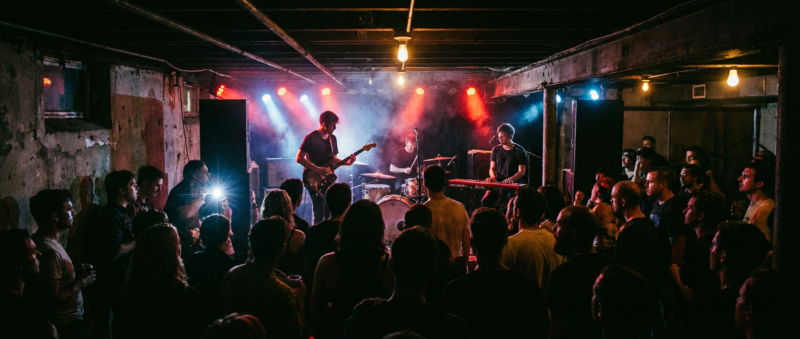
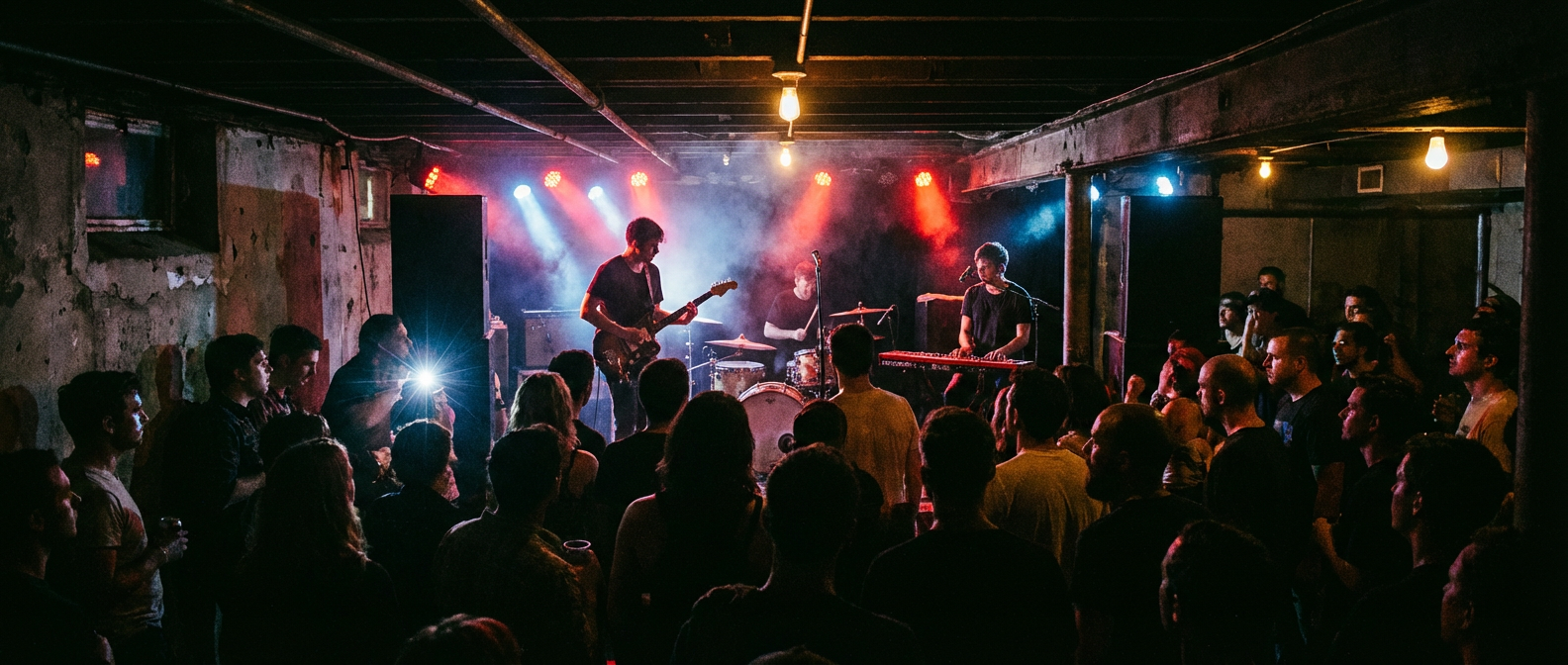
The Phantom Networks: How Underground Music Scenes Are Rewriting the Rules of Cultural Distribution

Beyond the Algorithm: Understanding True Underground Networks

The term “underground” has been so completely hijacked by streaming platforms and music blogs that we’ve lost sight of what genuine underground networks actually look like. Real underground scenes don’t operate through carefully curated playlists or influencer endorsements. They work like phantom networks, invisible webs of connection that skip traditional gatekeepers entirely. I’m talking about cassette trading circles in Eastern European basements, field recording collectives documenting disappearing soundscapes in rural America, and modular synthesizer communities building their own instruments in abandoned warehouses.

The Phantom Networks: How Underground Music Scenes Are Rewriting the Rules of Cultural Distribution

Consider the work of Seattle-based collective Sige Records, which has spent the past decade documenting the intersection of experimental noise and traditional folk forms. Their releases don’t chart on Billboard or rack up millions of Spotify plays. Instead, they circulate through a network of record stores, house shows, and academic conferences, creating a parallel economy of cultural exchange that operates completely outside mainstream metrics of success. This isn’t obscurity for its own sake. It’s a deliberate construction of alternative value systems.

What makes these networks particularly fascinating is their rejection of the attention economy that dominates contemporary culture. Unlike the performative underground posturing we see on social media, these scenes care about depth of engagement over breadth of reach. They get that true innovation requires sustained community investment, not viral moments.

Illustration for The Phantom Networks: How Underground Music Scenes Are Rewriting the Rules of Cultural Distribution

The Technology of Intimacy: Tools Creating New Sounds

The most compelling developments in underground music right now aren’t happening in professional studios or expensive software environments. They’re emerging from the creative misuse of everyday technology. Artists are circuit-bending children’s toys, running traditional instruments through broken amplifiers, and using obsolete software to create textures that would be impossible to achieve with modern tools. This isn’t some nostalgic fetish for analog warmth, but a sophisticated understanding of how technological constraints can generate aesthetic possibilities.

Take the growing movement of artists working with contact microphones and hydrophones to capture the sonic environments of urban decay and natural systems. Musicians like Jefre Cantu-Ledesma and Christina Vantzou aren’t just field recording for ambient texture. They’re developing new compositional strategies based on the acoustic properties of specific architectural spaces and ecological systems. Their work suggests that the most radical sounds might emerge not from pushing technology forward, but from listening more carefully to the world that already surrounds us.

The rise of modular synthesis communities represents another fascinating development. These aren’t gear fetishists collecting expensive toys, but communities of makers who understand electronic music as applied philosophy. They’re building instruments that embody specific theoretical approaches to time, randomness, and control. The patches they create become temporary architectures, existing only for the duration of a performance before being dismantled and rebuilt.

Genre Erosion: When Categories Become Meaningless

The most exciting underground scenes right now have completely abandoned genre categories as organizing principles. We’re seeing the emergence of what might be called “post-genre” communities that organize around methodology rather than style. These artists share approaches to improvisation, recording techniques, or collaborative processes rather than sticking to established musical forms.

The American Primitive Guitar movement, initially associated with John Fahey’s solo acoustic explorations, has evolved into something far more complex and polyglot. Contemporary practitioners like Yasmin Williams and Daniel Bachman incorporate elements of West African kora techniques, Indian classical ragas, and electronic processing into their work. They’re not trying to create fusion music in the traditional sense, but rather developing new languages that draw from multiple traditions without being bound by any of them.

Similarly, the international network of artists working in what gets loosely called “ambient music” has moved far beyond the new age associations of that term. Musicians like Klein, Gazelle Twin, and Forest Management are using ambient techniques to address urgent political and social questions, creating soundscapes that are simultaneously meditative and deeply unsettling. Their work demonstrates how experimental sound can work as cultural criticism.

The Economics of Refusal: Alternative Models of Success

Perhaps the most radical aspect of contemporary underground scenes is their development of alternative economic models that prioritize sustainability over growth. These communities understand that the attention economy is fundamentally incompatible with the kind of deep, sustained creative work they’re trying to support. Instead of competing for market share, they’re creating mutual aid networks and resource-sharing systems.

The emergence of artist-run venues, tool libraries, and recording cooperatives represents a return to the community organizing principles that powered earlier underground movements. But unlike the punk DIY ethos of previous decades, these contemporary efforts are informed by sophisticated analyses of how cultural production relates to housing policy, gentrification, and economic inequality. They’re building infrastructure rather than just staging events.

Labels like Orange Milk Records and Deathbomb Arc have developed distribution models that prioritize direct relationships with listeners over algorithmic discovery. They understand their releases as cultural objects rather than content, creating physical artifacts that reward close attention and repeated listening. This isn’t market nostalgia, but recognition that certain forms of artistic experience require different kinds of economic support.

Mapping the Unmappable: Future Trajectories

The underground scenes that will matter in the coming decade are those that understand cultural production as inherently political work. They’re developing new models of creative collaboration that challenge the individualistic mythology of the artist genius. They’re creating spaces for experimentation that exist outside the cycle of hype and backlash that drives mainstream cultural discourse.

These movements remind us that the most important cultural work often happens in spaces that resist documentation and commodification. They operate according to different timelines, developing ideas over years or decades rather than responding to the accelerated pace of social media attention cycles. They understand that true innovation requires the kind of sustained commitment that can only flourish in communities organized around shared values rather than market opportunities.

What specific underground scenes have you encountered that challenge conventional assumptions about how music should circulate and be valued? The phantom networks are always there, waiting for those willing to listen beyond the surface noise of promotional culture.

When the Underground Goes Overground: Comparing Three Decades of Local Gallery Gatekeeping

The Velvet Rope Era: How Gallery 404 Shaped Our Scene’s DNA

Walking into Gallery 404 in 1994 felt like being admitted to a secret society where the password was knowing which Cindy Sherman photograph influenced local painter Marcus Chen’s latest series. The gallery, tucked behind a Vietnamese restaurant on Bleecker Street, operated with the kind of exclusivity that made Studio 54 look like a community center. Owner Diane Kozlowski curated with surgical precision, showing perhaps twelve artists per year in a space that could barely accommodate fifteen people comfortably.

When the Underground Goes Overground: Comparing Three Decades of Local Gallery Gatekeeping

What made 404 revolutionary wasn’t its size but its obsession with context. Kozlowski refused to show work without extensive wall text that connected each piece to broader movements, often drawing lines between a local sculptor’s industrial materials and Donald Judd’s Marfa installations. This wasn’t pretension, it was pedagogy disguised as gallery practice. She understood that our scene needed education as much as exhibition, and her Saturday afternoon artist talks regularly drew crowds that spilled onto the sidewalk.

The gallery’s influence extended far beyond its physical walls. Artists began creating work specifically for Kozlowski’s consideration, knowing that her approval meant serious critical engagement rather than mere wall space. When 404 closed in 2003, it left behind a generation of artists who expected galleries to be intellectual laboratories, not just commercial spaces with white walls and wine.

Illustration for When the Underground Goes Overground: Comparing Three Decades of Local Gallery Gatekeeping

The Democratic Turn: Warehouse Collective’s Open Door Policy

Where Gallery 404 whispered, Warehouse Collective shouted. Opening in 2008 in a converted auto parts facility, the collective embraced a radically different philosophy: if you could make it to their monthly open submissions review, you had a shot at wall space. Co-founders Sarah Kim and Roberto Valdez positioned themselves as anti-gatekeepers, arguing that the local scene had become too insular, too dependent on academic credentials and gallery pedigree.

The results were predictably chaotic and occasionally brilliant. Warehouse’s group shows resembled visual cacophonies where a meticulously crafted oil painting might hang beside an assemblage made from McDonald’s wrappers and dental floss. Critics initially dismissed the space as amateur hour, but something fascinating emerged from this apparent randomness. Artists began pushing their work in unexpected directions, freed from the pressure to fit established aesthetic categories.

The collective’s monthly critique sessions, open to anyone willing to defend their work, became legendary affairs that lasted until 2 AM. These weren’t gentle community workshops but full-contact intellectual combat where ideas were tested against fierce questioning. Sarah Kim once reduced a conceptual artist to tears by systematically dismantling his installation’s theoretical framework, only to spend the next hour helping him rebuild it more coherently.

Warehouse’s democratic experiment lasted eight years, ending when gentrification priced them out of their space. But their legacy persists in the dozens of artist-run spaces that adopted their open submission model, proving that accessibility and quality aren’t mutually exclusive when paired with genuine critical engagement.

The Digital Native: Platform Gallery’s Algorithm-Resistant Curation

Platform Gallery represents our scene’s most recent attempt to solve the eternal tension between discovery and quality control. Founded in 2019 by former art critic Elena Rodriguez, Platform operates on what Rodriguez calls “slow curation”, an intentionally anti-digital approach that prioritizes sustained engagement over rapid content cycles. While Instagram stories determine which artists gain visibility everywhere else, Platform insists on showing work for minimum three-month runs.

Rodriguez learned from both her predecessors’ strengths and limitations. Like Kozlowski, she maintains rigorous selection standards, but unlike Gallery 404’s exclusive atmosphere, Platform actively courted artists working outside traditional art world networks. Like Warehouse Collective, she embraced diverse voices, but implemented a structured mentorship program that provided critical feedback without the gladiatorial atmosphere of open critiques.

The gallery’s signature innovation is its “Context Rooms”, adjacent spaces where Rodriguez displays historical works and contemporary pieces from other cities that illuminate the themes explored in the main exhibition. When local photographer James Liu showed his series documenting gentrification’s impact on small businesses, Rodriguez simultaneously displayed Walker Evans’ Depression-era storefront photographs and Zoe Leonard’s recent documentation of changing Lower East Side shop fronts.

This contextual approach has attracted national attention, with Artforum praising Platform’s ability to “localize global conversations without sacrificing intellectual rigor.” But the gallery’s real success lies in how it has influenced other local spaces to think more deliberately about historical precedents and cross-cultural dialogue.

Three Models, One Persistent Question

These three galleries represent distinct approaches to the fundamental challenge facing any cultural scene: how do you balance openness with quality, discovery with curation, local character with broader relevance? Gallery 404’s exclusivity produced artists with deep historical knowledge but limited the scene’s diversity. Warehouse Collective’s democracy generated exciting experimentation but struggled with consistency. Platform’s structured openness shows promise but remains too young for definitive judgment.

What strikes me is how each model shaped not just which art got shown, but what kind of art got made. 404’s high theoretical standards pushed artists toward conceptual sophistication. Warehouse’s anything-goes atmosphere encouraged material experimentation. Platform’s contextual framework has inspired more historically informed practice.

The comparison reveals that galleries aren’t passive venues but active creators of cultural DNA. They establish the terms of local discourse, determine which conversations matter, and ultimately influence how artists understand their own practice. Each model succeeded and failed in predictable ways: exclusivity breeds excellence but limits access, democracy encourages participation but dilutes focus, structured openness balances competing demands but risks bureaucratic stagnation.

Maybe the real question isn’t which model works best, but whether our scene needs all three approaches operating simultaneously. Maybe cultural health requires this kind of productive tension, spaces that challenge artists differently, audiences that expect different things, and curators who prioritize different values. What aspects of each model do you think our current scene most needs to embrace or abandon?

The Radical Quietude of Agnes Martin: How Grid Lines Became Gateway to the Infinite

The Desert Prophet of Minimalism

Agnes Martin died in 2004, but her legacy continues to confound the art world’s neat categories. Here was an artist who painted grids for five decades, yet transcended every assumption about repetition, minimalism, and the supposed sterility of geometric abstraction. While her contemporaries in the 1960s art scene were busy deconstructing painting or abandoning it altogether, Martin was quietly revolutionizing what a canvas could hold. Her process was both radically simple and impossibly complex: hand-drawn pencil lines creating grids on monochromatic fields, each work a meditation disguised as mathematics.

The Radical Quietude of Agnes Martin: How Grid Lines Became Gateway to the Infinite

The critical establishment initially struggled to place Martin. Was she a minimalist? A color field painter? An outsider artist? The answer, as with most revolutionary work, was none and all of the above. Her grids weren’t about systematic reduction or industrial precision. They were about capturing what she called “the untroubled mind” through the most basic visual language possible. Each line was drawn by hand, making her seemingly mechanical compositions deeply human documents of time, breath, and attention.

Martin’s move to New Mexico in 1967 was more than a geographical shift. It was a creative rebirth. In the high desert landscape, she found the visual equivalent of her internal state. The vast horizontal expanses, the quality of light, the sense of infinite space contained within defined boundaries. Her studio practice became a form of spiritual discipline, rising at dawn to work in natural light, approaching each canvas as both a technical challenge and a form of prayer.

The Architecture of Silence

Understanding Martin’s creative process requires abandoning conventional notions of artistic inspiration. She didn’t paint from emotion or external observation but from what she described as “inspiration,” a state of mental clarity she developed through years of meditation and careful attention to her inner life. Her paintings weren’t about expressing feelings but about creating conditions where pure perception could occur. The grid became her vocabulary for silence.

The physical demands of her work were extraordinary. Each canvas required hours of careful measurement and hand-drawing. A typical six-foot square painting might contain over 200 pencil lines, each one drawn with a ruler but guided by her eye and hand. The subtle variations in these supposedly uniform lines created what art historian Lynne Cooke called “a trembling perfection.” The human imperfections weren’t accidents to be corrected but the very source of the work’s emotional resonance.

Martin’s color choices emerged from the same patient observation. The pale pinks, subtle blues, and warm whites weren’t selected for their aesthetic appeal but for their ability to hold light without demanding attention. She mixed her own paints, often working with the same color for years until she had explored its possibilities. Her famous “Untitled” series from the 1990s used a pink so specific that it seemed to breathe with the changing light conditions in the gallery space.

The Courage of Repetition

In an art world obsessed with novelty and conceptual cleverness, Martin’s commitment to variation within repetition was genuinely radical. She painted grids for fifty years, but no two works were identical. Each painting was a new investigation into the same fundamental questions about space, light, and consciousness. This wasn’t artistic laziness or creative exhaustion but a deep understanding that depth comes through sustained attention rather than surface innovation.

Her approach challenged the masculine heroics of abstract expressionism while avoiding the ironic detachment of pop art. Where Jackson Pollock painted from his unconscious and Andy Warhol from the collective conscious, Martin painted from what she called “the classical state of mind.” Her work required viewers to slow down, to abandon the quick consumption that modern art often encouraged. Standing before a Martin painting was an exercise in patience and perception.

The art market initially resisted this approach. Her first solo show in 1958 sold nothing. Critics dismissed her early work as decorative or overly cerebral. It wasn’t until the 1970s that younger artists and curators began to recognize the radical nature of what she was doing. Artists like Sol LeWitt and Donald Judd understood that Martin had found a way to make spiritual content through purely formal means, without resorting to symbolism or narrative.

The Technology of Transcendence

Martin’s creative breakthrough came through understanding that limitation could be liberation. By restricting herself to the grid format, she freed herself from the burden of infinite formal possibilities. Each painting became an exploration within carefully defined parameters, like a jazz musician working variations on a standard. The grid wasn’t a prison but a launching pad for subtle investigation of color, proportion, and light.

Her working methods were deliberately analog in an increasingly digital world. She never used mechanical drawing tools beyond a ruler and never employed assistants. Every mark on the canvas came directly from her hand and eye. This insistence on direct physical engagement with the materials gave her work a quality of presence that reproductions could never capture. The slight irregularities in her lines, the texture of graphite on gesso, the way light caught the subtle variations in paint application. These physical facts were essential to the work’s meaning.

Martin understood that her paintings weren’t objects to be consumed but instruments for perception. She often spoke about wanting to create work that would “take you into a state of mind.” Her grids worked like meditation aids, providing a focus for attention that could lead to states of expanded awareness. This wasn’t mystical nonsense but practical psychology. The repetitive patterns created a kind of visual mantra that could quiet the mind’s usual chatter.

The Infinite Game

Agnes Martin’s legacy lies not in any single masterpiece but in her demonstration that sustained attention to apparently simple forms could yield infinite complexity. She proved that an artist could spend a lifetime exploring the smallest possible vocabulary and never exhaust its possibilities. Her influence extends far beyond the art world, touching fields as diverse as architecture, music, and contemplative practice.

Today, as our culture drowns in visual noise and digital distraction, Martin’s quiet grids feel more necessary than ever. Her work offers an alternative to the attention economy’s constant demands, creating spaces for the kind of deep seeing that our hyperconnected world often prevents. She reminds us that the most meaningful revolutions often happen through patient attention rather than dramatic gestures.

What other artists have found similar power in apparent simplicity? Which contemporary practitioners are carrying forward Martin’s investigation into the relationship between formal restraint and spiritual content? The grid may seem exhausted as a format, but Martin’s example suggests that any form, pursued with sufficient depth and attention, can become a gateway to the infinite.

The Last Tape Hiss: How Underground Music Died of Visibility

The Day Discovery Algorithms Killed the Basement

I watched it happen in real time at a warehouse show in Detroit last winter. A band I’d been following for two years played to their usual crowd of forty devoted weirdos, but something felt different. Half the audience held phones aloft, not just filming but livestreaming. Someone had posted about the show on TikTok, and suddenly these beautiful failures who’d been perfecting their damaged post-punk in absolute obscurity were performing for an invisible audience of thousands. The irony wasn’t lost on me: the very technology that promised infinite access to underground music had transformed the underground itself into just another content vertical.

That night killed something essential about how music scenes develop organically. The band broke up three months later, citing “creative differences,” but I suspect the real culprit was the sudden weight of expectation from an audience that had never earned the right to witness their evolution. When discovery becomes instant, development becomes impossible.

The Archaeology of Sound in Real Time

What we’re losing isn’t just the music itself, but the entire ecosystem that once sustained truly experimental sound. Look at UK drill, which emerged from South London estates in the early 2010s. For its first few years, the scene existed in a perfect bubble of geographic and social isolation. Artists like 67 and Section Boyz developed their distinct approach to production and flow patterns through pure repetition and local feedback loops. The music was dangerous, unpolished, and absolutely vital because it spoke to a specific community with specific needs.

Then came the think pieces, the major label signings, the sanitized versions designed for playlist consumption. What had been a genuinely underground movement became a genre, complete with stylistic conventions and commercial expectations. The original artists either adapted to industry demands or got left behind entirely. Meanwhile, young producers started making “drill-influenced” tracks that captured the surface aesthetics while completely missing the social context that gave the original music its power.

This pattern repeats endlessly across every underground scene that achieves visibility. The moment a sound becomes searchable, it stops being truly underground. The very act of documentation changes the nature of what’s being documented.

The Economics of Obscurity

The streaming economy has fundamentally broken the financial models that once sustained underground music. In the cassette and vinyl era, a band could survive by selling 500 copies of their release to devoted fans willing to pay $12 for physical media. Today, those same 500 fans might generate $15 in streaming revenue over an entire year. The math is brutal.

This economic reality has pushed underground artists toward increasingly desperate visibility strategies. The Portland noise scene, which once thrived on deliberate obscurity and confrontational aesthetics, now has artists creating “noise for beginners” playlists and posting production tutorials on YouTube. The survival instinct overrides artistic integrity every time, and you can’t blame anyone for choosing rent money over purity.

But the real tragedy lies in what this economic pressure does to artistic development. When every release needs to immediately find its audience to generate any revenue, there’s no space for the kind of gradual experimentation that produced the most groundbreaking underground music. Throbbing Gristle didn’t worry about Spotify algorithm compatibility when they were inventing industrial music in their Hull studio.

The Last Honest Venues

The physical spaces that once housed underground music are disappearing fast, and with them goes the cultural knowledge of how scenes actually develop. The legendary CBGB didn’t become important because it booked great bands. It became important because it provided a consistent space for terrible bands to become great through repetition and community feedback.

Today’s DIY venues operate under constant threat of noise complaints, licensing issues, and gentrification pressures. The few that survive often do so by compromising their original mission, booking safer acts and implementing policies that fundamentally alter the social dynamics that made them special in the first place. The Smell in Los Angeles closed in 2020 after thirty years of fostering genuinely experimental music, and its absence left a hole in the city’s creative ecosystem that no amount of streaming platforms can fill.

What made these spaces irreplaceable wasn’t just their willingness to book unknown bands, but their role as social institutions. They were places where musicians learned from each other, where audiences developed sophisticated tastes through exposure to challenging material, where scenes built themselves around shared aesthetic and political values. You can’t replicate that community function through virtual spaces, no matter how well-designed the platform.

What Dies When Everything Lives Forever

The digital preservation of underground music creates a paradox that previous generations of experimental artists never had to navigate. Every demo recording, every basement show, every creative misstep now exists in perpetuity, searchable and shareable across infinite networks. This permanent documentation fundamentally changes how artists approach their creative development.

The knowledge that everything will be preserved and potentially discovered by future audiences creates a self-consciousness that’s poison to genuine experimentation. Young artists know their roughest early work might someday be their most widely heard material, leading to a kind of creative paralysis that prevents the kind of fearless failure that historically drove underground innovation.

Meanwhile, the retrospective canonization of previously underground movements creates false nostalgia for scenes that were often characterized more by desperation and social alienation than by any romantic ideal of artistic purity. The retrospective narrative sanitizes the genuine chaos and uncertainty that made these movements vital in their original context.

Maybe what we’re witnessing isn’t the death of underground music but its transformation into something entirely new. The question becomes whether this transformation preserves anything essential about what made underground scenes culturally important, or whether we’re just watching the final absorption of all musical expression into the logic of content creation and algorithmic distribution. The answer will determine what kind of musical culture we leave for the next generation of artists brave enough to risk genuine experimentation.

Beneath the Surface: Marina Volkov’s Radical Return to Analog Truth

The Studio as Archaeological Site

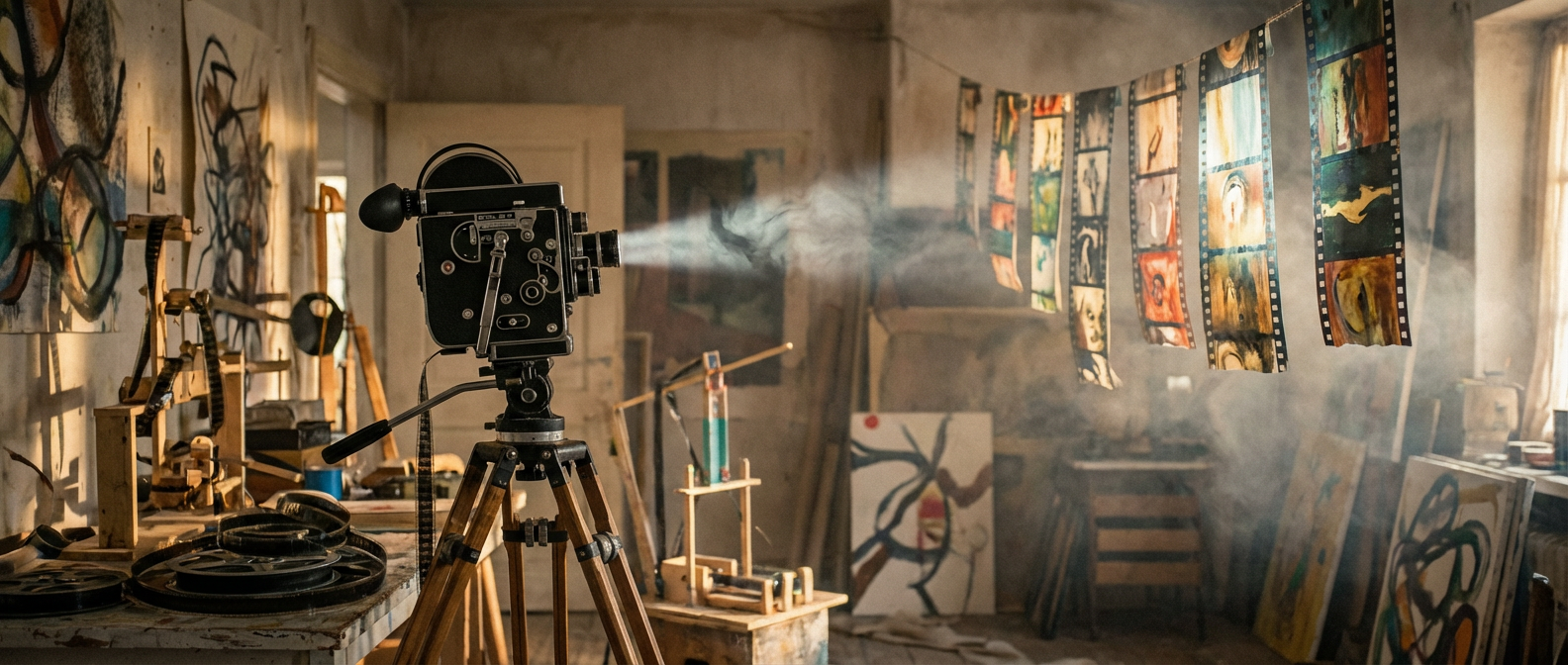
Marina Volkov’s Bushwick studio feels like stepping into a time machine that’s been deliberately sabotaged. Half-developed photographs hang from makeshift clotheslines, their surfaces bearing the chemical burns and light leaks that would send most photographers into fits of rage. But Volkov, perched on a paint-splattered stool amid towers of vintage cameras and bottles of hand-mixed developer, has the quiet satisfaction of someone who has found her medium’s beating heart.

Beneath the Surface: Marina Volkov's Radical Return to Analog Truth
Beneath the Surface: Marina Volkov’s Radical Return to Analog Truth

“Digital photography taught us to fear accidents,” she tells me, gesturing toward a print where an unexpected double exposure has created ghostly figures dancing through what was meant to be a simple portrait. “But accidents are where truth lives. They’re the moments when your ego steps aside and the world speaks directly through the chemistry.”

This philosophy drives Volkov’s latest exhibition “Analog Confessions” at the Lower East Side’s Gallery Provocateur, where her deliberately imperfect photographs challenge our Instagram-conditioned expectations of visual perfection. Each image carries the fingerprints of its creation process, from the subtle grain of pushed film to the organic edges where light crept past damaged camera seals.

The Rebellion Against Digital Sterility

Volkov’s journey back to film began during the pandemic, when she found herself trapped in her apartment with a stockpile of digital files that felt increasingly hollow. “I was looking at thousands of perfectly exposed, technically flawless images on my screen, and I felt nothing,” she recalls. “They were corpses. Beautiful corpses, but corpses nonetheless.”

The breakthrough came when she discovered a box of her grandmother’s old photographs in the basement, images shot on a battered Leica in 1960s Prague. “Every single photo had what digital photographers would call ‘flaws,’ but they pulsed with life. The grain told stories. The slight blur from camera shake revealed the photographer’s excitement or nervousness. These weren’t just pictures. They were emotional archaeology.”

This revelation sparked what Volkov describes as her “analog rebellion.” She began hunting down vintage cameras in varying states of decay, deliberately seeking out equipment that mainstream photographers had discarded. Her arsenal now includes a 1950s Hasselblad with a temperamental shutter, a Polaroid SX-70 held together with electrical tape, and dozens of 35mm cameras rescued from estate sales and thrift shops.

Process as Performance

Watching Volkov work is like witnessing a ritual between artist and medium. She loads each camera with methodical precision, but her shooting style embraces chaos. She’ll deliberately shake the camera during long exposures, expose the same frame multiple times, or develop film in chemistry that’s intentionally past its prime.

“The digital world wants us to believe that more control equals better art,” she explains while mixing developer in her makeshift darkroom. “But control is the enemy of discovery. When I shoot film, especially with these broken cameras, I’m entering into a collaboration with forces beyond my control. The camera’s mechanical quirks, the film’s chemical response, the ambient light, even the humidity in the air become my co-creators.”

Her darkroom technique is equally unconventional. She’ll expose prints under multiple enlargers, create chemical gradients by tilting developer trays, or interrupt the fixing process to create areas of continuing light sensitivity. The results are photographs that seem to breathe, their surfaces alive with the evidence of their creation.

The Politics of Imperfection

For Volkov, analog photography represents more than aesthetic choice. It’s a political statement against the homogenizing forces of digital culture. “Instagram has trained us to see the world through algorithmic filters,” she argues. “Every image gets processed through the same computational logic, flattened into the same visual language. We’re losing our ability to see differently.”

Her photographs resist this flattening through their insistent materiality. Each print exists as a unique object, unreproducible in its specific combination of chemical accidents and physical interventions. When viewed online, they lose crucial qualities, the subtle texture of fiber paper, the way certain areas seem to glow with internal light, the slight dimensional quality created by uneven development.

“Digital photography has become about capturing reality,” she continues. “But I’m not interested in capture. I’m interested in transformation. These photographs don’t document the world. They metabolize it, digest it through chemistry and time and chance, then offer back something that never existed before that moment of creation.”

Future Archaeology

As our conversation winds down, Volkov shows me her latest project: photographs shot entirely on expired film stocks, some dating back to the 1970s. The resulting images carry an otherworldly quality, their colors shifted into impossible spectrums, their contrast pushed to extremes that reveal hidden details while obscuring obvious ones.

“I think of these as photographs from the future’s past,” she muses. “Fifty years from now, when film is completely extinct, these images will be archaeological artifacts from a lost way of seeing. They’ll carry the DNA of their materials, the ghost signatures of chemical processes that no longer exist.”

The exhibition at Gallery Provocateur runs through the end of the month, offering viewers a chance to experience these photographs in their intended form, as physical objects that reward slow, careful attention. Each print invites the kind of sustained looking that our digital age has nearly eradicated, demanding that we slow down enough to notice the thousand small decisions and accidents that brought it into being.

What questions does Volkov’s work raise about our relationship with technology and imperfection? How might embracing analog processes change the way we see and create in our hyperdigital world? Share your thoughts about the role of chance and accident in artistic practice, or tell us about your own experiments with analog media.

The Deliberate Accidents: How Three Masterworks Emerged from Creative Chaos

The Revolutionary Mess of Rothko’s Seagram Murals

Mark Rothko’s commission for the Four Seasons restaurant in the Seagram Building should have been a triumph of modernist integration with corporate architecture. Instead, it became one of art history’s most fascinating creative meltdowns. When Rothko accepted the $35,000 commission in 1958, he intended to create decorative works that would complement fine dining. What emerged were some of the most psychologically devastating paintings of the 20th century.

The Deliberate Accidents: How Three Masterworks Emerged from Creative Chaos

The breakthrough came through Rothko’s methodical destruction of his own assumptions. Working in his Bowery studio, he began experimenting with darker palettes, moving away from his signature floating rectangles toward something more architectural and oppressive. The paintings grew increasingly claustrophobic as Rothko realized he was creating anti-environmental works. These weren’t paintings to dine by. They were meditations on mortality that would make every meal taste like ashes.

The real genius was Rothko’s decision to abandon the commission entirely. After dining at the Four Seasons and witnessing the casual wealth on display, he understood that his paintings would become mere backdrop for exactly the kind of social theater he despised. The refusal transformed the works from commissioned decoration into some of the most powerful statements about art’s relationship to power ever created. The Tate Modern installation of these works today proves Rothko’s instincts correct. They demand contemplation, not conversation over cocktails.

Illustration for The Deliberate Accidents: How Three Masterworks Emerged from Creative Chaos

Cage’s Prepared Piano and the Orchestrated Accident

John Cage’s invention of the prepared piano in the 1940s came from the most mundane problem: a dance recital at Cornish College needed percussion accompaniment, but the hall was too small for a full percussion ensemble. Cage’s solution was to transform the piano itself into a percussion orchestra by inserting screws, bolts, and rubber between the strings. What started as practical problem-solving became a complete reimagining of what musical instruments could be.

The creative process behind works like “Sonatas and Interludes” reveals Cage’s methodical approach to controlled chaos. He spent months experimenting with different objects and placements, creating detailed charts of which preparations produced which sounds. This wasn’t random experimentation but systematic exploration of an entirely new sonic palette. Each preparation was precisely notated, turning the piano into a carefully calibrated machine for producing specific timbres that had never existed before.

The philosophical implications emerged gradually as Cage realized he had fundamentally altered the relationship between composer, performer, and instrument. The prepared piano forced him to abandon traditional Western concepts of harmony and melody, leading directly to his later experiments with chance operations and silence. The physical act of preparation became a meditation on transformation, setting the stage for “4’33″” and his complete break with compositional intention. The prepared piano works show how technical innovation can unlock entirely new aesthetic territories.

Deren’s Meshes and the Grammar of Dreams

Maya Deren’s “Meshes of the Afternoon” came from her collaboration with Alexander Hammid in 1943, but calling it collaboration understates Deren’s revolutionary approach to filmmaking. Working with a 16mm camera in their Hollywood home, Deren developed what would become the visual language of experimental cinema. The film’s dreamlike narrative structure wasn’t born from surrealist theory but from Deren’s anthropological background and her understanding of ritual and myth.

The creative breakthrough came through Deren’s systematic deconstruction of cinematic time and space. She used multiple takes of the same action, shot from different angles and at different speeds, to create a sense of temporal displacement that mirrors the logic of dreams and memory. The famous sequence of the protagonist climbing the stairs exists in multiple temporal states simultaneously, each iteration slightly different, creating a sense of déjà vu that anticipates the film’s circular structure.

Deren’s use of domestic space as a site of psychological transformation was equally radical. The house becomes a character, with rooms that lead impossibly into other spaces, mirrors that reflect different realities, and keys that unlock doors to alternate dimensions. She understood that the familiar could become uncanny through careful manipulation of cinematic grammar. The film’s influence on directors from Lynch to Jarmusch proves that Deren’s innovations weren’t merely experimental but foundational to how we understand cinema’s ability to represent consciousness itself.

The Architecture of Creative Destruction

What unites these three works is their creators’ willingness to systematically destroy their own preconceptions about their mediums. Rothko abandoned the very premise of his commission, Cage physically altered his instrument beyond recognition, and Deren rejected linear narrative in favor of circular, mythic time. Each artist discovered that innovation required not just new techniques but new ways of thinking about what their art forms could accomplish.

The creative processes reveal a pattern: limitation breeds innovation, but only when artists are willing to work against their own expertise. Rothko’s mastery of color relationships allowed him to create paintings that subverted those very relationships. Cage’s deep knowledge of piano technique enabled him to imagine the instrument’s complete transformation. Deren’s understanding of classical narrative structure gave her the foundation to build something entirely different.

These works continue to influence contemporary artists because they demonstrate that true innovation comes not from technical facility alone but from the courage to pursue ideas that initially seem impossible or counterproductive. They remind us that the most important creative breakthroughs often come from the deliberate embrace of productive constraints and the systematic exploration of what happens when familiar materials are pushed beyond their intended uses.

The next time you encounter a work that seems to break every rule you thought governed its medium, consider what systematic destruction might have been necessary to create it. What assumptions did the artist have to abandon? What familiar tools did they have to reimagine? The answers often reveal not just how masterworks are made, but how entire art forms evolve.

The Radical Intimacy of Chantal Akerman: Why Cinema’s Most Uncompromising Voice Still Matters

The Revolutionary Act of Watching Paint Dry

When Chantal Akerman’s “Jeanne Dielman, 23, quai du Commerce, 1080 Bruxelles” premiered at Cannes in 1975, critics didn’t know what to do with its 201 minutes of methodical domesticity. Here was a film that dared to show a woman peeling potatoes in real time, washing dishes with the rhythm of actual labor, existing in the mundane spaces that cinema had always rushed past in montage. The film’s detractors dismissed it as pretentious endurance art. Its defenders hailed it as a masterpiece of feminist cinema. Both camps missed the point entirely.

The Radical Intimacy of Chantal Akerman: Why Cinema's Most Uncompromising Voice Still Matters
The Radical Intimacy of Chantal Akerman: Why Cinema’s Most Uncompromising Voice Still Matters

Akerman wasn’t making a statement about women’s work or patriarchal oppression, though the film certainly contains both. She was performing surgery on the medium itself, exposing how conventional narrative cinema had trained us to consume rather than observe, to seek climax rather than recognize the profound drama already embedded in existence. Every extended shot of Jeanne’s routine becomes a meditation on presence, on the weight of time as it actually unfolds rather than as Hollywood packages it for our convenience.

The film’s genius lies in its refusal to explain itself. Akerman trusts her audience to find meaning in duration, in the accumulation of detail, in the space between actions. When Jeanne’s routine finally breaks down in the film’s final act, the impact hits like an earthquake precisely because we’ve been made complicit in her daily rhythm. We’ve become intimate with her patterns of survival.

Illustration for The Radical Intimacy of Chantal Akerman: Why Cinema's Most Uncompromising Voice Still Matters
Illustration for The Radical Intimacy of Chantal Akerman: Why Cinema’s Most Uncompromising Voice Still Matters

Beyond the European Art House Ghetto

The lazy critical consensus has long positioned Akerman as a European art house curiosity, filing her alongside other “difficult” filmmakers whose work requires patience and cultural literacy. This categorization does violence to her actual achievement. Akerman’s cinema operates on principles that American independent film has spent decades trying to rediscover: the power of constraint, the poetry of limitation, the recognition that innovation often emerges from saying no to established possibility.

Consider her 1977 film “News from Home,” which layers her mother’s letters over footage of New York streets. The film anticipates our contemporary moment’s obsession with distance, displacement, and mediated intimacy by nearly fifty years. Where today’s filmmakers might reach for digital effects or narrative complexity, Akerman achieves profound emotional resonance through the simple juxtaposition of voice and image, presence and absence.

Her influence on contemporary cinema runs deeper than most critics acknowledge. The Criterion Collection’s recent reassessment of her work reveals connections to filmmakers as diverse as Apichatpong Weerasethakul, Céline Sciamma, and even Kelly Reichardt. These directors understand what Akerman pioneered: that cinema’s power lies not in its ability to manufacture excitement, but in its capacity to make visible the invisible rhythms of lived experience.

The Economics of Experimental Intimacy

Akerman’s career illuminates the material conditions that enable experimental cinema to exist. Her early films emerged from a specific moment in European cultural funding when institutions supported artistic risk-taking without demanding immediate commercial returns. This context matters because it shaped not just what she could make, but how she could think about making it.

The contrast with today’s independent film landscape is stark. Contemporary filmmakers working in experimental modes often must navigate grant applications, festival politics, and streaming platform algorithms that reward recognizable categories over genuine innovation. Akerman’s films remind us what becomes possible when artists can work outside these systems of anticipation and reward.

Her later works, including the documentary “No Home Movie” about her relationship with her mother, demonstrate how experimental approaches can illuminate personal history in ways that conventional documentary cannot. The film’s static camera setups and extended conversations create space for the kind of presence that families rarely achieve in life, let alone on screen.

The Politics of Duration

Akerman’s insistence on extended duration functions as both aesthetic choice and political statement. In a media environment increasingly organized around brief attention spans and immediate gratification, her films demand something our culture has nearly forgotten how to give: sustained attention to the present moment.

This isn’t the artificial difficulty that some experimental filmmakers create to signal their seriousness. Akerman’s long takes and real-time sequences work toward specific emotional and intellectual purposes. They force viewers to confront their own relationship to time, to recognize how rarely we actually observe the world without the mediation of narrative expectation.

Her 1993 film “D’Est” follows this logic to its conclusion, presenting a journey across Eastern Europe through a series of long tracking shots and static observations. The film becomes a record of historical transition, but also a meditation on cinema’s capacity to preserve moments that would otherwise disappear into the flow of ordinary time.

Reclaiming the Radical Center

The current moment in independent cinema desperately needs Akerman’s example. Too much contemporary experimental film mistakes obscurity for innovation, preferring puzzle-box narratives and self-conscious technique over the harder work of genuine observation. Akerman shows us that radical cinema doesn’t require abandoning human connection or emotional truth. It requires finding new ways to honor both.

Her films prove that experimental approaches can illuminate rather than obfuscate, that formal innovation works for experience rather than replacing it. This understanding could transform how we think about independent film’s possibilities, moving beyond the false choice between commercial accessibility and artistic integrity.

What would it mean for contemporary filmmakers to embrace Akerman’s radical patience, her willingness to trust both time and audience? How might our understanding of cinema expand if we took seriously her demonstration that profound drama already exists in the world, waiting not to be manufactured but to be revealed? These questions deserve more than academic consideration. They demand the kind of practical engagement that only comes from watching her films with the attention they require and the respect they’ve always deserved.

The Radical Quietude: Why Mono-ha Deserved to Reshape Contemporary Art

The Movement That Whispered While the World Screamed

While the art world fixated on the bombast of Pop Art and the theatrical aggression of Conceptualism in the late 1960s, a group of Japanese artists were orchestrating something far more subversive: a complete rejection of the very premise that art needed to shout to be heard. Mono-ha, which translates roughly to “School of Things,” emerged between 1968 and 1975 as perhaps the most philosophically coherent yet criminally underexamined movement of the postwar era. These artists weren’t interested in making objects so much as revealing the tensions between natural and industrial materials, between human intervention and organic process.

The Radical Quietude: Why Mono-ha Deserved to Reshape Contemporary Art

The movement’s central figures including Lee Ufan, Nobuo Sekine, and Kishio Suga operated from a premise that would make most Western curators break out in hives: the artist’s role wasn’t to impose meaning but to step back and allow materials to speak their own truths. This wasn’t minimalism’s cool intellectualism or Arte Povera’s romantic pastoralism. This was something else entirely, a kind of material phenomenology that predated and arguably surpassed much of what we now celebrate as contemporary practice.

Consider Sekine’s “Phase-Mother Earth” from 1968, where he excavated a perfect cylinder of earth and placed the resulting form beside the void it left behind. The work existed for exactly eighteen days before being filled in, yet its reverberations continue to challenge our assumptions about sculpture, site, and permanence. This wasn’t documentation-dependent ephemeral art, this was a fundamental questioning of what the art object even is.

Illustration for The Radical Quietude: Why Mono-ha Deserved to Reshape Contemporary Art

Eastern Philosophy Meets Industrial Reality

What made Mono-ha genuinely revolutionary was its synthesis of Eastern philosophical traditions with the material realities of Japan’s rapid industrialization. While American artists were either celebrating consumer culture or retreating into the white cube, these Japanese practitioners were grappling with the psychic dislocation of a nation transforming at breakneck speed. They found in raw materials, cotton, steel, stone, glass, a language for experiences that existing artistic vocabularies couldn’t contain.

Lee Ufan’s “Relatum” series gets at this with devastating clarity. By placing industrial steel plates against natural stones, he created configurations that were neither sculpture nor installation but something between meditation and confrontation. The works required viewers to slow down, to notice the subtle ways materials influenced each other across space. There was nothing to decode, no hidden symbolism to unpack, just the direct encounter between human consciousness and material reality.

This philosophical foundation separated Mono-ha from its Western contemporaries in key ways. Where Minimalism often felt like a cerebral exercise in reduction, Mono-ha emerged from lived experience with impermanence and interdependence. The artists weren’t trying to create timeless objects, they were exploring how materials change, age, and interact over time. Suga’s rope and wood constructions, for instance, deliberately incorporated tension and release, allowing gravity and material properties to determine final forms.

The Western Blind Spot

The art world’s failure to properly contextualize Mono-ha is one of the most glaring blind spots in postwar criticism. While galleries and museums rushed to canonize Earth Art and Process Art, they consistently relegated Mono-ha to the margins, treating it as a regional curiosity rather than a major international development. This wasn’t merely cultural bias, though that certainly played a role, but a fundamental inability to recognize artistic innovation that didn’t conform to Western narrative structures.

Part of the problem was timing. Mono-ha emerged just as the New York art world was consolidating its global dominance, creating institutional frameworks that favored certain kinds of artistic discourse over others. The movement’s resistance to commodification, its emphasis on temporary configurations rather than collectible objects, and its philosophical complexity made it difficult to integrate into existing market and critical structures. Unlike Land Art, which could be photographed and mythologized, or Conceptual Art, which translated readily into gallery contexts, Mono-ha required a different kind of attention.

The language barrier was real but not insurmountable. More problematic was the Western art world’s investment in narratives of artistic rebellion and individual genius that simply didn’t map onto Mono-ha’s collaborative, process-oriented approach. These artists weren’t trying to shock or provoke, they were investigating fundamental questions about perception, materiality, and human relationship to environment. That such investigations were happening through art rather than philosophy or science apparently confused critics who expected clearer categorical boundaries.

Contemporary Reverberations and Recognition

Today’s renewed interest in Mono-ha isn’t simply historical revisionism. As contemporary artists grapple with environmental crisis, digital alienation, and the commodification of experience, Mono-ha’s approaches feel prophetic rather than dated. Artists like Danh Vo, Tino Sehgal, and Jimmie Durham have rediscovered material strategies that Mono-ha pioneered five decades ago, though few acknowledge the debt directly.

The 2012 “Mono-ha” exhibition at The Guggenheim was a watershed moment in Western recognition, but even this belated acknowledgment felt incomplete. The museum’s presentation, while respectful, couldn’t fully convey the radical nature of works designed to resist institutional framing. Seeing Mono-ha in a white cube was like hearing jazz in a concert hall, better than nothing, but missing essential contextual elements.

What’s most frustrating is how thoroughly Mono-ha anticipated concerns that now dominate contemporary discourse. Their investigation of industrial materials’ psychological effects, their interest in impermanence and change, their rejection of the artist as authoritative interpreter, all of these approaches feel startlingly relevant to current artistic practice. Yet because the movement was marginalized during its initial emergence, we’re forced to rediscover insights that could have been shaping artistic development for generations.

Reclaiming Overlooked Territories

Mono-ha’s example reveals the ongoing costs of cultural myopia in artistic evaluation. When we favor certain geographical centers and critical frameworks, we don’t just miss individual artists or works, we lose entire ways of thinking about what art can be and do. The movement’s emphasis on material relationships, temporal process, and philosophical inquiry is a road not taken in postwar art development, one that might have led to very different contemporary landscapes.

The movement’s practitioners understood something that many Western contemporaries missed: that the most profound artistic statements often emerge not from dramatic gestures but from careful attention to how things already are. By working with rather than against material properties, by embracing rather than fighting impermanence, they developed approaches that feel both timeless and urgently contemporary.

Understanding Mono-ha properly requires more than adding a few names to art history survey courses. It demands a fundamental reconsideration of how we evaluate artistic significance, a willingness to recognize that the most important developments don’t always happen where we’re looking. The movement’s legacy isn’t just historical but methodological, offering tools for approaching contemporary practice with the kind of philosophical rigor and material sensitivity that our current moment desperately needs. What other overlooked territories might yield similar revelations if we could learn to see past our inherited blind spots?

The Invisible Hand That Shapes What We See: How Gallery Politics Really Work

The Myth of Neutral Spaces

Walk into any contemporary art gallery and you’re immediately confronted with a carefully orchestrated fiction: that these pristine white walls represent neutral territory where art speaks for itself. This notion, perpetuated by decades of institutional marketing and critical complacency, misunderstands how cultural meaning gets made. Every exhibition is a political act, every wall text a manifesto, every curatorial decision a power play in an elaborate game most visitors never realize they’re witnessing.

The gallery system operates through what I call “invisible curation” – the countless behind-the-scenes negotiations, financial pressures, and ideological alignments that determine which artists get seen and which voices get amplified. When Gagosian shows a Koons retrospective alongside a carefully selected emerging artist, that juxtaposition isn’t accidental. It’s a calculated statement about artistic lineage, market positioning, and cultural authority that shapes how both artists will be understood by collectors, critics, and the public.

This dynamic becomes particularly troubling when galleries present themselves as discoverers of talent while operating within rigid economic and aesthetic frameworks. The “discovery” narrative obscures the reality that most gallery decisions flow from pre-existing relationships with collectors, secondary market considerations, and institutional partnerships that have little to do with artistic merit.

The Collector-Curator Complex

The political machinery of contemporary art is most visible in the relationship between major collectors and curatorial programming. The influence operates on multiple levels, from direct board positions at major institutions to more subtle forms of cultural capital exchange. When François Pinault’s collection shapes programming at the Palazzo Grassi, or when Eli Broad’s holdings find their way into LACMA exhibitions, we’re watching private taste transform into public cultural authority.

This isn’t simply about wealthy individuals buying their way into cultural relevance. The more sophisticated dynamic involves collectors who understand that cultural legitimacy enhances economic value, creating feedback loops where curatorial validation increases market prices, which in turn funds more ambitious collecting, which enables greater institutional influence. The result is a system where aesthetic judgments become inseparable from economic calculations.

Consider how this plays out in individual artists’ careers. A young painter might create work that challenges prevailing market tastes, but if that work can’t find collector support, it struggles to gain gallery representation, which limits museum visibility, which affects critical attention, which shapes art historical narratives. The most radical artistic gesture becomes meaningless if it can’t navigate these economic realities.

Regional Hierarchies and Geographic Politics

The contemporary art world maintains a sophisticated hierarchy of geographic legitimacy that shapes which artists and movements gain international recognition. New York and London still function as primary validators, with Berlin, Los Angeles, and a handful of other cities acting as important but secondary nodes. This system creates what amounts to cultural imperialism, where artistic practices from peripheral regions must be translated into the aesthetic vocabularies of dominant centers to achieve broader recognition.

The biennial circuit has complicated but not changed these dynamics. While events like the Venice Biennale or Documenta create platforms for non-Western artists, they often do so within curatorial frameworks developed in dominant art centers. The result is a kind of cultural ventriloquism where diverse artistic practices get filtered through institutional structures that may be incompatible with their original contexts.

Regional galleries face impossible choices: maintain local relevance while risking international invisibility, or adapt to global market demands while potentially betraying their immediate communities. The most successful navigate this tension by developing relationships with traveling curators and international collectors, but this strategy inevitably shapes their programming in ways that may not help local artistic ecosystems.

The Critical Apparatus and Institutional Memory

Art criticism, despite its pretensions to independence, operates as a component of gallery politics rather than external commentary upon it. The relationship between critics, galleries, and institutions creates a complex ecosystem where aesthetic judgments, career advancement, and cultural authority intersect in ways that compromise traditional notions of critical distance.

The decline of traditional art journalism has concentrated critical power in fewer hands while making critics more dependent on institutional access. When major galleries control advertising revenue for art publications, and when museum positions offer more financial security than freelance writing, the potential for genuine critical independence diminishes. The result is a critical discourse that tends toward diplomatic consensus rather than genuine intellectual conflict.

This dynamic becomes particularly problematic when dealing with historically marginalized artists or movements. The art world’s recent embrace of previously overlooked voices often occurs through the same institutional mechanisms that originally excluded them. While this creates opportunities for visibility, it also means that radical artistic practices get absorbed into systems they may have been designed to critique. The question becomes whether institutional recognition represents genuine progress or sophisticated co-optation.

Beyond the White Cube

Understanding gallery politics isn’t about cynical dismissal of the art world’s power structures, but rather about developing more sophisticated ways of seeing and interpreting contemporary artistic practice. When we recognize how economic pressures, institutional relationships, and cultural hierarchies shape what gets exhibited, we become better equipped to identify genuine innovation and resist lazy critical consensus.

The most interesting contemporary artists are often those who find ways to work within these systems while maintaining critical distance from them. They understand that complete rejection of institutional structures often leads to irrelevance, while uncritical embrace leads to co-optation. The challenge lies in finding strategies that allow for genuine artistic development while navigating inevitable political pressures.

This awareness should make us more, not less, invested in contemporary art. When we understand the complex negotiations that bring work into public view, we can better appreciate both the achievements and limitations of what we’re seeing. The goal isn’t to achieve some impossible critical purity, but to develop more nuanced ways of understanding how cultural meaning gets made in our particular historical moment.