Walk into any major art fair right now and you’ll feel it before you can name it. The scale has swollen. The canvases are bigger, the palettes more ingratiating, the gestures smoother. It’s not a conspiracy. It’s just gravity—the slow, irresistible pull of serious money. Collector cash doesn’t just buy paintings. It buys the direction painting takes.
For decades, we’ve told the story of contemporary painting as a story of artists and their visions. That’s a comforting tale. But look at the actual landscape of the last fifteen years and a different plot emerges, one where the unspoken preferences of a few hundred ultra-wealthy individuals and their private institutions have quietly redrawn the boundaries of what gets made, shown, and celebrated. This isn’t about overt censorship. It’s about incentive. And right now, the incentives overwhelmingly reward the decorative, the monumental, and the instantly legible.
The New Patronage: From Medici to Market Signals
Patronage is as old as art. The Medici didn’t just buy paintings; they shaped the Florentine Renaissance by deciding who got the commissions, the studio space, the social access. Today’s patrons operate differently. They rarely commission directly. Instead, they signal through acquisitions, auction bids, and the soft power of their private museums. When a cluster of mega-collectors starts buying a certain kind of painting—large, abstract, polite enough to hang above a designer sofa—the market snaps to attention. Galleries adjust their rosters. Artists, consciously or not, adjust their work.
The difference now is speed. Medici taste trickled down over generations. Today, a single auction season can reroute a career. When a young painter’s work hits a record at Christie’s or Phillips, the aesthetic impact is immediate. Dealers push for more of the same. Collectors ask for “something like that one.” The artist, suddenly facing a global audience and a waiting list, often doubles down on the formula that sold. What emerges is a feedback loop where market success narrows the range of what’s made, rather than expanding it.
Bigger Walls, Bigger Paintings
Step into any blue-chip gallery or the painting section of Art Basel and you’ll notice a physical fact: the works are enormous. Ten feet wide. Twelve. Fifteen. This isn’t just ambition. It’s a direct response to the spaces these paintings are destined for—the double-height foyers of private museums, the glass-walled living rooms of new-build mansions, the corporate lobbies of tech headquarters. A painting has to command a wall, and these walls are vast.
But not every artistic idea scales. Some of the most compelling painting of the last century was intimate—Morandi’s quiet bottles, Gwen John’s hushed interiors, Forrest Bess’s weird little visions. Those works asked you to lean in, to spend time, to look closely. Today’s mega-canvases ask for something else: to be seen from across a room, to register in a glance, to photograph well for Instagram. The demand for scale pushes painters toward bold, graphic compositions and away from subtlety. It rewards the declarative over the exploratory.
None of this means large paintings can’t be great. They can. But when size becomes a default requirement for market viability, it warps the ecology. Mid-career painters who once worked at a human scale suddenly inflate their canvases. Emerging artists see the path to representation and stretch bigger supports. What we get is a kind of gigantism that has less to do with vision than with real estate.
The Signature Style Trap
Collectors buy brands. This is as true for art as it is for handbags. A painter who develops a recognizable style—a particular palette, a recurring motif, a consistent mark—becomes legible to the market. Galleries can sell the work more easily. Auction houses can catalogue it with confidence. The artist becomes a known quantity, and known quantities are safer investments.
The pressure to maintain that signature is immense. An artist who shifts direction risks alienating the collectors who bought the earlier work. Dealers may quietly discourage experimentation. The secondary market punishes inconsistency. So painters often find themselves locked into a mode they developed in their late twenties or early thirties, repeating it with minor variations for decades. The work becomes product. It may be beautiful product, skillfully made, but it’s product nonetheless.
Look at the trajectory of many successful painters. Early work is raw, searching, uneven. Then comes a breakthrough—a body of work that attracts critical and commercial attention. After that, the edges smooth. The palette stabilizes. The compositions become more predictable. The artist has found a market, and the market has found its artist. What gets lost is the possibility of genuine surprise, the kind of rupture that makes painting matter as more than decoration.
The Consultant Class
Behind many major collections stands an art advisor. These professionals, often with backgrounds in art history or gallery work, guide wealthy clients through the opaque terrain of the contemporary market. Their role is ostensibly educational, but in practice it’s often curatorial. They shape collections, and by extension, they shape demand. An advisor who champions a particular painter can redirect significant capital. A negative word can freeze a career.
Advisors tend to favor work that’s easy to explain and easy to place. They need to justify their choices to clients who may not have deep art knowledge. So they gravitate toward paintings with clear conceptual hooks, recognizable styles, and strong market track records. Work that’s difficult, ambiguous, or formally challenging is harder to sell. The result is a feedback loop that privileges the legible over the complex.
This dynamic is especially visible in abstract painting. The most market-friendly abstraction today tends to be what you might call “polite abstraction”—work that nods to modernist history without its difficulty, that offers visual pleasure without demanding too much in return. It looks good above a sofa. It doesn’t keep you up at night. For advisors, this is an easy recommendation. For painting as a medium, it’s a narrowing of possibility.
The Auction House Effect
Auction houses aren’t neutral platforms. They’re active market-makers. Their evening sales are theatrical events designed to generate headlines and establish price benchmarks. When a painting sells for a record sum, it sends a signal that ripples through the entire ecosystem. Galleries raise prices for similar work. Collectors feel validated. Other artists in the same vein see their stock rise.
The auction houses also shape taste through their curation of sales. They decide which artists get the prime lots, which works are featured in previews, which names are promoted to top clients. These decisions are driven by a mix of market knowledge and strategic positioning. The goal is to maximize revenue, but the side effect is to concentrate attention on a narrow band of artists and styles. The auction calendar becomes a kind of tastemaker, elevating some painters and ignoring others.
For painters, the auction market is a double-edged sword. A strong result can transform a career overnight. But it also locks the artist into a price bracket that may be difficult to sustain. If the next body of work doesn’t perform as well, the market can turn quickly. The pressure to maintain auction momentum pushes artists toward safer, more market-tested approaches. Experimentation becomes a financial risk.
Private Museums and the New Geography of Display
The past two decades have seen an explosion of private museums—single-collector institutions that rival public museums in scale and ambition. From The Broad in Los Angeles to the Rubell Museum in Miami, these spaces have become major players in the art world. They lend works to exhibitions, publish catalogues, and host events. They also shape the canon. When a private museum devotes a wing to a particular painter, it confers a level of legitimacy that public institutions may later endorse.
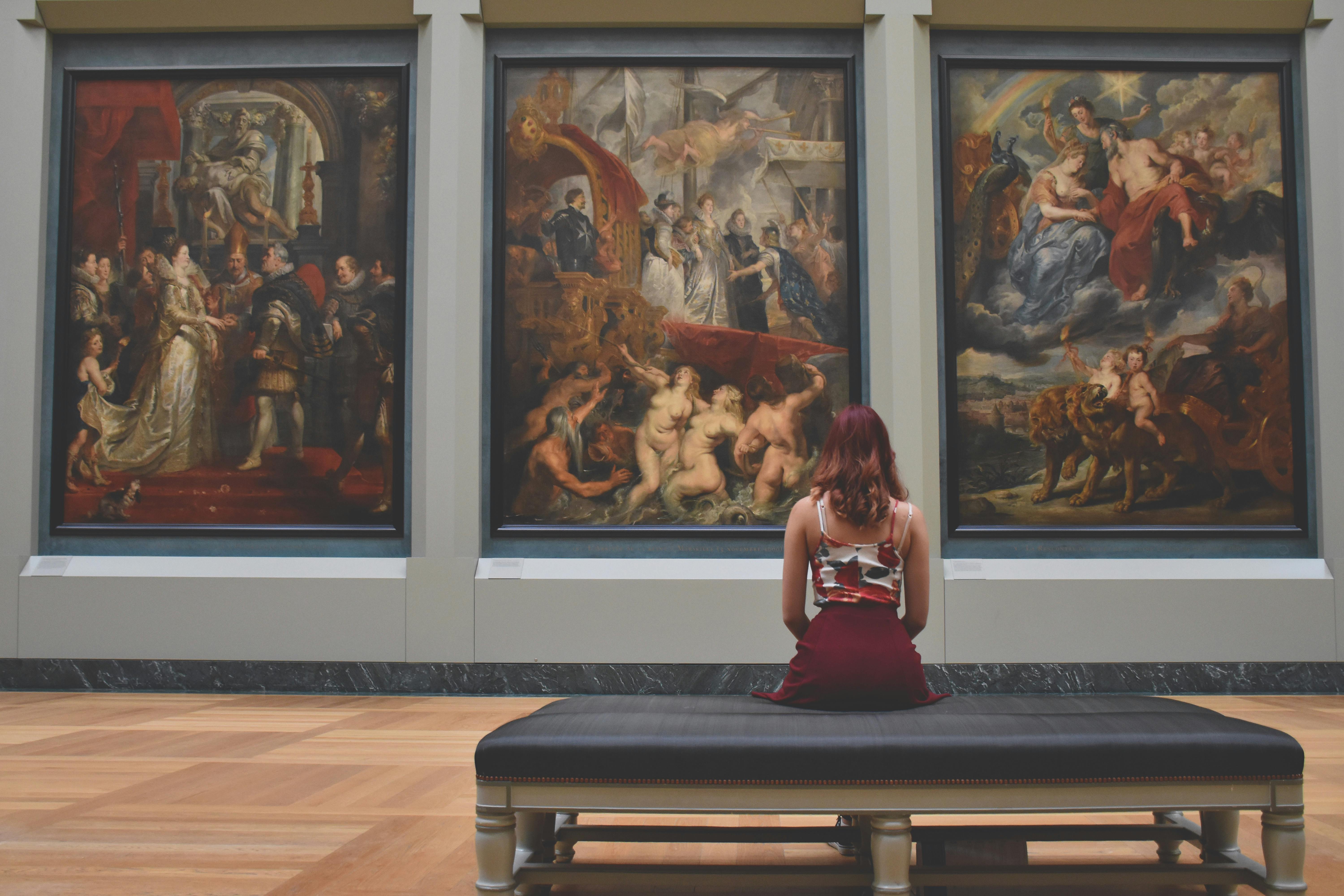
But private museums have their own logic. They’re extensions of their founders’ tastes and egos. They tend to favor work that’s spectacular, immersive, and photogenic—the kind of painting that fills a large gallery and impresses visitors. Intimate, quiet, or difficult work is less likely to find a home in these spaces. The architecture of display shapes the art that’s made for it. Painters who want to be collected by these institutions must think in terms of installation shots and visitor flow.
This isn’t inherently bad. Some of the most exciting painting of recent years has been made for these spaces. But it’s a specific kind of painting, and its dominance can crowd out other modes. The private museum boom has tilted the field toward the theatrical and away from the contemplative. It has made painting a form of spectacle, and spectacle has its own demands.
What Gets Lost: The Space for Failure
Great painting has always required room to fail. The studio is a laboratory, and most experiments don’t work. Artists need time to make bad paintings, to follow dead ends, to circle back and start again. The market, by contrast, has no patience for failure. It wants product. It wants consistency. It wants the next thing that looks like the last thing that sold.
When collector money floods into a painter’s career too early, it can short-circuit this process. The artist is pulled out of the studio and into the production line. Assistants are hired. Deadlines multiply. The work becomes a response to demand rather than an exploration of possibility. The paintings may be competent, even impressive, but they lack the depth that comes from sustained, unpressured inquiry.
Some artists resist. They turn down gallery offers, keep their studios small, refuse to scale up. But resistance is costly. It means forgoing income, visibility, and institutional support. For every painter who manages to protect their practice from market pressures, there are dozens who can’t. The system isn’t designed to nurture artistic development. It’s designed to extract value. And value, in this context, means paintings that sell.
Is There a Way Out?
The relationship between money and painting isn’t going anywhere. Art has always been a commodity as well as a calling. The question is whether the current balance can be adjusted—whether there are ways to support painters that don’t also constrain them. Some models exist. Artist-endowed foundations, residencies with no production requirements, collector groups that fund experimentation without demanding output. These are small-scale solutions, but they point toward a different kind of patronage, one that values process as much as product.
Critics and curators also have a role to play. They can champion work that doesn’t fit the market mold. They can write about painters who aren’t yet auction stars. They can build alternative narratives that value difficulty, slowness, and idiosyncrasy. The market listens to critics more than it admits. A well-argued essay can shift perception. A museum show can rewrite an artist’s trajectory. These are soft powers, but they’re real.

Ultimately, the health of painting depends on a diversity of voices and a diversity of support structures. When all the money comes from the same sources and flows toward the same kinds of work, the medium suffers. The challenge isn’t to eliminate collector influence—that’s impossible and probably undesirable—but to balance it with other forces. Public funding, critical discourse, artist-run spaces, and a culture that values risk. Without these counterweights, painting becomes what the market wants it to be: a luxury good, polished and predictable, beautiful and safe.
Frequently Asked Questions
How does collector money actually change what artists paint?
Collector influence operates through a chain of incentives. When certain styles, sizes, or subjects sell well, galleries encourage their artists to produce similar work. Artists, seeing a path to financial stability, often comply. Over time, this narrows the range of what is made and shown. The effect is not direct censorship but a gradual shaping of artistic choices through market signals.
Are large paintings inherently less serious than small ones?
Not at all. Scale is a tool, and many artists use it brilliantly. The problem arises when large scale becomes a market requirement rather than an artistic decision. When painters feel they must work big to be competitive, the medium loses the intimacy and focus that smaller works can provide. The issue is not size itself but the pressure to conform to a market-driven standard.
Can an artist succeed today without catering to collector tastes?
It is possible but difficult. Some artists build careers through critical acclaim, institutional support, and a slow-burn collector base that values their independence. Others find niches outside the mainstream market—through public commissions, teaching, or alternative funding models. The path is harder, but it exists. The artists who manage it often produce the most enduring work.
What role do art advisors play in shaping contemporary painting?
Art advisors act as intermediaries between wealthy collectors and the art market. They guide purchasing decisions, often steering clients toward work that is easy to understand, place, and resell. This tends to favor painting with clear conceptual hooks and strong market track records. Advisors thus amplify the market’s preference for legible, investment-grade work over more challenging or experimental painting.