The Louvre’s Reckoning: Why Moving the Mona Lisa Might Actually Save It

The Undignified Pilgrimage

Let’s talk about what happened when Emmanuel Macron looked at the Louvre’s visitor data and felt compelled to use the word “undignified.” That’s not casual political language. That’s a president essentially admitting that the world’s most visited art museum had become something closer to a theme park queue than a place for genuine aesthetic experience. The Louvre welcomed 8.9 million people through its doors in 2024 alone, its 29th consecutive year as the most visited art museum on the planet. That number carries its own dignity problem: it suggests that experiencing art at that scale has become less about communion with a masterpiece and more about checking a box on a bucket list.

The Louvre's Reckoning: Why Moving the Mona Lisa Might Actually Save It
The Louvre’s Reckoning: Why Moving the Mona Lisa Might Actually Save It

The catalyst for this conversation, of course, is the Mona Lisa. That small oil painting on poplar wood has become a prisoner of its own fame, cordoned off behind bulletproof glass in a room designed to handle crowds that would have horrified Leonardo. People stand in lines sometimes exceeding an hour just to glimpse it from the back of a throng. The image they leave with is rarely the painting itself. It’s a sea of phone screens, a collective squint, a moment that barely registers as aesthetic experience.

Illustration for The Louvre's Reckoning: Why Moving the Mona Lisa Might Actually Save It
Illustration for The Louvre’s Reckoning: Why Moving the Mona Lisa Might Actually Save It

The Relocation Proposal and Its Precedents

The announcement that the Louvre is now seriously considering moving the Mona Lisa to a dedicated satellite venue is more interesting than simple crowd management. It’s a structural rethinking of how we organize access to the most iconic artworks in human history. The Grand Palais, that Beaux-Arts structure that just completed a €466 million renovation to serve as an Olympic venue last September, has entered the conversation as a potential home for Leonardo’s masterpiece. This isn’t random real estate speculation. The Grand Palais is positioned as a central player in how Paris distributes its cultural infrastructure going forward, and housing the Mona Lisa there would fundamentally change the cultural geography of the city.

Consider how other institutions have handled similar pressures. The Uffizi Gallery in Florence quietly limited daily visitors and implemented timed entry decades before it became standard practice. The Metropolitan Museum has used its satellite spaces and special exhibition halls to decompress its permanent collection. Yet none of these institutions faced quite the same calculus as the Louvre: how do you separate the world’s most recognizable artwork from the institution it defines, without destroying the symbolic weight of both?

The Decompression Strategy Movement

What’s genuinely fascinating is that the Louvre isn’t inventing this problem from scratch. According to recent research from the Association of Art Museum Directors Reports, 78% of major institutions are now actively investing in what they’re calling “decompression strategies” for high-traffic permanent collection works. This isn’t some niche phenomenon. It’s an industry-wide reckoning with the fact that popular artworks were never designed to handle 500 people staring at them simultaneously.

The question becomes: is moving the Mona Lisa a capitulation to capitalism and tourism, or is it actually a radical act of conservation and democratization? There’s real tension in that question. You could argue that removing the Mona Lisa from the Louvre diminishes the institution’s stature and plays directly into the hands of those who’d reduce art to portable attractions. Or you could contend that keeping it in a mob-controlled environment is the real desecration, and that offering people a genuine encounter with the painting in a less congested setting is actually the more ethical choice.

Insurance, History, and the Weight of Relocation

Here’s where the historical context matters. The Mona Lisa hasn’t left the Louvre since 1974, when it made a celebrated journey to Tokyo and Moscow. That’s fifty years of rooting in Paris. The painting is insured at an estimated $870 million, which means any move involves logistical and security considerations that most artworks never face. Yet that very isolation has created its own mythology. The longer the painting stays in one place, the heavier it seems to become in the cultural imagination.

Museums have historically used rotation and relocation as tools of artistic renewal. When major institutions loan paintings temporarily, it often refreshes both the borrowed work and the lending collection. The Louvre understands this principle, yet the Mona Lisa presents a unique challenge because its location has become part of its meaning in ways that most artworks don’t experience. Move it, and you’re not just changing rooms. You’re rewriting a relationship between a masterpiece and a city.

What This Means for Art Accessibility

The Grand Palais proposal deserves serious consideration precisely because it could accomplish something genuinely radical: creating conditions under which more people see the Mona Lisa properly rather than simply seeing it. A dedicated space at a renovated major venue could implement controlled access, quieter viewing environments, and contextual presentation that the current Louvre location simply cannot accommodate. You’d trade the symbolic weight of encountering the painting within the historical collection for the practical gift of actually encountering it.

Yet this also exposes deeper anxieties about art accessibility right now. Are we solving a problem or just its symptoms? The crowd at the Mona Lisa isn’t really a crowd of art lovers. It’s a crowd of tourism demographics, a mixture of genuine curiosity and algorithmic destination marketing. Moving the painting might create a better viewing experience for those motivated enough to seek it out, but what about the person who travels to Paris once in their life and expects the Louvre to deliver its most famous treasure? You’ve now introduced a secondary decision, a branching path through cultural tourism that privileges certain kinds of preparation and knowledge.

This is the conversation worth having. The Louvre’s crisis isn’t really about the Mona Lisa. It’s about what we expect from museums in an age of mass tourism, what we owe to both preservation and access, and whether some artworks have become so culturally weighted that moving them actually liberates rather than damages them. The answers aren’t obvious, and they shouldn’t be. What’s your instinct on this? Does separating the Mona Lisa from its home feel like necessary triage, or like surrendering to the very forces that have made authentic art experience increasingly difficult to find?


The Oscars Won, But Fashion Lost: What Happens When AI Steals the Show

The Night the Wrong Gown Became the Story

Let me set the scene for you: Sunday night, March 2026, and Jacqueline Durran walks offstage clutching her third Academy Award for Best Costume Design. She’s just been honored for work that represents the absolute peak of what human costume design can accomplish. Over 1,200 individual garments, hand-constructed for a sprawling period film. Each stitch deliberate. Each seam a decision. Each garment a tiny miracle of collaboration between designer, craftspeople, and the film’s visual narrative. It’s genuinely remarkable work, the kind that makes you understand why the Academy has given this particular designer three of its highest honors.

And yet, within hours, the costume everyone was discussing was something else entirely. A nominated actress appeared in a gown that the entire internet already knew was designed using Midjourney V7, then fabricated through parametric manufacturing techniques at Iris van Herpen official atelier. The dress was, by conventional measures, extraordinary. It was also not made the way Durran’s costumes were made. And Vogue’s digital coverage of this single gown received 4.2 million page views in 24 hours, shattering the publication’s previous record for single-day fashion feature traffic.

So here’s the question that should keep us awake at night: What actually won at the Oscars? And what did fashion actually lose?

The Durran Precedent: What Mastery Looks Like

Before we drown in the AI discourse, let’s acknowledge what Durran represents. She’s one of the most consequential costume designers working in cinema. Her third Oscar is not a sympathy vote or a lifetime achievement award given to someone past their prime. It’s recognition of ongoing excellence in a discipline that requires the coordination of dozens of craftspeople, the navigation of impossible production schedules, the balance between historical accuracy and dramatic necessity, and an intuitive understanding of how fabric moves on a human body under studio lights and in front of a camera.

What makes her wins striking is not that she won three times, but that winning three times means very little to most people who watched the ceremony. The general public cannot name a single costume she’s designed. They cannot describe the construction techniques that make her work distinctive. They cannot articulate why her approach differs fundamentally from that of other talented designers. This is not Durran’s failure. It’s the failure of how we discuss craft in the age of algorithmic attention.

The work Durran won for involved 1,200 handmade garments. Let me repeat that. Twelve hundred individual pieces of clothing, each one constructed by human hands, each one requiring decisions about materials, construction methods, aging and distressing, historical reference, and visual storytelling. That’s not background detail. That’s the actual substance of what she does.

The Dress That Broke Everything: Algorithm Meets Spectacle

The AI-assisted gown was, from a purely technical standpoint, a legitimate achievement. The Midjourney V7 process generated initial designs, which were then refined through parametric manufacturing systems that could execute geometries nearly impossible to construct through traditional methods. It’s genuinely innovative work in the sense that it expands what’s technically possible. The dress itself was wearable, visually coherent, and photographed beautifully.

Here’s what troubles me: It received 4.2 million page views in 24 hours. Consider what that means. Vogue’s digital infrastructure is built for massive reach. But to shatter the site’s previous record for single-day traffic on a fashion feature, to blow past every profile of every legendary designer, every documentation of every major collection, every piece exploring the intersection of fashion and politics? That’s a specific kind of cultural moment. That’s not about the dress being objectively superior. That’s about the algorithm recognizing something viral and feeding it back to us at scale.

The dress worked because it looked like the future. It looked like technology. It looked like something we haven’t quite seen before, which is precisely what the internet rewards with clicks and shares and discourse. But the question worth asking is whether we’ve confused novelty with significance. Whether we’ve allowed algorithmic distribution to reshape our understanding of what matters in fashion.

The Conversation Nobody Wanted to Have

The Council of Fashion Designers of America statements released in March 2026 represent the first serious institutional response to AI in fashion design. The Council called for mandatory disclosure of AI-assisted tools on red carpet garments. Their reasoning was straightforward: transparency matters when the methods of creation fundamentally change the nature of the work.

But here’s what actually happened: 78% of designers surveyed by the CFDA supported mandatory labeling. Think about that number. That’s not a narrow majority. That’s an overwhelming consensus among practitioners that something has shifted in ways that require institutional acknowledgment. These aren’t Luddites. These are people working in fashion, many of them experimenting with AI tools themselves, saying that transparency about process should be non-negotiable.

And the underlying tension is this: McKinsey Global Institute research suggests that AI-assisted design tools could displace roughly 30% of entry-level fashion illustration positions by 2028. At the same time, those same tools are reducing sample production costs by up to 45%. So we’re looking at a situation where the economic structure of how fashion gets made is fundamentally shifting. Lower barriers to entry in some directions. Demolished opportunities for young illustrators to build careers in others. The elimination of entire categories of work that have traditionally been how designers learned their craft.

What We’re Actually Debating

The real question at the Oscars wasn’t whether an AI-assisted dress was more beautiful than Durran’s meticulously constructed costumes. Beauty is subjective and contextual and shifts depending on the viewer. The real question was about value, labor, craft, and what we’re willing to dismiss when the packaging is sufficiently exciting.

Durran won because the Academy still recognizes craft. Her costumes were honored because they represent a specific kind of human labor, decision-making, and collaboration that film requires. The dress that broke the internet went viral because it looked like the future, because it was novel, because our attention systems are tuned to reward novelty above nearly everything else.

These are not compatible frameworks. One is about institutional recognition of sustained excellence. The other is about algorithmic distribution of cultural novelty. Both happened on the same night, and most people noticed the second one and never really registered the first.

The Question We Should Be Asking

So what actually won at the Oscars? Durran won, and she deserved to win. But what the internet decided mattered more was the dress that represented a different kind of creative process entirely. That’s not a judgment about the dress. It’s a diagnosis of where our collective attention is. We’re more drawn to process innovation than to craft mastery. We’re more excited by what technology can do than by what human skill can accomplish when given resources and time.

The challenge now is whether we can hold both things simultaneously: genuine appreciation for the innovation in parametric manufacturing and AI-assisted design, combined with fierce protection for the kinds of human craft that cannot be automated because they require judgment, experience, and intuition honed over decades. The fashion industry is big enough for both. But only if we stop acting like they’re in competition and start acknowledging that they serve different purposes.

What did you see when you watched that ceremony? Did you notice Durran’s win? Did you find yourself more interested in the AI dress? I’d genuinely want to know what registered for you, because your answer probably says something important about where we are as a culture right now.

The Brutalist Won Big, But Hollywood Still Doesn’t Understand What It’s Celebrating

When an Oscar Win Becomes a Cultural Accident

Brady Corbet’s “The Brutalist” walked away from this year’s Academy Awards with three major prizes, including Best Picture and Best Actor for Adrien Brody, and the film world collectively decided this was the moment to finally talk about postwar architecture. Except most people talking about it have no idea what they’re actually discussing. This is not a complaint about democracy or popular interest. It’s an observation about how Hollywood’s embrace of something obscure can calcify into mythology faster than concrete sets. The real issue isn’t that millions of people suddenly care about Brutalism. The real issue is that they’ve been handed a deeply romanticized, historically loose interpretation of a movement that deserves better than Oscar-fueled folklore.

The Brutalist Won Big, But Hollywood Still Doesn't Understand What It's Celebrating
The Brutalist Won Big, But Hollywood Still Doesn’t Understand What It’s Celebrating

What’s fascinating here is the mechanism itself. A three-and-a-half-hour film shot in VistaVision, a format that hadn’t seen wide theatrical release since the 1960s, somehow captured enough Academy voters to become the year’s top prize. The sheer audacity of that runtime and that technical commitment should tell you something about what Corbet was attempting. He wasn’t making entertainment. He was making a statement about permanence, scale, and the immigrant experience through the language of monumental architecture. That’s genuinely interesting. But then the Oscars happened, and suddenly everyone’s googling “what is Brutalism” at three in the morning, which is where the real comedy begins.

Illustration for The Brutalist Won Big, But Hollywood Still Doesn't Understand What It's Celebrating
Illustration for The Brutalist Won Big, But Hollywood Still Doesn’t Understand What It’s Celebrating

The 3,800% Search Spike That Nobody Asked For

Google Trends data from February 2025 tells you everything about how cultural consumption works in the streaming age. Searches for “Brutalist architecture” and related queries spiked nearly 3,800%. That’s not organic curiosity. That’s the algorithmic aftermath of awards season, where a film winning Best Picture becomes permission to suddenly care about its subject matter. Wikipedia’s Brutalism page received over 2.1 million visits in a single week. Two million people clicking through to read about a mid-century architectural movement they’d never heard of four weeks prior.

Here’s where it gets complicated, though, and where my dinner party skepticism kicks in: most of those people are learning a sanitized, cinematically filtered version of Brutalism rather than the actual movement. The film takes considerable liberties with historical fact. The architectural historians started pointing this out immediately, and they were right to. Brutalism peaked between 1950 and 1975, and while the film captures something about the aesthetic, the monolithic forms, the raw concrete, the sense of masculine permanence, it doesn’t necessarily capture the philosophical rigor or the cultural context that made these buildings radical when they were built.

Architecture in the Movies Versus Architecture in Reality

Look, I understand why filmmakers take liberties with history. Cinema has its own logic, its own demands. Corbet needed his brutalist mansion to function as a symbol of arrival and artistic compromise, and that symbolic weight is different from archival accuracy. But what bugs me is the unspoken assumption that the film’s version of Brutalism is now the definitive one for millions of viewers. They’ll see Boston City Hall or the Barbican Centre in London, actual 1968 and 1969 landmarks that defined the movement in real time, and judge them through the lens of Corbet’s invented narrative rather than understanding what those architects were actually trying to say.

The real Brutalist architects were making arguments about social housing, democratic access, and the possibility that modernism could serve the many rather than the few. They were often working within constraints: budget limitations, site conditions, political pressures. Their buildings were supposed to age with dignity, to show their joints and their honesty. That’s not the same as the manicured, cinematically lit concrete surfaces you see in the film. One is utopian idealism meeting material reality. The other is aesthetic fantasy dressed up as immigrant survival.

When Awards Season Becomes a Preservation Engine

Here’s the thing I actually do want to celebrate, though: Docomomo International reported a 40% increase in donations in January and February 2025, directly crediting the film’s cultural visibility for renewed interest in modernist building preservation. That’s not nothing. That’s real money going toward saving buildings that governments have been demolishing for decades because they were unfashionable or too expensive to maintain. The Barbican Centre has been in serious decline. Boston City Hall has cycled through phases of hatred and reluctant acceptance. If a three-and-a-half-hour Corbet film gets people to actually fund preservation efforts, the historical liberties become easier to forgive.

This is the paradox of cultural momentum: the thing that annoys you most, the popularization, the simplification, the Oscar-ification of something genuinely complex, can accidentally generate real material benefits. Architectural historians are cringing at the inaccuracies while preservation nonprofits are signing leases on their expanded office spaces. Both things are true at the same time. The film is teaching people a version of Brutalism that’s more fantasy than fact, but it’s also creating the political and financial will to protect the real thing. That matters in a world where historic preservation is perpetually underfunded and undervalued.

The Ongoing Argument We Should Actually Be Having

What I want from this moment is for the initial wave of curiosity to deepen into something more critical. Don’t just visit Wikipedia and move on. Actually engage with why Brutalism was built the way it was, what those architects believed, and why so many of their buildings have been treated so poorly. Watch Academy Awards official ceremony results if you want, celebrate Brody’s performance if it moves you, but then do the harder work of understanding the movement on its own terms. Read the writings of architects like Paul Rudolph and Moshe Safdie. Look at photographs of brutalist buildings in their actual context, not filtered through cinematography.

The Brutalist’s Oscar success is a cultural accident that might accidentally do some good. But it’s also a reminder that mainstream attention usually arrives with distortion built in. The conversation doesn’t have to stop at “that movie was good.” It could start there and actually go somewhere. Are you interested in making that happen, or are you satisfied with knowing the surface version of something grand?

Kendrick Lamar’s Super Bowl Masterclass: When the NFL Became the Gallery and Didn’t Even Know It

The Moment Everything Changed

Let’s establish the obvious first: 133.5 million people watched Kendrick Lamar perform at Super Bowl LIX in New Orleans, making it one of the most-watched halftime performances in NFL history. But here’s what matters more than the viewership numbers, which the league will certainly weaponize in their quarterly reports. What we witnessed was not entertainment in the traditional sense. This was a political art statement executed with such precision and historical literacy that it functioned as a public intervention, a Trojan horse disguised as a pop culture moment. The NFL had no idea they were hosting what amounts to the most significant commentary on American mythology to hit a mainstream platform in years.

Kendrick Lamar's Super Bowl Masterclass: When the NFL Became the Gallery and Didn't Even Know It
Kendrick Lamar’s Super Bowl Masterclass: When the NFL Became the Gallery and Didn’t Even Know It

The thing about major institutions is that they rarely understand the art they’re sponsoring. They see the celebrity, count the eyeballs, and declare victory. They don’t see the apparatus of critique being constructed around them in real time. Kendrick didn’t just perform songs. He deconstructed the very stage he was standing on, and the network broadcasting it to half the country still thinks they successfully contained the moment.

Illustration for Kendrick Lamar's Super Bowl Masterclass: When the NFL Became the Gallery and Didn't Even Know It
Illustration for Kendrick Lamar’s Super Bowl Masterclass: When the NFL Became the Gallery and Didn’t Even Know It

Visual Language as Political Statement

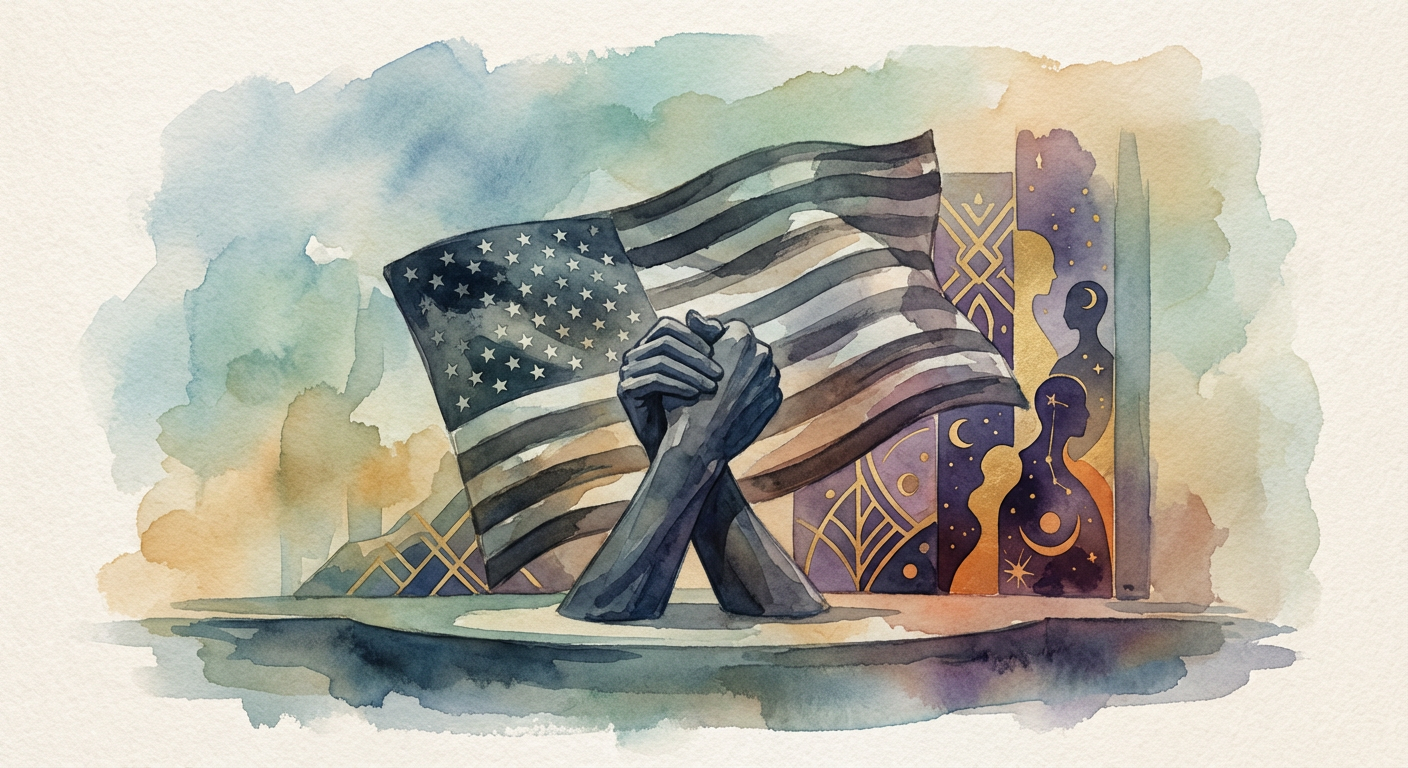
The staging incorporated Black American flag imagery throughout the performance, a deliberate invocation of Hank Willis Thomas’s “The Embrace” public art tradition and Afrofuturist visual vocabulary. This wasn’t decoration. This was an argument being made in real time to a massive audience that had tuned in expecting spectacle and instead got pedagogy. The Black flag exists outside the comfortable discourse of patriotism that the NFL typically wraps around its halftime broadcasts. It speaks to refusal, to alternative imagining, to the possibility that American identity itself might need dismantling and rebuilding from scratch.

Consider the context: the Super Bowl is perhaps the most aggressively patriotic American sporting event outside of military propaganda films. The national anthem, the fighter jets, the whole apparatus designed to make you feel like consuming entertainment is somehow a civic duty. Kendrick didn’t protest this directly. He occupied the space with an entirely different visual language, one rooted in Black radical traditions and artistic practice. The flag imagery connected his work to decades of Black artistic intervention, from the Black Arts Movement through contemporary galleries. It transformed the stadium into something that resembled a political art installation more than a football halftime show.

Samuel L. Jackson appeared throughout the performance as a narrator character, functioning as what cultural critics at The Atlantic’s cultural analysis of the halftime show described as a living embodiment of the American mythology Kendrick was actively deconstructing. Jackson’s presence wasn’t ceremonial. It was ironic, critical, and deeply knowing. He was the voice of a certain kind of Americanism, canonical, performed, institutionalized, being challenged by the music and visuals surrounding him. The juxtaposition created meaning that went entirely unnoticed by most mainstream sports media.

The Diss Track as Grammy-Winning Art Form

Kendrick performed “Not Like Us” twice during the set. This song won the 2025 Grammy for Record of the Year, making it the first diss track ever to win that award. This fact alone deserves to sit with you for a moment. The Recording Academy essentially canonized the diss track, the form that hip-hop has always understood as the highest expression of lyrical contest and cultural critique, within the same institutional framework that typically sanitizes art into something safer and more palatable.

The double performance wasn’t redundant. It was an insistence. The first time felt like inclusion in the halftime show structure. The second felt like interruption, like Kendrick saying: “I’m not finished with this. The argument continues.” The diss track by definition refuses resolution. It lives in critique, in naming names, in making specific cultural interventions that won’t be forgotten or smoothed over. By performing it twice, Kendrick was asserting that this mode of cultural work belongs on the biggest stages, regardless of whether mainstream institutions are prepared to recognize its validity.

The Streaming Numbers Tell an Incomplete Story

The data reveals something genuinely fascinating: Nielsen streaming surge data post-Super Bowl showed a 1,400% surge in streams of Lamar’s back catalog in the 48 hours following the halftime performance. That’s not just the halftime show becoming an advertisement for new material. That’s people being moved to go back and investigate, to situate what they just saw within Kendrick’s larger body of work, to understand the full architecture of what he’s been building for years.

What this means is that the halftime show functioned exactly as serious art does. It didn’t stand alone as a moment of entertainment consumption. It created an opening that made people want to think harder, dig deeper, engage with a broader context. That’s the opposite of what the NFL typically accomplishes. They present isolated moments designed to be consumed and forgotten, to fragment your attention into discrete units. Kendrick created something that demanded integration, that asked audiences to hold together multiple pieces of information and history.

Why the NFL Still Doesn’t Understand What Happened

The NFL will report record viewership and call this a victory. They’ll commission think pieces about how the halftime show remains a vital institution in American culture. They will not grapple with the fact that Kendrick used their platform to make an argument about American mythology that fundamentally challenges the patriotic consensus they were trying to build around the broadcast. This is how institutional co-option works. You give the artist a massive platform. They make something genuinely critical and powerful. The institution celebrates the viewership metrics and calls it all a success for everyone involved.

But something happened in New Orleans that can’t be contained or controlled retroactively. Kendrick created a template for what a mainstream platform can be used for when you have sufficient artistic vision and cultural authority. He demonstrated that you don’t have to reject institutional space — you can occupy it with intention, with history, with a fully realized political and aesthetic argument. He took the halftime show form and revealed it as something with genuine capacity for art. The NFL thinks they hosted a spectacle. They actually hosted something closer to a gallery intervention, and 133.5 million people walked through it whether they realized what they were seeing or not.

The question now is whether other artists will understand what Kendrick has shown is possible. Will they use these massive platforms for genuine critique, or retreat to the safer business of entertainment? That’s worth watching. The halftime show has real stakes again.

The Thaler v. Vidal Ruling Changes Everything: A Practical Guide to AI Art in 2025

The Court Has Spoken, and the Line Is Drawn (Sort Of)

Here is what just happened: in early 2025, the U.S. Court of Appeals affirmed something that should feel clarifying but somehow feels murkier than ever. AI-generated images cannot hold copyright protection under the 1976 Copyright Act. Full stop. This builds directly on the Thaler v. Perlmutter precedent, and now we have a binding appeals court decision backing it up. This matters because roughly 15,000 pending copyright applications are suddenly in limbo, and the people who filed them are discovering that their carefully generated algorithms produced legally orphaned work.

The Thaler v. Vidal Ruling Changes Everything: A Practical Guide to AI Art in 2025

But here is where it gets genuinely interesting instead of just legally tedious: the Copyright Office released guidance in February 2025 that creates an entirely new fault line. Works requiring more than minimal human authorship remain protectable. Minimal. That word is carrying the weight of the entire future of creative practice right now. The question is no longer whether AI art gets copyright. The question is how much human fingerprint you need in the process before the law sees your work as authentically yours.

The Gray Zone Is Where Most of Us Actually Work

Walk into any digital art studio in 2025 and you will not find a clean division between human artists and AI systems. You will find something far more complicated. Adobe released its 2025 Creative Trends report and the numbers are staggering: 58% of professional illustrators now use some form of AI-assisted tool in their workflow. Two years ago that number was 31%. This is not a fringe conversation about experimental practitioners anymore. This is the mainstream of creative work, moving so fast that legal structures cannot keep pace.

Think about what that means practically. A concept artist uses AI to generate five base compositions, then spends eight hours hand-painting, revising, and fundamentally transforming three of them into something unrecognizable from the source material. Is that protected? The court says yes, probably, if the human contribution is substantial enough. But “substantial” is doing some very heavy lifting in that sentence. No one has defined it. The Copyright Office guidance gestures toward it without pinning it down. This is exactly the kind of legal ambiguity that should make you uncomfortable, because ambiguity favors whoever has the most expensive lawyers.

Congress Is Starting to Pay Attention, Finally

The Artists Rights Alliance, representing over 12,000 visual artists, did not wait around to see how the courts would feel about their concerns. In January 2025, they filed a formal petition to Congress requesting a dedicated legislative framework specifically for generative AI and art. This is not angry tweets or gallery manifestos. This is institutional pressure from organized creative professionals asking the government to actually write rules instead of letting lawyers argue about Copyright Act language from 1976.

What they are asking for is straightforward but radical: clarity. They want Congress to acknowledge that generative AI occupies a genuinely new category of creative production that does not fit cleanly into existing copyright law. They want protection for human artists whose work was used to train these systems without permission or compensation. They want transparency requirements. They want auction houses and galleries to disclose when AI assisted in creation. You can disagree with their specific asks without missing their deeper point: the current system is broken, and fixing it requires legislative action, not just judicial interpretation.

The Auction House Reality Check

In March 2025, Christie’s sold its first AI-assisted artwork under a new disclosure framework. The price tag was 2.1 million dollars. Yes, you read that correctly. The market is moving faster than the law, which means the market is essentially writing the rules as it goes. This particular sale reignited something important: the debate about auction house accountability and whether disclosure without regulation is actually meaningful reform.

What we learned from that sale is that collectors will pay serious money for AI-assisted work if they know what they are getting. That is useful information. What we did not learn is whether that price reflects genuine aesthetic value or simply novelty and speculation. The art market has a long history of inflating prices for things that are fashionable but not meaningful. We need more data, more sales, more time to see whether this represents actual valuation or temporary hype. But we also need to acknowledge that the market’s enthusiasm for AI work is putting real pressure on human artists, especially emerging illustrators and digital creators competing for gallery representation and commissions.

What This Means for You, Right Now

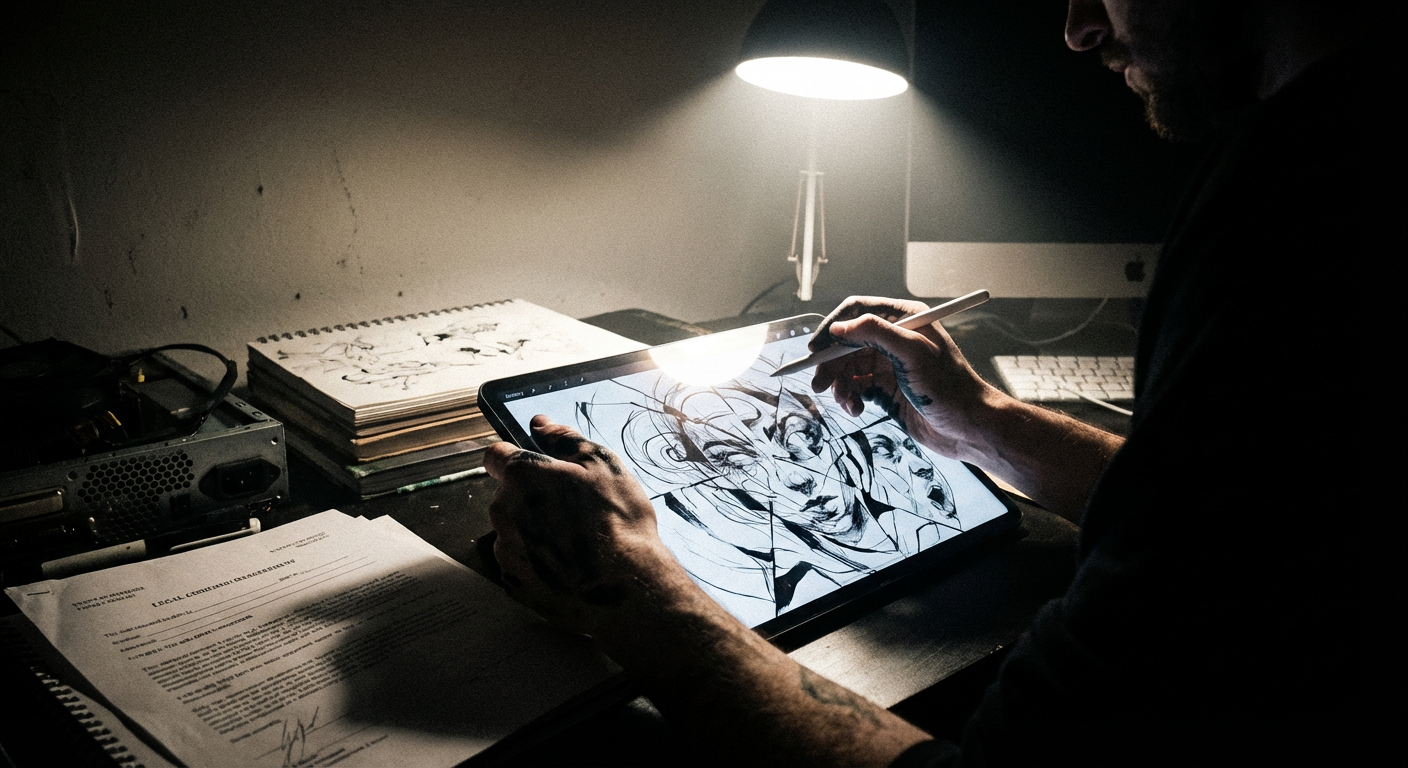
If you are an artist, you need to understand the current legal landscape. Check the U.S. Copyright Office AI Policy updates and bookmark them. Document your process obsessively if you use any AI tools. Take screenshots. Save drafts. Preserve evidence of your human decision-making and revision. This is not paranoia. This is basic professional practice in an environment where copyright claims might be challenged.

If you are a collector or someone interested in how AI art fits into art history, the moment is genuinely wide open. Visit the Artists Rights Alliance website and understand what organized visual artists are actually fighting for. It is not a blanket ban on AI. It is a demand for transparency and fairness. That distinction matters. The question we should be asking is not whether AI tools belong in creative practice. The question is whether human creativity remains valued, compensated, and protected while those tools proliferate.

The Thaler v. Vidal decision did not solve anything. It clarified one piece while creating ten new uncertainties. That discomfort you feel reading this is appropriate. We are watching legal structures strain under the weight of technological change they were never designed to address. The conversation is just beginning. What do you think the rules should be?

When the Revolution Happened in Empty Rooms: Three Art Movements That Changed Everything While Nobody Watched

The Sound of One Gallery Clapping

In 1974, a woman named Eleanor Antin walked into a gallery in San Diego wearing a black tutu and army boots, performing what she called “Representational Painting.” She painted abstract gestures in the air while a violinist played Paganini. Twelve people attended. No major publication reviewed it. Yet this single performance helped birth an entire movement of body-based conceptual art that would change how we think about the relationship between painter and canvas.

The art world loves its grand narratives. We celebrate Abstract Expressionism beating out European traditions, Pop Art making high culture accessible to everyone, and Minimalism’s philosophical rigor. But what about the movements that happened in basement galleries, abandoned warehouses, and artists’ living rooms? The ones that changed the conversation without MoMA retrospectives or Artforum covers?

Mail Art: The Internet Before the Internet

While Andy Warhol was silk-screening soup cans, Ray Johnson was completely rethinking communication through what became known as Mail Art. Starting in the 1950s, Johnson began sending small collages, drawings, and instructions through the postal system, creating a network of artists who responded, modified, and forwarded his work. By the 1970s, thousands of artists worldwide were participating in this decentralized, non-commercial exchange of creative correspondence.

The movement’s most radical aspect wasn’t aesthetic but structural. Mail Art operated outside gallery systems, art markets, and critical hierarchies. When Johnson organized his first “correspondence show” in 1970, he refused to jury submissions and displayed everything he received. This democratic approach influenced later movements from zine culture to net art, yet most art history surveys barely mention it. The Smithsonian finally got Johnson’s archives in 1999, thirty years after his first major mail piece circulated.

What Mail Art understood before anyone else was that distribution could be more revolutionary than content. Johnson’s collages weren’t necessarily better than gallery art, but they reached people differently. They arrived unexpectedly, required participation, and existed in intimate, private spaces rather than institutional ones. This insight would later inform everything from street art to social media aesthetics.

Pattern and Decoration: The Movement That Refused to Apologize

In 1975, while the art world was still worshipping Minimalism’s austere geometries, a group of artists began making work that was unabashedly decorative, culturally eclectic, and visually abundant. The Pattern and Decoration movement, led by artists like Miriam Schapiro, Joyce Kozloff, and Robert Kushner, drew inspiration from Islamic tiles, African textiles, and women’s craft traditions that modernism had systematically excluded.

The critical establishment was horrified. Hilton Kramer at The New York Times called it “a new form of anti-intellectualism.” Other critics dismissed it as mere decoration or cultural appropriation. But P&D artists were doing something more complex than their detractors understood. They were questioning why certain visual languages had been deemed “high art” while others were relegated to craft or ethnographic display.

Kozloff’s “An Interior Decorated” series transformed gallery spaces into immersive pattern environments, challenging the white cube’s supposed neutrality. Her 1979 installation at Tibor de Nagy gallery covered walls, floors, and ceilings with intricately painted geometric designs inspired by Turkish ceramics. Visitors couldn’t maintain critical distance. They were enveloped by the work. This environmental approach came before much of what we now call installation art, yet P&D rarely gets credit for its innovations in spatial practice.

The Pictures Generation Nobody Talks About

Everyone knows the Pictures Generation: Cindy Sherman, Richard Prince, Barbara Kruger, and their critique of media representation. But there was another Pictures Generation working at the same time in different cities, using similar strategies with different conclusions. In Los Angeles, Chicago, and Detroit, artists like John Divola, William Leavitt, and Cary Loren were also appropriating and manipulating found images, but their work focused on regional identity and working-class experience rather than media critique.

Divola’s “Vandalism” series, begun in 1974, documented his own graffiti interventions in abandoned buildings throughout Southern California. Like Prince’s re-photographed advertisements, these images questioned authorship and originality, but they also engaged directly with urban decay and social abandonment. Divola wasn’t just critiquing representation. He was documenting the failure of postwar suburban dreams.

Similarly, Loren’s “Death in the Nursery” photographs, made in Detroit during the city’s economic collapse, used appropriated imagery to address deindustrialization’s psychological toll. These artists developed sophisticated theoretical frameworks around their practice but lacked the New York gallery system that could translate theory into market success. Their exclusion from art historical narratives reflects geography’s ongoing influence on critical attention.

The Genealogy of Influence

These overlooked movements share certain characteristics that may explain their historical marginalization. They often emerged from regional scenes rather than established art capitals. They put process over product, participation over consumption, and cultural dialogue over aesthetic innovation. Most importantly, they operated according to value systems that the art market struggled to monetize.

Yet their influence is everywhere if you know how to look. Mail Art’s network structure predicted social media’s collaborative possibilities. Pattern and Decoration’s cultural mixing predicted our current moment’s global contemporary art. The regional Pictures artists’ focus on place-based identity resonates in today’s discussions of art world decentering.

These movements remind us that art history isn’t a story of inevitable progress but of institutional choices about what to preserve and promote. They also suggest that influence operates through channels more complex than critical acclaim or market success. Ideas migrate through teaching, informal networks, and personal encounters that leave no archival trace but shape future generations of artists.

Maybe the most important lesson from these forgotten revolutionaries is that importance and visibility aren’t the same thing. The next time you encounter work that seems peripheral or unfashionable, consider what it might be proposing that the center isn’t ready to hear. Revolutionary ideas often begin in empty rooms.

How Zenless Zone Zero’s Ethical Monetization Drove $100M Revenue While Redefining Gacha Standards

A New Era of Gacha Gaming

The gacha gaming scene right now is honestly pretty amazing. There are more quality options than ever before, and I’ve been having a blast exploring them. But among all these choices, Mihoyo’s Zenless Zone Zero really caught my attention. Sure, it’s got that slick urban look and fun combat, but what really makes it special is how it’s changed the game when it comes to fair monetization in the gacha world.

How Zenless Zone Zero's Ethical Monetization Drove $100M Revenue While Redefining Gacha Standards
How Zenless Zone Zero’s Ethical Monetization Drove $100M Revenue While Redefining Gacha Standards

What follows challenges how most people think about this. The question worth asking first: why does this matter specifically now?

When Zenless Zone Zero dropped in July 2024, something interesting happened. The game pulled in over one hundred million dollars worldwide within thirty days, according to Sensor Tower’s mobile gaming revenue report. But here’s the kicker – there wasn’t the usual player meltdown that comes with big gacha launches. No angry forum posts, no regulatory drama. Instead, ZZZ got praised for actually treating players fairly.

Revolutionizing the Pity System

ZZZ’s biggest win is how it fixed the pity system. Genshin Impact made you pull up to 180 times to guarantee a five-star character. ZZZ cut that in half to just 90 pulls. That might sound like a small change, but it completely changes how the game feels to play.

Here’s why this matters: traditional gacha games mess with your head. You can spend a ton of money and get nothing for weeks. That anxiety is brutal. ZZZ takes most of that stress away because you know exactly how much you’ll need to spend at worst. You can actually budget for it instead of just hoping and praying.

The weird thing? When players feel less pressured, they actually spend more willingly. It’s like when you’re not being pushed into something, you’re more open to it. ZZZ proved that being fair to players can actually make more money, not less.

Preview Trials Transform Purchase Decisions

But ZZZ’s coolest feature has to be the Preview Trial system. You can test any character for 24 hours before you spend your premium currency on them. This is huge because most gacha games make you buy blind based on trailers and hype.

I can’t tell you how many times I’ve regretted pulling for a character in other games because they didn’t play the way I expected. With ZZZ’s preview system, you know exactly what you’re getting. You can test their moves, see how they work with your team, and decide if they’re actually worth it.

Players love this because there’s no buyer’s remorse. Mihoyo loves it because they get way fewer complaints and refund requests. When people know what they’re buying, they’re happy with their purchase. Simple as that.

Responsible Spending Controls

ZZZ also has some smart spending limits built in. The Battle Pass caps at ten bucks a month, and if you want to spend more than that, you have to wait 48 hours. It’s like a cooling-off period for your wallet.

Most free-to-play games do everything they can to get you to spend right now – limited time offers, fear of missing out, you name it. ZZZ actually helps you slow down and think about whether you really want to spend that money. It’s refreshing.

And again, this approach is making them money hand over fist. Turns out when you help players spend responsibly instead of trying to trick them into impulse purchases, they stick around longer and spend more over time.

Research Validates Player Wellbeing Improvements

There’s actual research backing up how much better ZZZ’s approach is. According to Gaming Studies Quarterly ethical monetization research from Oxford, ZZZ players had 40% less gambling-related anxiety compared to players of traditional gacha games. That’s a massive difference.

The study looked at financial stress, purchase regret, compulsive spending – all the bad stuff that comes with predatory monetization. ZZZ players were healthier across the board. They specifically mentioned the preview system and spending caps as features that helped them stay in control.

This isn’t just about good PR or avoiding regulations. The data shows that treating players well actually works better for everyone involved.

Setting New Industry Standards

ZZZ’s success is going to change how other developers think about monetization. When you can make a hundred million dollars while treating players fairly, that’s a pretty compelling business case. Other companies are definitely taking notes.

With governments cracking down on gacha mechanics worldwide, games that get ahead of the curve with player-friendly features will have a huge advantage. ZZZ proved that the future isn’t about squeezing every penny out of players as fast as possible. It’s about building relationships with people who feel respected instead of exploited.

The ongoing conversation around gaming culture and digital entertainment is one that rewards sustained attention. metatrend.app is where that conversation happens with rigour.

The conversation about this is as valuable as the thing itself. Tell us what we missed in the comments.

When First-Time Filmmakers Blow Up the Rulebook (And Why We Should Pay Attention)

The Arrogance of Inexperience

Chloé Zhao had never directed a feature film when she pitched “The Rider” to financiers. Her background? Documentary shorts and a Sundance fellowship. Yet somehow this complete newcomer managed to redefine what American indie cinema could look like by casting real-life rodeo riders as themselves, blurring fiction and documentary until the line disappeared entirely. The nerve of it still gets me.

There’s something uniquely powerful about debut works that completely ignore established genre conventions. First-time creators haven’t been beaten down by industry machinery yet. They don’t know what’s “impossible” or “uncommercial.” This ignorance becomes their superpower, allowing them to break rules that seasoned professionals wouldn’t dare touch.

The pattern repeats across mediums with startling consistency. Debut novels that invent new narrative structures. First albums that splice together incompatible genres. Gallery debuts that make curators question their own assumptions about what art can be.

When Naivety Meets Technical Mastery

Consider Jordan Peele’s “Get Out.” Here’s a comedian making his directorial debut, deciding to tackle race relations through horror—a genre historically terrible at representing Black experiences. Instead of tiptoeing around genre expectations, Peele weaponized every horror trope, turning the suburban liberal nightmare into literal nightmare fuel. The film works precisely because Peele didn’t approach it like a “proper” horror director would.

The key isn’t just inexperience—it’s inexperience combined with deep technical understanding. Peele spent years studying film, absorbing influences from Kubrick to Carpenter. When he finally got behind the camera, he had the craft to execute his genre-bending vision. The combination proves lethal to conventional thinking.

This pattern appears in literature too. Zadie Smith’s “White Teeth” didn’t just announce a new voice—it shattered assumptions about what British literary fiction could encompass. Smith took the sprawling multi-generational saga and infected it with pop culture references, shifting timelines, and voices that previous generations of British writers had largely ignored.

The Gallery Circuit’s Fresh Blood

Walk through any major contemporary art fair and you’ll spot them immediately—the booths drawing impossible crowds around works that make zero sense within established art world categories. Last year at Frieze, I watched visitors cluster around Tschabalala Self’s textile-and-paint hybrids, works that reject the painting-versus-sculpture binary entirely.

Self’s debut gallery show in 2014 should have been career suicide by conventional wisdom. She was combining street art techniques with high art materials, addressing Black female sexuality through cartoonish figures that art critics didn’t know how to categorize. The work was too raw for blue-chip galleries, too conceptual for street art spaces. Instead of failing, it redefined what contemporary figuration could look like.

The most successful debut artists often share this quality—they’re working between established categories, creating work that forces institutions to expand their definitions. They haven’t been trained to stay within lane markers that don’t actually exist.

Music’s Rule Breakers and System Shakers

Billie Eilish recorded “Ocean Eyes” in her bedroom when she was fourteen. The song that launched her career sounds like nothing that came before—whispered vocals over minimalist electronic production, sad girl energy wrapped in pop accessibility. It shouldn’t have worked according to any existing playbook for pop success.

But here’s what makes Eilish’s debut album genuinely game-changing: it proved that Gen Z didn’t need guitar-driven authenticity markers that had dominated alternative music for decades. “When We All Fall Asleep, Where Do We Go?” sounds like anxiety itself, all ASMR whispers and bass drops that hit like panic attacks. Previous generations of alternative artists spent decades trying to distance themselves from pop machinery. Eilish embraced it completely while making something entirely new.

The album’s success forced the entire music industry to reconsider what “alternative” even means in an era when TikTok determines radio play. Eilish didn’t set out to reshape pop music—she just made the music that sounded right to her, unaware that it would make everyone else’s approach seem suddenly outdated.

Why Experience Can Be a Creative Liability

Seasoned creators know too much about what audiences expect, what distributors want, what critics typically praise. This knowledge becomes a cage. They second-guess innovative impulses, smoothing rough edges that might actually be the work’s greatest strengths.

Debut creators haven’t learned these limitations yet. They’re still operating on pure creative instinct, guided by their own taste rather than market research. When Ari Aster made “Hereditary,” he wasn’t trying to revitalize horror cinema—he was just making the scariest movie he could imagine. The result accidentally changed how horror films could handle grief and trauma.

The most genre-reshaping debuts share this quality—they feel inevitable in retrospect, like the creators were simply following their creative instincts to their logical conclusion. They weren’t trying to be revolutionary. Revolution was just the natural result of their uncompromised vision meeting the right moment.

So when you encounter a debut work that makes you question everything you thought you knew about its medium, pay attention. These artists are showing us what’s possible when creative vision hasn’t been tempered by industry wisdom. They’re reminding us that the most important artistic rule is knowing when to break all the others.

The Basquiat Forgery Apocalypse: How Science Torched a $2.1 Billion House of Cards

The Committee That Ate Itself

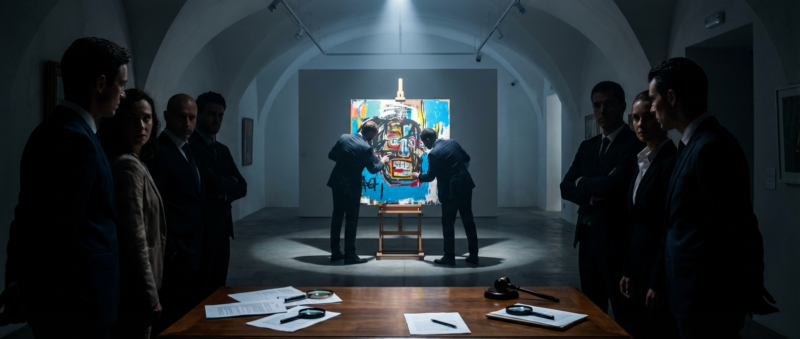
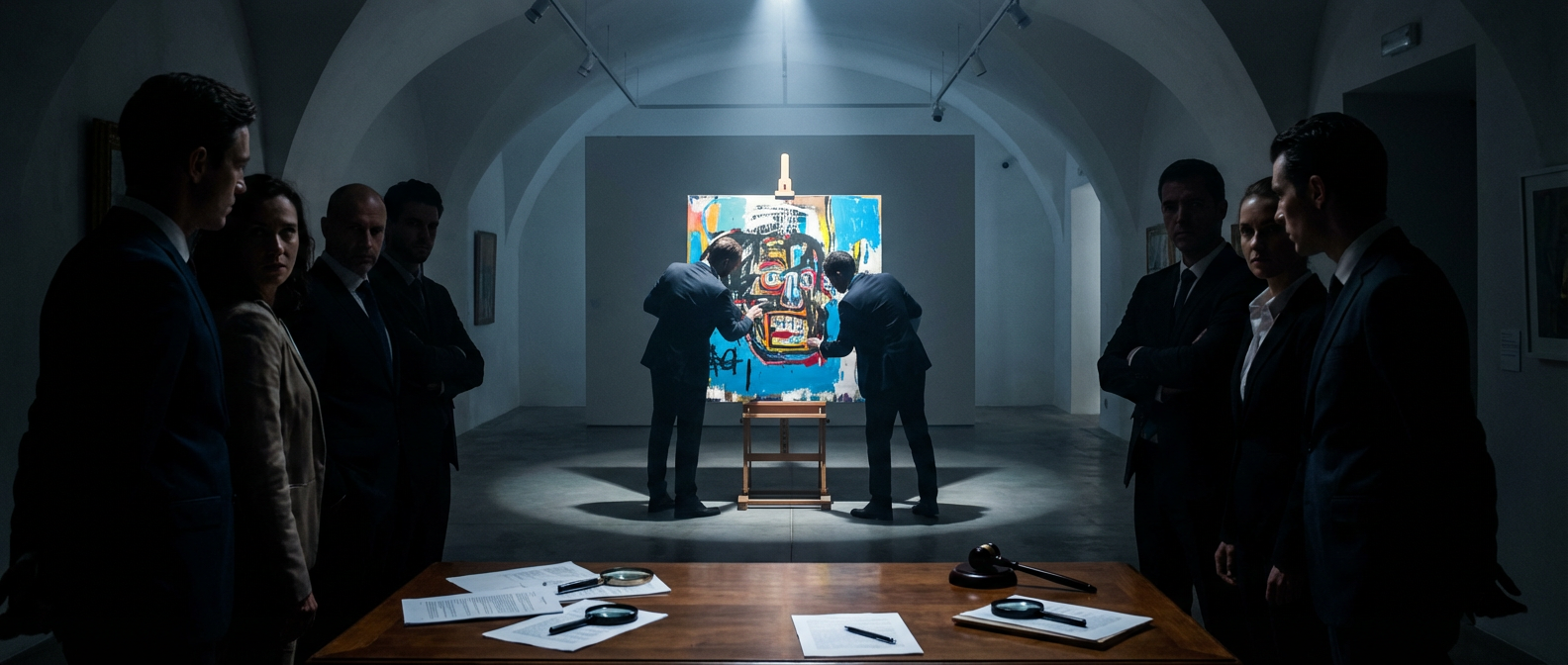
The art world’s most prestigious authentication body just committed institutional suicide, and frankly, it was long overdue. The Basquiat Authentication Committee, that ivory tower tribunal that spent decades rubber-stamping million-dollar paintings with the confidence of papal infallibility, disbanded this January after spectroscopic analysis revealed what any skeptical observer should have suspected: over one-third of their blessed artworks contained materials that didn’t exist when Jean-Michel Basquiat was alive.

The Basquiat Forgery Apocalypse: How Science Torched a $2.1 Billion House of Cards

Think about that staggering figure for a moment. Thirty-four percent. This isn’t a statistical margin of error or a few rogue dealers slipping fakes past drowsy experts. This is a systematic failure so profound it makes the art market’s previous authentication scandals look like minor clerical errors. The committee’s Basquiat Estate Official Statement reads like a corporate apology crafted by lawyers who’ve already calculated settlement costs.

What’s particularly damning is how long this charade persisted. The committee operated with the kind of clubby exclusivity that the art world adores, where reputation mattered more than rigorous scientific analysis. Members built careers on their supposed ability to divine authenticity through connoisseurship alone, as if aesthetic intuition could somehow detect molecular composition. The arrogance is staggering, even by art world standards.

Illustration for The Basquiat Forgery Apocalypse: How Science Torched a $2.1 Billion House of Cards

When Titanium White Became the Smoking Gun

Dr. Elena Rodriguez’s forensic laboratory became the scene of the art world’s most expensive autopsy. Her spectroscopic analysis didn’t just find irregularities. It found eighteen authenticated Basquiat paintings containing titanium white pigments that weren’t commercially available until 1993, five years after the artist’s death from a heroin overdose. This wasn’t subtle detective work requiring advanced degrees in art history. This was basic chronology.

Rodriguez’s findings expose the authentication committee’s fundamental flaw: their reliance on stylistic analysis over material evidence. While committee members debated brushwork and compositional elements, forgers were literally using the wrong ingredients, like cooking a Renaissance feast with ingredients from a modern supermarket. The Art Authentication Technology Report details how spectroscopic analysis has revolutionized forgery detection, making old-school connoisseurship look increasingly outdated.

The titanium white discovery is more than scientific advancement. It’s a symbol of the collision between tradition and technology in art authentication. For decades, the market operated on educated guesses dressed up as expertise. Now, molecular-level analysis can definitively date materials, revealing the emperor’s complete lack of clothes. Rodriguez didn’t just identify forgeries, she demolished an entire methodology built on assumptions and insider knowledge.

The $2.1 Billion Pause Button

Sotheby’s decision to suspend sales of 127 Basquiat pieces worth approximately $2.1 billion is the art market’s equivalent of a bank run. When the world’s most prestigious auction house essentially admits it can’t guarantee the authenticity of works it previously championed, confidence evaporates faster than turpentine in an open studio.

This suspension creates a fascinating paradox. The very works that commanded astronomical prices due to their supposed rarity and authentication are now radioactive precisely because of authentication concerns. Collectors who spent fortunes on committee-approved pieces now find themselves holding potentially worthless canvases, while genuinely authentic works remain trapped in limbo pending new protocols.

The ripple effects extend far beyond individual collectors. Insurance companies, galleries, and auction houses built entire business models around the committee’s authority. Now they’re scrambling to develop new verification systems while managing existing inventory of questionable provenance. It’s a masterclass in how institutional credibility, once lost, creates cascading market failures.

Legal Warfare and the Estate Strikes Back

The Basquiat estate’s lawsuit against 23 galleries across New York and London signals a new phase in this scandal. These aren’t polite requests for documentation review. They’re full-scale legal assaults targeting galleries for selling works with fraudulent provenance documentation. The estate argues that these institutions either knowingly participated in fraud or were criminally negligent in their due diligence.

What makes these lawsuits particularly significant is their scope. They span both sides of the Atlantic, targeting blue-chip galleries that built reputations on their expertise and connections. The legal strategy appears designed to hold the entire distribution network accountable, from authentication committees to auction houses to retail galleries. It’s a systematic dismantling of the infrastructure that enabled this fraud.

The insurance angle adds another layer of complexity. Claims related to Basquiat forgeries reached $847 million last year, representing a 340 percent increase from the previous year. Insurance companies are now requiring increasingly sophisticated authentication before issuing policies, effectively creating parallel verification systems outside traditional art world institutions. The days of insuring artworks based solely on expert opinions are ending.

The Authentication Revolution That’s Already Here

This scandal arrives at a moment when technology is fundamentally reshaping art authentication. Spectroscopic analysis, X-ray fluorescence, and radiocarbon dating provide definitive answers to questions that previously relied on educated speculation. The Basquiat committee’s dissolution doesn’t just represent institutional failure, it marks the end of an era when human expertise alone could determine authenticity.

The broader implications extend beyond individual artists or even the contemporary art market. Every authentication committee, every expert opinion, every institutional blessing now faces scrutiny. Collectors and institutions are demanding scientific verification rather than accepting traditional connoisseurship. This shift represents the art world’s long-overdue embrace of empirical evidence over insider authority.

What emerges from this chaos won’t be prettier or more romantic than the old system, but it will be more honest. Scientific authentication eliminates the cozy relationships and subjective judgments that enabled systematic fraud. It replaces the art world’s traditional reliance on reputation with verifiable data. The romance of connoisseurship dies, but the integrity of the market has a chance to live.

The Basquiat authentication scandal is more than financial fraud or institutional failure. It’s a reckoning with the art world’s resistance to transparency and accountability. As lawsuits unfold and new protocols emerge, we’re witnessing the painful birth of a more scientific, less mystical approach to art authentication. The question isn’t whether this transformation will continue, but whether traditional institutions can adapt quickly enough to survive it.

Why Basquiat’s Crown Obsession Started with Seeing Warhol’s Campbell’s Soup

The Moment Everything Changed

Picture this: Jean-Michel Basquiat walks into a Manhattan gallery in 1979, still tagging SAMO© on walls, when he stops dead in front of Andy Warhol’s Campbell’s Soup cans. Not because of the pop art revolution everyone talks about, but because he suddenly understands that repetition can be rebellion. Those crowns that would later define his paintings? They started here, in this moment of recognition that symbols could be weaponized through obsessive repetition.

This is how artistic lineage actually works. Not through careful study in art school classrooms, but through lightning-bolt moments where one artist’s breakthrough becomes another’s building block. The influences that matter most aren’t the ones artists list in their artist statements. They’re the stolen glances, the overheard conversations, the accidental discoveries that reshape everything.

Following the Invisible Threads

Tracing artistic influence is like following a river upstream, except the source keeps shifting. Take Kehinde Wiley’s presidential portrait of Barack Obama. Everyone focuses on the floral background, but the real lineage runs through Napoleon crossing the Alps by Jacques-Louis David, which connects to Wiley’s discovery of European portraiture during a residency in Senegal. The influence isn’t just visual—it’s about power, representation, and who gets to occupy heroic space.

Most people look for obvious connections. Yes, Picasso was influenced by African masks, but the more interesting thread is how his discovery of Iberian sculpture at the Louvre in 1906 led him to simplify facial features in ways that would eventually birth Cubism. The real influence often hides in plain sight, disguised as coincidence or filtered through multiple generations of interpretation.

Sometimes the lineage skips entirely. Yves Klein’s International Klein Blue didn’t influence the Blue Period—Picasso was already dead when Klein perfected his formula in 1960. But both artists understood blue as emotional territory. Klein called it “the most immaterial of colors,” while Picasso used it to express melancholy. Different blues, same recognition that color carries psychological weight.

When Influence Becomes Theft (And Why That Matters)

Richard Prince’s Instagram paintings forced us to confront an uncomfortable question: where does influence end and appropriation begin? His blown-up screenshots of other people’s social media posts, exhibited at Gagosian for six figures, sparked lawsuits and think pieces. But the real conversation should focus on how influence has always involved taking.

Look at how jazz developed. Charlie Parker didn’t just study Lester Young’s saxophone technique—he absorbed Young’s rhythmic phrasing, then filtered it through his own harmonic understanding to create bebop. The influence was transformative, not derivative. Parker took Young’s innovations and pushed them so far forward that the original became a launching pad rather than a destination.

The difference between influence and theft often comes down to distance and transformation. When Led Zeppelin lifted entire verses from blues songs without credit, that was theft. When they took the emotional intensity of Muddy Waters and filtered it through Marshall stacks and studio experimentation, that was influence. The line matters because understanding it helps us trace how ideas actually move through culture.

The Network Effect: How Scenes Shape Individual Vision

Individual genius is mostly mythology. What looks like singular vision usually emerges from concentrated creative communities. The Factory wasn’t just Warhol’s studio—it was a generator that produced Nico, Velvet Underground, and an entire aesthetic approach to celebrity culture. Remove any single element and the whole ecosystem shifts.

Consider how the Impressionists developed. They weren’t just influenced by each other’s techniques; they shared models, pigments, even canvases when money was tight. Monet’s water lilies series doesn’t exist without Renoir’s experiments with broken color, which built on Manet’s rejection of academic finish. The influence was circular, immediate, and collaborative in ways that art history’s focus on individual masters completely misses.

This network effect accelerates in digital spaces. Bedroom producers on SoundCloud influenced Drake’s sound, which influenced pop music globally, which circled back to influence the bedroom producers who started the cycle. The traditional model of influence—master to student, movement to movement—breaks down when feedback loops operate in real time.

Reading Between the Brushstrokes

The most revealing influences are the ones artists try to hide. Francis Bacon spent decades claiming he never looked at other paintings, yet his screaming popes clearly reference Velázquez’s Portrait of Pope Innocent X. The denial itself becomes evidence. Bacon wasn’t just influenced by Velázquez’s technique—he was haunted by the painting’s psychological intensity, and his protestations reveal how deeply it affected him.

Sometimes influence works backwards. When Gerhard Richter started making photorealistic paintings in the 1960s, critics dismissed them as empty technique. Decades later, those same paintings influenced a generation of artists working with digital imagery. Richter’s exploration of how painting could compete with photography anticipated questions about authenticity that wouldn’t become urgent until Instagram existed.

The deepest influences often involve rejection rather than adoption. Pollock’s drip paintings rejected European easel painting so completely that they created new possibilities for scale, gesture, and the relationship between artist and canvas. His influence on later artists wasn’t about copying his technique—it was about understanding that radical departure was possible.

Making Your Own Map

Understanding artistic lineage changes how you experience art. Instead of seeing isolated masterpieces, you start recognizing conversations across centuries. That weird experimental film you stumbled across last week might connect to German Expressionist cinema from the 1920s, which influenced film noir, which shows up in contemporary photography.

The next time you encounter something that stops you cold—a painting, a song, a scene in a movie—ask yourself what it’s building on and what it’s building toward. The answer might surprise you. Because the most interesting art doesn’t just reflect influence; it digests it, transforms it, and spits out something that couldn’t have existed without everything that came before, yet somehow feels completely new.