The Price of Paint: How Big Money Is Quietly Rewriting the Rules of Art

Walk into any major contemporary art fair and you’ll sense it before you can name it. A certain gloss. A scale that has nothing to do with the wall it’s on and everything to do with the penthouse it’s destined for. A palette that whispers investment-grade instead of experimental. The money hasn’t just followed the art—it’s started to lead it, tugging at the painter’s sleeve like a patron who no longer merely requests but quietly insists. This isn’t the old Medici story. It’s something more structural, more pervasive, and a lot less romantic.

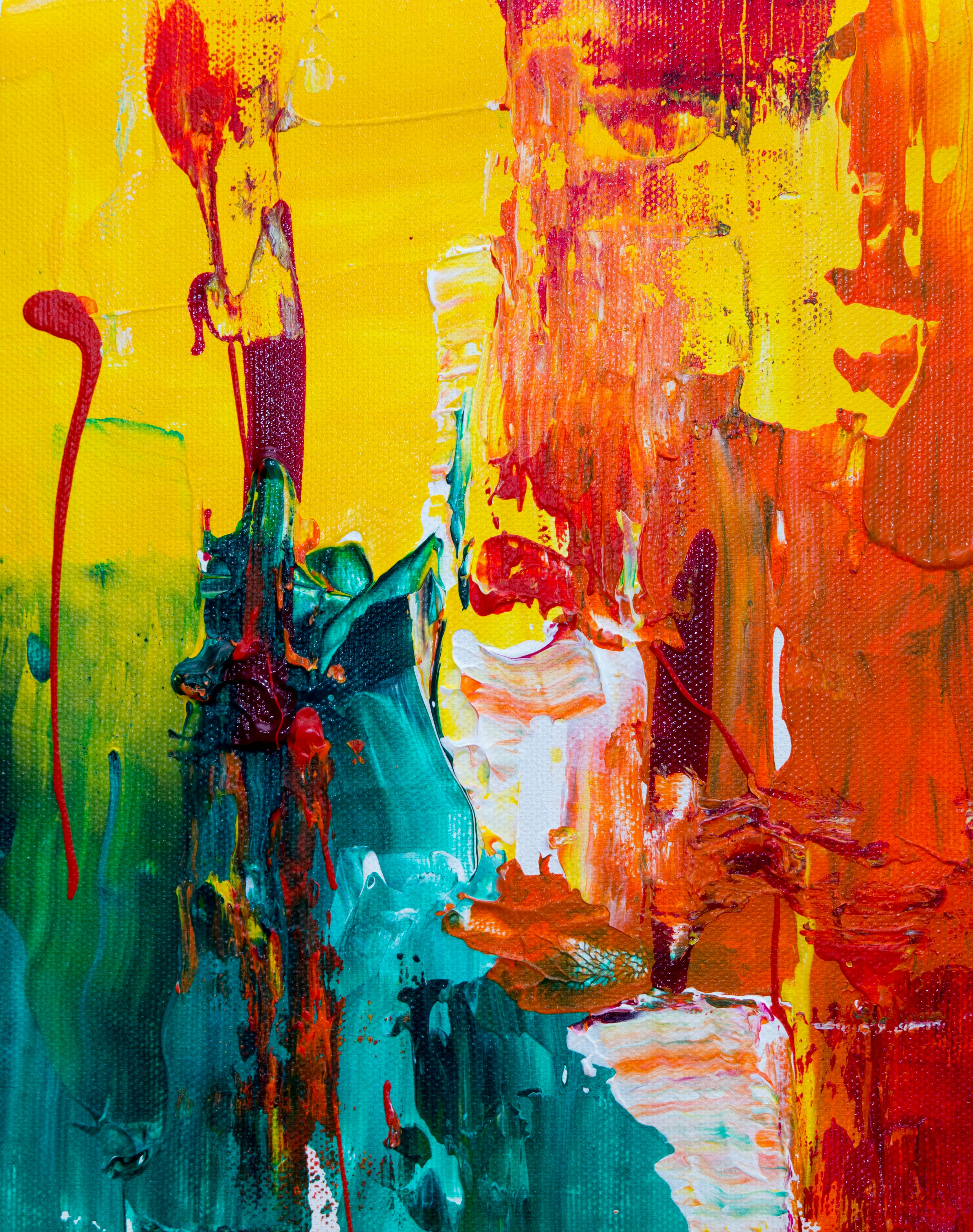
Abstract painting with bold brushstrokes in a gallery setting

The New Patronage: From Connoisseur to Portfolio Manager

Collectors have always nudged the art world, but the nature of that nudge has changed. The old model—wealthy individuals buying what they loved, occasionally boosting a career—has been overtaken by something more systematic. Today’s heavy hitters sit on museum boards, fund production budgets, whisper to dealers about which artists need a “push,” and increasingly commission work directly, cutting galleries out of the loop entirely.

You can see the results at Art Basel or Frieze without squinting. Painting after painting seems built for a specific wall—a wall in a specific penthouse, a specific foyer, a specific yacht. The dimensions are suspiciously obliging. The color scheme complements rather than confronts. The subject matter dodges anything that might sour a dinner party. This isn’t a conspiracy; it’s a quiet alignment of incentives. When a collector drops six figures on a canvas, they’re not just buying an object. They’re buying a future resale value, a social marker, and, more and more, a say in what the artist makes next.

The Commission Economy

Private commissions have been around forever, but their character has shifted. Once, a patron might ask for a family portrait or a religious scene. Today’s collector often wants something fuzzier: a certain feeling, a certain size, a certain compatibility with the sofa. The artist slides into the role of a high-end interior decorator, albeit one whose work carries the scent of cultural legitimacy. The result is a flood of large-scale, inoffensive abstraction—pieces that are undeniably skilled but emotionally hollow, designed to harmonize rather than disrupt.

Think about the rise of the “statement piece” for the open-plan living space. It needs to be big enough to anchor a double-height wall, colorful enough to photograph well for Instagram, but not so confrontational that it makes guests uncomfortable. That’s the collector’s brief, spoken or unspoken. And artists, especially those without independent wealth, listen. They adapt. The market rewards them with gallery representation, fair slots, and museum acquisitions. It punishes the difficult with obscurity.

When the Market Becomes the Medium

Some artists have internalized this logic so completely that the market itself becomes their subject. You get a genre of painting that’s acutely self-aware—works that comment on their own commodification while simultaneously cashing in on it. It’s clever, sometimes brilliant, but also a trap. Irony about the market is still marketable. A painting that mocks a rich collector can still be sold to that rich collector, who will hang it with a wink, proving they’re in on the joke. The critique gets absorbed, neutralized, and framed in gold leaf.

This sets up a weird feedback loop. Galleries, sensing what moves, push artists toward certain modes. Artists, needing to survive, comply or cleverly subvert—but the subversion itself becomes a recognizable brand. The market loves a rebel with a consistent output and a reliable shipping schedule. True unpredictability, the kind that might produce a genuinely challenging body of work, is a liability. Nobody wants to invest in a liability.

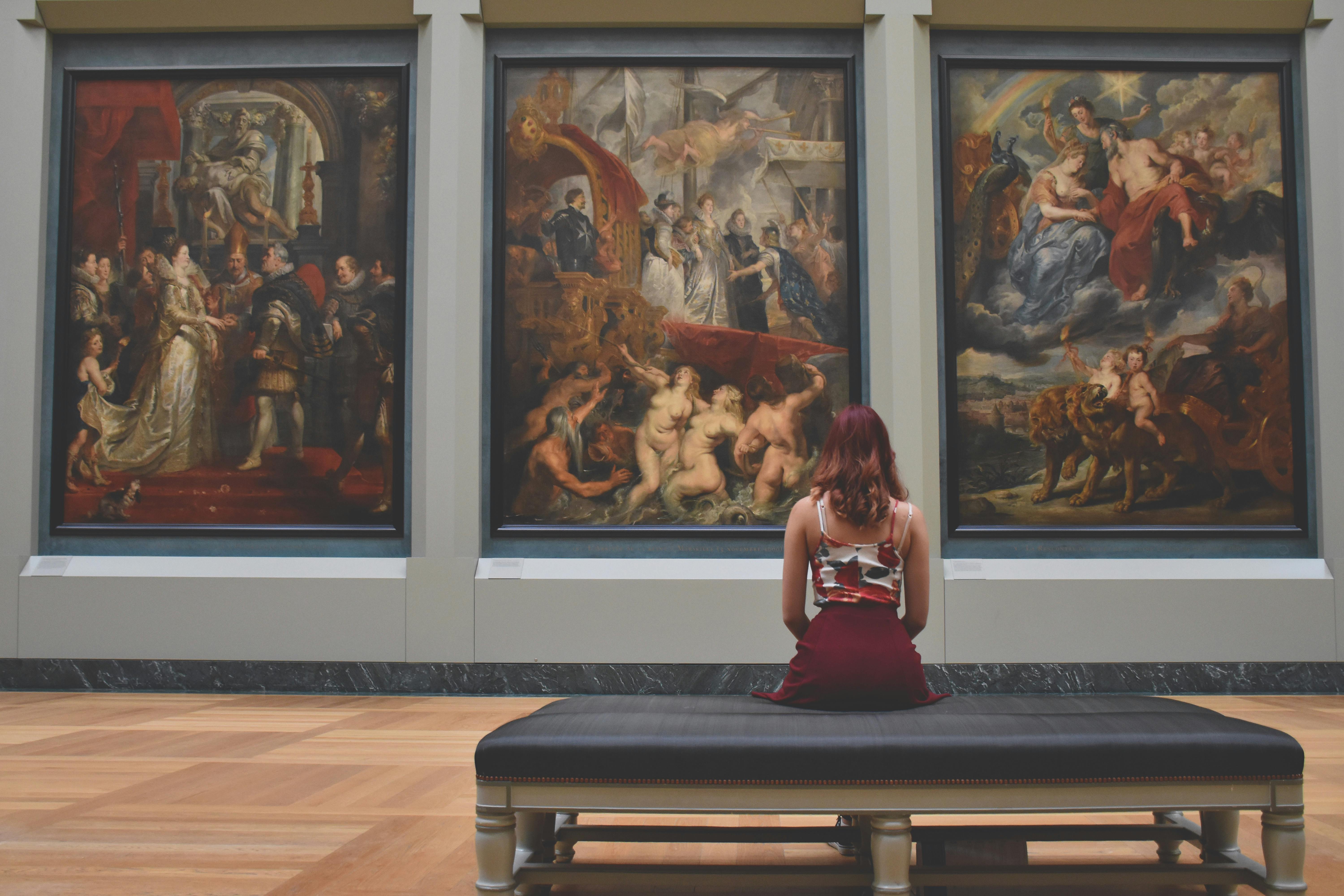
Gallery visitors observing large colorful abstract paintings

The Rise of the Painter-as-Producer

In response to this pressure, a new figure has emerged: the painter-as-producer. This artist runs a studio with multiple assistants, sometimes a dozen or more, churning out works that bear the master’s signature but not necessarily their brushstroke. The model is borrowed from Jeff Koons and Damien Hirst, but it’s trickled down to painters whose market heat demands volume. Collectors want a piece, and they want it now—not after two years on a waiting list. The solution is to scale up production, to treat the studio like a small factory, to delegate the physical labor of painting to skilled hands while the named artist oversees, signs, and authenticates.

This practice raises uncomfortable questions about authorship and value. What’s being collected—the object, the idea, or the brand? If a painting is executed entirely by assistants, is it still a “work” by the artist whose name appears on the gallery checklist? The market has answered with a shrug. Prices hold. Museums acquire. The aura of the artist’s hand has been replaced by the aura of the artist’s signature, a legal and financial construct rather than a physical trace. The collector buys into the brand, and the brand delivers a product that meets demand.

The Aesthetic Consequences

What does this do to the paintings themselves? The effects are visible to anyone who spends time looking. There’s a growing sameness in certain sectors of the market—a convergence on a set of visual tropes that signal “contemporary art” to the uninitiated. Gestural abstraction with just enough figuration to be legible. A palette that flatters without being pretty. Surfaces that are busy but not chaotic, complex but not confusing. The work is often technically impressive, but it lacks friction. It slides down too easily.

This isn’t to say that all collector-driven painting is bad. Some of it is very good, even excellent. But the conditions of its production have narrowed the range of what’s possible. Risk has been priced out. Experimentation happens in the margins, in the works that are too small, too weird, too confrontational to sell easily. Those works exist, but they’re increasingly invisible, relegated to project spaces and artist-run initiatives while the big walls and the big checks go to the big, safe paintings.

The Geography of Taste

Collector money also reshapes where painting happens. Art centers aren’t just where artists live; they’re where collectors buy. Cities like New York, London, and Hong Kong dominate not because they produce the most interesting painters but because they concentrate the most aggressive buying. An artist in Berlin or Mexico City may be doing work of equal or greater importance, but if the collectors aren’t flying there, if the local market can’t sustain international prices, that work remains peripheral. The geography of value is a geography of wealth, not necessarily of talent.

This creates a gravitational pull. Artists relocate. Galleries open outposts. The ecosystem reorganizes itself around the money, and the money reorganizes itself around a handful of global hubs. The result is a kind of cultural monoculture, where the same names, the same styles, the same curatorial narratives circulate through the same fairs, biennials, and auction houses. Regional specificity gets sanded down into a global contemporary aesthetic that is, above all, legible to a collector class that moves between these hubs with ease.

Abstract painting with bold colors and dynamic brushwork

The Auction House as Tastemaker

No discussion of collector influence is complete without the auction houses. Christie’s, Sotheby’s, and Phillips are no longer mere secondary markets; they’re primary tastemakers. Their evening sales set the tempo for what’s “important,” and their specialists actively shape artists’ careers by deciding whose work appears alongside established masters. A young painter included in a curated evening sale sees their primary market prices jump overnight. Galleries adjust accordingly. Museums take note. The auction house, once a place where art went to die (or be reborn as a commodity), now functions as a kingmaker.

This has a trickle-down effect on the studio. Artists know that certain formats, certain subjects, certain sizes perform better at auction. A monumental canvas commands a monumental hammer price. A series of small, intimate works does not. So the monumental becomes the default, even when the idea doesn’t demand it. Scale inflates to meet the auction house’s expectations, and the work suffers a kind of gigantism—impressive but bloated, loud but saying little.

The Collector as Curator

Perhaps the most significant shift is the collector’s move into curatorial territory. Private museums have proliferated, funded by individuals whose collections become public-facing institutions. This isn’t inherently bad—many private museums are serious, scholarly endeavors. But they also create a parallel system of validation that bypasses the slower, more critical apparatus of public museums and academic art history. A collector with deep pockets can anoint an artist, fund a survey show, publish a catalogue, and effectively write that artist into the canon—all within a few years.

This acceleration warps artistic development. Painters who might have spent decades refining a singular vision are instead rushed into mid-career surveys before they’ve had a mid-career. The work becomes a product line, each show a new collection, each collection needing to outdo the last in scale and spectacle. The pressure to constantly produce “important” work leaves little room for the kind of slow, weird, unmarketable experimentation that has historically produced the most enduring painting.

The Speculative Collector

Then there’s the speculator—the collector who buys not out of love or even social ambition, but as a pure financial play. These collectors operate like day traders, flipping works by young artists before the paint is dry. They track auction results like stock tickers, buy in bulk at studio visits, and dump inventory when an artist’s market cools. Their presence distorts prices and pressures artists to maintain a market-friendly consistency. An artist who takes a sharp left turn risks alienating the speculators who hold their early work, potentially crashing their market before they can establish a new direction.

This creates a perverse incentive: stay the course, repeat the formula, don’t evolve too quickly or too radically. The result is a kind of stylistic stagnation disguised as a “mature practice.” We see painters producing the same painting for a decade, each iteration slightly tweaked but fundamentally identical, because the market has decided that this is what they do, and deviation is financial suicide.

What Survives the Money?

Despite this grim picture, painting isn’t dead. It’s not even dying. But it’s being shaped in ways that are often invisible to those who only see the finished product on a gallery wall or a fair booth. The question isn’t whether collector money influences painting—it does, profoundly—but whether that influence is acknowledged and resisted where necessary.

The painters who matter in the long run are often those who find ways to work both within and against the system. They take the commissions but use them to fund stranger, smaller projects. They sell the big canvases but keep a private practice that’s weirder, more difficult, more personal. They understand that the market is a condition of production, not a determinant of value. And they know that the collectors who will truly shape history aren’t the ones buying the most, but the ones buying the best—and the best is rarely the most obvious.

FAQ

How do collectors directly influence what artists paint?
Collectors influence artists through commissions, studio visits, and market signals. When a certain style, size, or subject sells well, galleries encourage artists to produce more of it. Collectors may also request specific works, effectively becoming collaborators in the creative process. Over time, this feedback loop can narrow an artist’s practice toward market-friendly outcomes.

Are auction houses really shaping contemporary painting?
Yes. Auction houses have moved from being secondary markets to primary tastemakers. Their evening sales set price benchmarks and validate artists for institutional acquisition. The formats that perform well at auction—large-scale, visually striking works—become templates that artists and galleries replicate, often at the expense of more experimental or intimate approaches.

Is it possible for a painter to resist market pressures entirely?
Complete resistance is rare and often comes at a financial cost. However, some artists maintain a split practice: producing market-friendly work for income while pursuing riskier, less commercial projects on the side. Others find patrons who support experimentation without demanding predictable output. The challenge is structural, but individual strategies can create space for genuine artistic risk.


The Price of Paint: How Collector Money Reshapes Contemporary Art

The canvas isn’t just a surface for pigment anymore. It’s a ledger, a contract, a speculative asset. Walk through any major art fair today and you can practically hear the hum of financial machinery beneath the brushstrokes. The relationship between collectors and painters has always been transactional, but the sheer scale and speed of modern money have fundamentally changed what gets made, how it’s valued, and even how it looks. This isn’t a tidy story of corruption versus purity. It’s a structural shift where a wire transfer can be as formative as the artist’s wrist.

The New Patronage: From Medici to Mega-Gallery

Patronage is old news. The Medici family didn’t just buy Botticelli’s paintings; they helped set the thematic and philosophical boundaries of the Renaissance. But the velocity of today’s capital makes that model look almost pastoral. A handful of mega-galleries—Gagosian, Hauser & Wirth, Pace, David Zwirner—now operate less like dealerships and more like private equity firms for pigment. They don’t just sell art; they manage careers, finance production, and signal to a global network of buyers what deserves attention.

That signaling has direct aesthetic consequences. When a gallery with nine international locations and a dedicated “artist liaison” team takes on a painter, the pressure to produce consistent, brand-aligned work is relentless. The collector class, often buying work sight unseen from JPEGs pinged over WhatsApp, craves recognizability. A painting has to look like a so-and-so. The result is a kind of stylistic hardening, where an artist’s signature motifs become a cage rather than a starting point. The market demands a product, and that product better be identifiable from across a crowded VIP preview.

Abstract painting with bold, market-friendly colors and gestural marks

The Bigger, the Better: Scale as a Financial Instrument

Step into any booth at Art Basel and you’ll face a wall of canvas that could double as the side of a shipping container. The sheer physical scale of contemporary painting has ballooned in lockstep with the square footage of the homes and storage facilities of the ultra-wealthy. This isn’t about artistic ambition; it’s a logistical requirement. A painting destined for the foyer of a Hamptons estate or the atrium of a Singaporean investment firm can’t be intimate. It has to command the architecture, filling the void left by soaring ceilings and bare concrete.

This demand for scale warps the studio. Painters who once worked on easels now rent warehouse spaces and employ teams of assistants. The artist’s hand becomes a managerial one, directing fabrication rather than executing it. The market doesn’t penalize this; it rewards it. A massive, assistant-produced canvas by a brand-name painter can fetch seven figures, while a modest, hand-wrought panel by the same artist might struggle to find a buyer. The logic is perverse but clear: the price per square inch drops as the total area expands, making the monumental work a “better value” for the collector. The painting is priced like real estate.

The Studio as a Production Line

This industrial model has a genealogy. Jeff Koons and Damien Hirst normalized the artist-as-CEO, but their practices were rooted in conceptualism and the readymade. When the same methods migrate to painting—a medium historically tied to the autographic touch—the tension becomes acute. Collectors, however, have largely made peace with it. They’re buying the idea, the provenance, the certificate of authenticity, and the guaranteed place in the historical narrative that the gallery’s PR machine is constantly writing. The physical object is almost a souvenir of that narrative.

Young painters, watching from the sidelines, internalize this lesson. The path to a sustainable career isn’t through slow, idiosyncratic development in a garret; it’s through rapid scaling, factory-like output, and strategic alignment with a powerful gallery’s brand. The collector’s money doesn’t just buy paintings; it buys the entire production apparatus, shaping the very conditions under which art is conceived.

Large-scale abstract painting dominating a white-walled gallery space

The Blue-Chip Algorithm: What Gets Bought and Why

If you were to design a painting specifically to attract a major collector in 2025, you’d follow a surprisingly rigid formula. The work would be large, but not so large it can’t fit through a standard freight elevator. It would employ a palette that is either aggressively chromatic—think acid greens, electric blues, hot pinks—or muted to the point of tonal whisper, the kind of beige-on-beige abstraction that signals “serious” minimalism. Figuration, if present, would be fragmented, surreal, and vaguely unsettling, but never so grotesque as to repel a trustee’s spouse. The surface would be seductive: thick impasto, glossy resin, or a velvety matte finish that begs to be touched.

This isn’t a conspiracy; it’s a market consensus. Galleries, advisors, and auction house specialists have collectively calibrated what “museum-quality” looks like, and that calibration is increasingly narrow. A painter who deviates too far—by working too small, using unfashionable colors, or tackling genuinely difficult subject matter—risks being deemed “uncommercial.” The term is a polite death sentence. It means the work doesn’t fit the algorithm that drives six-figure sales and secures institutional placements.

The Auction House as Kingmaker

No institution wields more power in this ecosystem than the auction house. Christie’s, Sotheby’s, and Phillips don’t just reflect the market; they actively manufacture it. An evening sale is a theatrical event where prices are not discovered but performed. When a painting by a 35-year-old artist hammers at $2 million, it recalibrates the entire primary market overnight. Gallery prices jump. Waiting lists swell. The artist’s next studio visit becomes a pilgrimage for advisors clutching client wish lists.

The problem is that auction houses are fundamentally indifferent to art history. Their fiduciary duty is to consignors and shareholders, not to the long-term health of an artist’s career. They will happily flip a work that was placed with a “committed” collector six months prior, flooding the market with supply and destabilizing the artist’s price structure. The collector who flips is often the same one who was given preferential access and a “friends and family” discount. The betrayal is structural, not personal. The painting is just a token in a game of hot potato.

The Zombie Formalists and the Rise of Process-Based Abstraction

A decade ago, critic Walter Robinson coined the term “Zombie Formalism” to describe a strain of abstraction that dominated the market: process-heavy, aesthetically pleasant, and utterly devoid of conceptual risk. It was the perfect product for a market hungry for decorative, instantly legible objects that could be flipped at auction. The term was a polemic, but it named something real: a genre of painting engineered for liquidity.

Today, that genre has evolved but not disappeared. The new market-friendly abstraction is often process-based in a different way—think poured pigments, algorithmic compositions, or digitally mediated mark-making. The work presents as “rigorous” and “investigative,” but the investigation is always into the materiality of paint itself, never into anything that might unsettle a buyer. The paintings are beautiful, often stunningly so, but their beauty is a safe beauty. They are designed to be Instagrammable, to read instantly on a screen, to harmonize with a Vitra sofa and a Noguchi lamp. The collector’s living room is the final frame.

Process-based abstract painting with poured and layered pigments

The Death of Difficulty

What gets lost in this transaction is difficulty. Not technical difficulty—the works are often technically virtuosic—but intellectual and emotional difficulty. The kind of painting that resists easy consumption, that demands time, that refuses to be a backdrop for a dinner party. Collectors, by and large, don’t want to be challenged; they want to be affirmed. They want work that signals their sophistication without actually requiring it. The market has become a machine for producing this kind of frictionless luxury good, and it has been terrifyingly efficient.

Consider the career trajectory of a young painter today. To gain gallery representation, they must produce a coherent, marketable “project.” To sustain that representation, they must continue producing variations on that project, feeding the collector base’s appetite for more of the same. Experimentation is punished; consistency is rewarded. The result is a generation of painters who peak at 30, their work hardening into a brand before it has had time to mature. The collector’s money, far from enabling artistic freedom, enforces a kind of creative stasis.

The Speculative Collector: Flipping as a Creative Act

There is a new breed of collector who doesn’t just buy art but actively trades it, treating the market as a canvas of its own. These speculators operate with a trader’s mentality, buying emerging artists in bulk, hyping them on social media, and dumping the work at auction the moment a price spike occurs. They are not patrons; they are predators. And their activity has a direct, often devastating, impact on the artists whose work they churn.

When a speculator floods the auction market with an artist’s work, the price can collapse overnight. Galleries, which rely on controlling supply to maintain price levels, are powerless to stop it. The artist, who may have sold the work for $10,000 two years ago, watches it hammer for $5,000, their primary market effectively destroyed. The speculator, having already extracted their profit, moves on to the next hot name. The painting itself becomes a casualty, tainted by the smell of failure, its aesthetic qualities irrelevant to its financial fate.

The Advisor as Gatekeeper

Between the collector and the gallery stands the art advisor, a figure whose influence has grown exponentially in the last two decades. Advisors are paid to guide collectors through the market, but their guidance is often a form of herd reinforcement. They recommend the same ten galleries, the same twenty artists, the same fair booths. Their value proposition is access and risk mitigation, not aesthetic discernment. An advisor who steers a client toward an unfashionable, difficult painter is an advisor who soon loses that client.

The result is a concentration of money into an ever-narrowing band of artists. The top 1% of painters capture the vast majority of collector dollars, while the rest scramble for residencies, teaching gigs, and the occasional grant. The market doesn’t just shape what kind of painting gets made; it shapes who gets to make a living making it. The collector’s money, channeled through advisors and galleries, functions as a massive filtration system, sifting out anything that doesn’t fit the template.

Is There an Outside?

It would be easy to end this essay with a call for purity, for artists to reject the market and return to some imagined state of authentic creation. But that’s a fantasy. Artists have to eat. The market is not an external contaminant; it’s the water we swim in. The question isn’t how to escape it, but how to navigate it without drowning.

Some painters are finding ways. They’re building alternative networks of support—artist-run spaces, direct-to-collector sales, patronage models that cut out the gallery middleman. They’re embracing scale and spectacle but injecting them with genuine political or emotional content, using the market’s tools against its logic. They’re making difficult work and finding, against the odds, collectors willing to be challenged. These are exceptions, not the rule, but they prove that the system isn’t total. There are cracks where something unruly can grow.

The collector’s money reshapes painting, but it doesn’t have to dictate it. The real question is whether artists can remember that the canvas is a site of inquiry, not just a unit of inventory. The market will always want product. The task is to keep making art.

Frequently Asked Questions

How does collector money directly influence the style of contemporary painting?

Collector demand creates a feedback loop where galleries and advisors promote work that sells easily. This pushes painters toward recognizable, brand-consistent styles—large-scale, chromatically bold or safely muted, and technically impressive but conceptually unchallenging. The market rewards repetition and punishes deviation, effectively shaping the aesthetic parameters of what gets made and shown.

Why are so many contemporary paintings so large?

Scale is driven by the architecture of wealth. Large paintings fill the walls of collector homes, corporate lobbies, and museum atriums. They also offer a better price-per-square-inch ratio, making them more attractive as assets. The demand for monumental work has forced painters to adopt industrial studio practices, often employing assistants and fabricators to meet production quotas.

What role do auction houses play in the painting market?

Auction houses like Christie’s and Sotheby’s act as market makers, setting public price records that influence the entire ecosystem. A high auction result can instantly raise an artist’s primary market prices, but speculative flipping can also destroy an artist’s career by flooding the market and causing prices to crash. Auction houses prioritize liquidity and profit over the long-term health of artists’ practices.

Can a painter succeed without catering to collector tastes?

It’s possible but rare. Painters who resist market pressures often rely on alternative support structures—grants, teaching, artist-run initiatives, or a small base of committed, risk-tolerant collectors. The market’s gravitational pull is strong, and ignoring it usually means accepting a more precarious financial existence. The artists who manage to do so often produce the most vital work, but they remain the exception rather than the norm.

When the Market Holds the Brush: How Big Money Is Quietly Rewriting Contemporary Painting

Walk into any major contemporary art fair and you’ll feel it before you can name it—a low-frequency hum that has nothing to do with aesthetics and everything to do with transaction. The booths are pristine, the canvases enormous, the colors suspiciously compatible with designer furniture. This isn’t a space of reckless experimentation. It’s a marketplace, and the real currency isn’t just money. It’s influence, access, and the raw power to decide what painting will look like for the next ten years.

We’re living through a period where collector money doesn’t just chase artistic trends—it manufactures them. The relationship has always been tangled, but the balance has tipped. When a handful of private individuals and family offices can steer an entire medium by strategically acquiring certain styles, the result is a quiet, profound reshaping of what gets made, shown, and remembered. The question has shifted from “Is it good?” to “Is it buyable?”—and increasingly, those two questions produce the same answer.

The New Patronage: From Medici to Mega-Collector

Patronage used to be overt. The church, the crown, the state—they commissioned works that served explicit functions, whether devotional, decorative, or propagandistic. Today’s system is more slippery because it wears the mask of a free market. In theory, artists paint what they want, galleries show what they believe in, and collectors buy what moves them. In practice, the feedback loop is so tight it strangles genuine risk.

Take the wave of process-based abstraction that flooded the market in the early 2010s—what critic Dean Kissick memorably tagged “zombie formalism.” These were sleek, photogenic paintings that asked almost nothing of the viewer. They looked spectacular above a mid-century credenza. They were the perfect product for a new class of buyer who wanted cultural credibility without intellectual friction. The market rewarded them with rapidly climbing prices, which signaled to artists, dealers, and even MFA programs that this was the work that mattered. The money didn’t just follow the art. It led it, like a dog on a very short leash.

Abstract painting with bold colors and gestural brushstrokes

This dynamic now extends far beyond a single stylistic fad. The entire ecosystem of contemporary painting runs on a kind of pre-validation. A young painter’s career isn’t shaped by a slow burn of critical debate and studio evolution. It’s determined by a rapid sequence of market signals: placement in a prominent collection, a solo booth at a satellite fair, a flip at evening auction. Each step is greased by collector money, and each step narrows the aesthetic bandwidth. The work that survives this gauntlet isn’t necessarily the most challenging or original. It’s the most palatable to a global elite whose taste is shaped as much by interior design as by art history.

The Advisory Industrial Complex

Behind nearly every major collector now stands an art advisor, and behind many advisors stands a spreadsheet. Collecting has been professionalized, injected with a corporate logic that would have baffled an earlier generation of idiosyncratic hoarders and obsessive connoisseurs. Advisors are hired to build collections that will appreciate, diversify assets, and generate cultural capital. They track auction results, analyze market data, and identify “undervalued” artists with the same dispassion a hedge fund analyst brings to emerging markets. Painting, with its singular objecthood and easy storability, is the ideal asset class for this approach.

The aesthetic fallout is real. Advisors favor artists with consistent, recognizable styles—brands, essentially—because consistency reduces risk. An artist who shifts dramatically between bodies of work is harder to sell. An artist whose practice is rooted in difficult conceptual terrain is harder to explain over cocktails. The pressure pushes toward signature styles, toward the endlessly repeatable motif, toward the painting that announces its authorship in a single glance. The market doesn’t want evolution. It wants product recognition.

The Auction House as Taste Engine

If galleries are the primary market’s gatekeepers, auction houses are its amplifiers. A strong evening sale result doesn’t just enrich the consignor—it recalibrates the perceived value of every artist in that orbit. When a painting by a thirty-something artist hammers for ten times its estimate, the signal ripples backward through the primary market. Galleries raise prices. Waiting lists stretch into years. Other collectors, terrified of being priced out, scramble to buy whatever scraps remain. The artist, now financially incentivized to produce more of the same, faces a devil’s bargain: deviate and risk cratering the market, or comply and risk creative atrophy.

The auction houses themselves have become active players in this game. They no longer simply resell secondary market material; they aggressively court primary market consignments, offering guarantees and curating “ultra-contemporary” evening sales that blur the line between gallery and auction block. These sales create artificial price benchmarks for artists barely out of graduate school. A twenty-six-year-old painter whose work goes for $400,000 at Phillips is suddenly a different kind of artist—not necessarily a better one, but a more valuable one. The money has spoken, and the discourse scrambles to catch up.

Contemporary art gallery interior with large paintings on white walls

The Museum: Final Arbiter and Willing Enabler

Museums are supposed to be the counterweight, the institutions that preserve historical perspective and champion work of lasting significance. In reality, they’re increasingly tangled up with the same collectors who drive the market. Board seats are occupied by major donors whose own collections are stuffed with the very artists the museum might exhibit. Curators, starved for acquisition funds, rely on gifts from these same collectors. The line between disinterested scholarship and market promotion gets dangerously thin.

When a museum mounts a solo show for a young painter whose market is still being established, it confers a legitimacy that translates directly into financial value. This isn’t inherently corrupt—museums should support living artists—but the selection process is often shaped by donor interests. A trustee who owns five works by a particular artist has a vested interest in that artist’s museum validation. The exhibition becomes a branding exercise, and the catalogue essay reads like an auction house lot note. The museum, once imagined as a sanctuary from commerce, becomes its most powerful marketing arm.

Geographic Arbitrage and the Global Palette

Collector money also reshapes painting through geographic arbitrage. As established Western markets become saturated and expensive, collectors and their advisors look to “emerging” art scenes for undervalued inventory. This has produced a wave of interest in contemporary painting from regions like West Africa, Southeast Asia, and Latin America. On the surface, it looks like a welcome diversification of the canon. In practice, it often imposes Western market expectations on artists from vastly different cultural contexts.

Artists from these regions are frequently encouraged—subtly or overtly—to produce work that engages with identity, politics, or local tradition in ways that are legible to international audiences. The market wants difference, but only a domesticated difference, one that can be easily packaged and consumed. A painter from Accra or Ho Chi Minh City who makes rigorous abstract work that doesn’t signal its geographic origin faces a harder path to global recognition than one whose canvases are saturated with recognizable cultural signifiers. The money rewards the exportable, the translatable, the exotic-but-not-too-exotic.

The Countercurrents: Artists Who Refuse

Despite these pressures, there are artists who actively resist the gravitational pull of collector money. Some do it by slowing down—producing less, refusing to feed the market’s demand for constant new inventory. Others do it by making work that is deliberately uncollectible: paintings too large for private homes, installations that incorporate perishable materials, works that require complex instructions for display. These strategies aren’t just aesthetic choices; they’re structural critiques of the market’s appetite.

Consider the quiet persistence of painters who work in series that take years to complete, who refuse to show until a body of work is fully resolved. Their practice is antithetical to the market’s demand for quarterly product cycles. They’re sustained not by collector money but by teaching jobs, residencies, grants—the unglamorous infrastructure that still, barely, supports artistic independence. Their existence is a reminder that the market’s version of painting is not the only one. It’s just the loudest.

Artist studio with works in progress and paint supplies

The Specter of Financialization

The most extreme manifestation of collector money’s influence is the financialization of art itself. Fractional ownership platforms allow investors to buy shares in blue-chip paintings like they would in a publicly traded company. Art-secured lending turns collections into collateral for further investment. The painting becomes a purely financial instrument, its physical presence an afterthought. In this context, the content of the work—its ideas, its emotions, its historical engagement—is irrelevant. What matters is the price trajectory, the volatility, the correlation with other asset classes.

This financialization exerts a backward pressure on production. If paintings are ultimately destined to become assets in a portfolio, then the qualities that make them good assets—liquidity, price transparency, brand recognition—become the qualities that artists and dealers prioritize. The work is optimized for resale before it’s even made. The collector’s money, in this scenario, doesn’t just reshape painting. It hollows it out.

What Survives the Money

It would be easy to conclude that collector money has ruined contemporary painting, but that’s too tidy. Money has always been part of art’s story. The Sistine Chapel was a commission. Rembrandt’s portraits were made for paying clients. The difference today is one of scale, speed, and transparency—or rather, the lack of it. The mechanisms by which money shapes taste are more opaque, more global, and more efficient than ever before.

What survives the money is work that refuses to be reduced to its price tag. Painting that insists on its own complexity, its own difficulty, its own unfashionable commitments. This work often exists at the margins—in artist-run spaces, in small press publications, in the studios of painters who have accepted that they will never be auction stars. It is work that demands slow looking, that resists the Instagram scroll, that doesn’t photograph well. It is, in other words, work that is bad for business.

The collector class will continue to shape the visible center of contemporary painting. The fairs, the auctions, the museum galas will go on. But the center is not the whole story. The real question is whether we can still see the margins, and whether we can still hear the painters who are speaking in a language the market doesn’t understand.

Frequently Asked Questions

How exactly does collector money influence what artists paint?

Collector money influences artists through a chain of market signals. When certain styles, sizes, or subjects sell well at galleries and auctions, dealers encourage their artists to produce more of that work. Young artists, seeing which peers get representation and institutional support, often adapt their practice to fit marketable trends. The influence is rarely explicit—it operates through the ecosystem of prices, waiting lists, and exhibition opportunities that are funded by collector purchases.

Are art advisors making painting more conservative?

Art advisors, who guide many major collections, tend to favor artists with consistent, recognizable styles because these are easier to value and resell. This professionalization of collecting introduces a risk-averse logic that rewards brand-like consistency over artistic evolution. While not all advisors operate this way, the overall effect is a market that penalizes radical shifts in an artist’s practice and rewards easily identifiable signature styles.

Can museums still function independently from collector interests?

Museums face increasing pressure to align with collector interests due to funding needs. Board members are often major collectors, and their donations—both of artworks and money—can influence exhibition programming and acquisitions. While many curators strive to maintain independence, the structural entanglement between museums and wealthy donors makes complete separation difficult. The most independent programming often comes from smaller institutions and kunsthalles that rely less on private philanthropy.

Is there a way for collectors to support challenging painting rather than market-friendly work?

Yes, but it requires a different approach. Collectors who want to support genuinely challenging work can fund artist residencies, donate to experimental non-profit spaces, or commission ambitious projects without demanding market-friendly outcomes. They can also resist the urge to flip works at auction and instead hold pieces for the long term, allowing artists to develop without constant market pressure. This kind of patronage exists but is far less visible than the speculative buying that dominates headlines.

When the Checkbook Holds the Brush: Collector Power and the New Rules of Painting

You feel it before you see it. Walk into any major contemporary art fair and the air itself seems different—thicker, charged, a little desperate. The canvases are enormous, the colors practically shout, and behind every splash of pigment there’s an unspoken transaction. Not the old story of patron and protégé, but something more transactional, more urgent. Private wealth isn’t just buying art anymore. It’s setting the agenda, quietly dictating what gets painted, how big, how bright, and how bland.

Abstract painting with bold brushstrokes in a gallery

The New Patronage: From Altarpiece to Asset

Patronage has always shaped painting. The church wanted altarpieces. The court wanted flattering portraits. The 20th century gave us the dealer-critic system, where gallerists and curators decided who mattered and museums sealed the deal. That system hasn’t disappeared—it’s been gutted and repurposed. Today, real influence sits with a small, global network of ultra-wealthy individuals who treat art as an asset class, a social credential, and a vanity project all rolled into one. They don’t just buy what’s offered. They order it.

Consider the collector-advised commission. A decade ago, a painter might get a loose request for a portrait or a site-specific piece. Now, collectors come armed with mood boards, paint chips, and exact dimensions for the wall above the sofa in the Aspen house. The conversation isn’t “I believe in your vision.” It’s “I need 72 by 96 inches, ultramarine and ochre, something that ties the room together.” The artist, often young and financially exposed, says yes. What emerges is half expression, half interior design. And it’s everywhere.

This isn’t marginal. At Art Basel Miami Beach last year, a dealer told me—strictly off the record—that close to 40% of her gallery’s sales now involve some pre-negotiation of size or palette. “The collectors know what they want,” she said. “And they’re not shy.” The implications are hard to overstate. When the buyer’s taste arrives before the artist’s impulse, the painting is a product before it’s ever a proposition. The studio shifts from a place of experiment to a fulfillment center.

Bigger, Brighter, Blander: The Look of Liquid Money

Stroll through Chelsea, Mayfair, or Central and a creeping sameness settles over you. The canvases are huge—they have to fill cavernous foyers and telegraph status. The palettes lean hard on saturated primaries and metallic accents, because they pop on Instagram and glow against white walls. Abstraction rules, because it’s safe: no awkward figures, no difficult stories, nothing that might embarrass a host mid-canapé. The result is a global contemporary style—call it investment-grade abstraction—as interchangeable as a dollar bill.

Large colorful abstract painting in a modern art gallery

None of this is accidental. It’s a direct answer to what the market applauds. Auction houses like Christie’s and Sotheby’s have become tastemakers in their own right, pushing artists who fit a tidy profile: young, photogenic, prolific, and making objects that look good on a catalog cover. The secondary market amplifies the signal. A painting that flips for triple its primary price in two years isn’t just a windfall—it’s a proof of concept. Other collectors see the return and want a piece. Galleries see the demand and reshuffle their rosters. Artists see the trajectory and, consciously or not, adjust the work.

Take a certain Brazilian abstract painter—no names, but you’d know the canvases. Her early work was dense, muddy, intellectually combative. After a breakout auction result in 2019, the mud thinned. The compositions opened up. The colors went sweet. Critics talked about “maturation,” but anyone with eyes could see the market’s gravitational tug. The work didn’t evolve; it optimized. And the prices kept climbing.

The Studio as Factory Floor

Behind the scenes, the pressure to produce is relentless. A successful contemporary painter today isn’t just an artist; she’s a small business owner juggling a crew of assistants, a logistics chain, and a social media calendar. The studio swells to meet demand. Assistants stretch canvases, mix pigments, often execute whole passages. The artist’s hand becomes a brand signature—a final glaze, a gestural flourish—applied to a largely prefabricated object. This isn’t new; Rubens and Warhol did it. But the scale and speed are unprecedented. One prominent New York painter I know turns out over 80 large-scale works a year, a pace impossible without a team of six. When I asked how he keeps quality in check, he shrugged: “The market doesn’t care about my brushstroke. It cares about my name.”

This factory model warps the very idea of painting as a medium of intimacy and risk. When a canvas is designed by committee—artist, dealer, collector, interior designer—the friction that produces genuine surprise gets sanded off. The work becomes a luxury good, polished and predictable. And the collector, having paid six figures, expects nothing less. The tragedy is that this expectation now shapes the creative process from the first sketch.

The Vanishing Middle

Maybe the most corrosive effect of collector dominance is the hollowing out of the middle tier. A healthy art ecosystem needs room for the experimental, the modestly scaled, the difficult. But when the top of the market is so lucrative, resources—gallery representation, media attention, institutional shows—flow upward. Mid-career painters who refuse to play the game get squeezed. Their galleries drop them for more market-friendly names. Their museum surveys are postponed indefinitely. Their prices flatline, which in the current climate reads as failure.

I think of a painter I’ve followed for fifteen years, a woman in her fifties whose work is rigorous, strange, and deeply unfashionable. She paints small, figurative scenes of domestic unease—think Balthus without the perversion, or Fairfield Porter with a sharper edge. Her last solo show sold two pieces. Meanwhile, a 28-year-old abstractionist with a Yale MFA and a family trust fund sold out his first exhibition before it opened, prices starting at $40,000. The difference isn’t talent. It’s alignment with what collectors currently want. And what they want is novelty they can brag about, not complexity they have to sit with.

Artist working on a large canvas in a bright studio

The Museum as Showroom

Museums, once the supposed guardians of art-historical judgment, are now complicit. Public institutions, starved for funding, lean heavily on trustee donations and collector loans. The quid pro quo is barely disguised: mount a show of a trustee’s collection, and suddenly those works gain institutional validation. Prices rise. The collector’s holdings appreciate. The museum gets a wing named after them. Everyone wins—except the public, who are served a sanitized version of contemporary practice, curated not by scholarly rigor but by private acquisition patterns.

The 2022 exhibition “Fresh Paint” at a major European museum is a case study. Ostensibly a survey of emerging painting, the checklist read like a who’s-who of auction darlings. Of the twenty artists included, eighteen were represented by just four mega-galleries. The wall texts strained to find critical language for work that was, in essence, market-ready decoration. One label described a candy-colored abstraction as “interrogating the liminal space between materiality and affect.” It was a painting of stripes. Beautiful stripes, but stripes nonetheless. The show was sponsored by a luxury watch brand, and the opening felt like a product launch. Because in a sense, it was.

Resistance in the Margins

Is there a countermovement? Yes, but it’s small, scattered, and deliberately unfunded. A handful of painters are rejecting the commission culture outright, refusing to customize work for buyers. Some are scaling down, making paintings that are intentionally uncollectible—too fragile, too site-specific, too politically charged. Others are turning to alternative distribution models: direct sales from the studio, artist-run spaces, even barter. These gestures are symbolic more than systemic, but they matter. They keep alive the idea that painting can be a form of resistance, not just a luxury accessory.

One collective in Detroit, for example, operates on a radical transparency model. Every sale is posted publicly, with the buyer’s name, the price, and a statement from the artist about the work’s intent. The goal is to demystify the market and re-center the conversation on the art itself. It’s a small project, but it’s attracted a surprising following among younger collectors disillusioned with the secrecy and speculation of the mainstream. Whether it can scale without being co-opted is the open question.

The Specter of Speculation

Speculation is the engine of the current system, and it warps everything it touches. Paintings are now traded like stocks, sometimes before the paint is dry. Flipping—buying a work at primary market prices and reselling it quickly at auction—has become so common that galleries now insert clauses into sales contracts to discourage it. But the clauses are porous, and the incentives are too strong. A collector who buys a $50,000 canvas and sees it sell for $200,000 two years later isn’t going to be deterred by a gentleman’s agreement. They’re going to call the auction house.

This speculative frenzy creates bubbles that distort artists’ careers. A young painter gets hot, prices spike, and then the speculators move on to the next thing. The artist is left with an inflated market that can’t be sustained, a body of work tailored to a moment that’s passed, and a reputation tainted by the whiff of hype. Recovery is rare. Many of the most celebrated painters of the 2010s boom are now selling at a fraction of their peak prices, their work quietly shuffled to the day sales while the evening auctions feature the next cohort.

What Gets Lost

Ultimately, the question isn’t whether money influences art—it always has. The question is what kind of art gets lost when one type of money dominates. We’re losing the slow painting, the difficult painting, the painting that doesn’t photograph well. We’re losing the artist who takes three years to make ten works, because the market rewards the one who makes thirty in a year. We’re losing the critic who can say “this is mediocre” without fear of alienating advertisers, because the magazines are owned by the same conglomerates that run the auction houses. We’re losing the viewer who learns to see slowly, because the images scroll by too fast.

And we’re gaining something, too—let’s be fair. The influx of money has supported a global expansion of contemporary art, bringing attention to scenes in Africa, Asia, and Latin America that were long ignored. It’s created livelihoods for thousands of artists who would otherwise be teaching or waiting tables. It’s funded residencies, publications, and public installations. The problem isn’t money per se. It’s the concentration of money in a few hands, and the lack of countervailing forces—strong public funding, independent criticism, artist solidarity—to balance it.

Painting will survive. It always does. But the painting that survives in a collector-driven market may not be the painting we need. It may be the painting we deserve, which is a different thing entirely. The challenge for artists now is to find ways to make work that answers to something deeper than a purchase order—and for the rest of us, to learn to look past the price tag and see what’s actually on the canvas.

Frequently Asked Questions

How do collectors directly influence what artists paint?

Collectors often commission works with specific size, color, or style requirements to fit their spaces or tastes. Galleries also steer artists toward market-friendly aesthetics, knowing what sells at auction. This feedback loop pushes painters toward larger, brighter, more abstract works that function as luxury decor rather than challenging art.

Why are so many contemporary paintings large and abstract?

Large-scale abstract paintings photograph well for social media, fill expansive walls in collector homes, and avoid controversial subject matter. They’re also easier to produce quickly with studio assistants, meeting the high demand of a speculative market that rewards prolific output.

Is the art market hurting mid-career and experimental painters?

Yes. The market’s focus on young, bankable stars drains resources from mid-career artists who don’t fit the current trend. Galleries drop them, museums overlook them, and their prices stagnate. This creates a winner-take-all system that stifles diversity and long-term artistic development.

Can artists resist the pressure of collector money?

Some artists are rejecting commissions, scaling down their work, or using alternative sales models like direct studio sales and artist-run spaces. While these efforts are small, they preserve the idea of painting as a critical practice rather than a commodity. However, scaling such resistance without being absorbed by the market remains a challenge.

The Price of Pigment: How Collector Money Is Reshaping Contemporary Painting

Brightly lit gallery interior with abstract paintings and a small crowd

Step into any major art fair and the pattern hits you before you’ve made it past the first aisle. Medium-to-large canvases, every surface buffed to a showroom gleam, in palettes that feel focus-grouped for a Design Within Reach catalog. The craft is real—sometimes it’s staggering—but a fog of sameness hangs over the booths. This isn’t some cabal of taste. It’s a market signal. Collector money doesn’t just buy paintings. It shapes what lands on the canvas in the first place.

The link between patronage and production goes back to the guilds, sure, but right now the texture is different. Private collectors—especially the ultra-high-net-worth crowd who treat art like an alternative asset—exert a gravitational pull that warps every stage of an artist’s life. I’m not about to pine for some make-believe golden age. Money was always in the room. But the scale, the speed, the blunt directness of today’s influence? That’s new. And it’s breeding a generation of painters who, whether they admit it or not, are designing for the collector’s eye.

The New Gatekeepers Aren’t Curators

For most of the twentieth century, you earned significance through a tangle of critics, museum curators, and the grudging respect of your peers. A painter might sell, but sales came after a slow, messy process of evaluation. That pyramid has flipped. Now a fat auction result or a slot in some hedge funder’s collection can leapfrog an artist straight into institutional shows, skipping the old vetting machine entirely. When a single acquisition can trigger a museum retrospective, the collector effectively becomes the curator.

You can see the fallout in the studio. Artists talk—usually off the record, often bitterly—about the squeeze to produce “readable” work. Readable meaning a painting that pops on Instagram and the collector’s inventory app, that declares its maker from across a crowded VIP preview, and that settles above a sofa without asking for too much psychic square footage. The result is a flattening. A drift toward signature styles that can be branded, scaled, and repeated with minor tweaks.

The Series Imperative

Notice how many contemporary shows are just near-identical spins on a single motif. Ten canvases, each a slight wobble from the last—a color shift here, a compositional nudge there. This isn’t necessarily bankrupt imagination. It’s a rational answer to a market that pays for consistency, not risk. Collectors buy into a recognizable product. Gallerists nudge artists to “deepen their investigation,” which often means “don’t spook the client base.” The series becomes a safe box, one that assures buyers their investment won’t get torched by an artist’s inconvenient evolution.

The tragedy is that painting’s history runs on hairpin turns and productive face-plants. Think of Philip Guston’s late swerve into cartoonish figuration. Critics retched before they caught up and called it a masterstroke. Would that work find oxygen today, or would a dealer gently steer him back toward the abstractions that sold? You already know the answer.

The Trophy Aesthetic

Scale is another distortion field. Walk the painting section of a blue-chip gallery and you’ll feel like a borrower in a land of giants—canvases built for aircraft hangars, not dwellings. This isn’t some organic artistic impulse. It’s a straight-up response to the architecture of wealth. Collectors putting up homes with double-height great rooms and private museum wings need art that can hold those walls. The monumentality that once belonged to public or sacred art now belongs to a foyer.

Size also doubles as a clumsy shortcut for importance. A twelve-foot painting simply costs more—more materials, more studio space, more freight—and those higher costs inflate both the price tag and the aura of consequence. Artists swallow this logic. They churn out work that’s physically loud but often conceptually thin, as if bigness alone could patch a hole where urgency should be.

Artist's studio with large canvases in progress, paint-splattered tools

Color as Currency

Then there’s the palette problem. Spend an hour scrolling online viewing rooms from major galleries and the spectrum starts to curdle into a signature: dusty pinks, sage greens, muted ochres, and those noncommittal blues that interior designers call “livable.” They’re the colors of a spa, not a confrontation. They soothe rather than jab.

None of this is an accident. Collectors who treat art as part of a total living environment drift toward work that complements instead of disrupts. Artists absorb this, often without meaning to. A painter might start with a feral relationship to color, but after a few studio visits where collectors murmur about how a piece would “work beautifully in the dining room,” the palette starts self-censoring. The market doesn’t outlaw aggressive color. It just makes it economically punishing.

The Advisory Industrial Complex

This doesn’t play out in a vacuum. Art advisors—those shadow operators who steer collector purchases for a cut of the sale—have become a real shaping force. Unlike critics, who at least pantomime disinterest, advisors get paid to serve their client’s interests. Their recommendations carry weight, and they naturally favor work that’s legible, credentialed, and unlikely to tank. An advisor who talks a client into a difficult, discordant painting that later craters at auction won’t stay in business long.

Advisors also juice the trend cycle. When a style or artist catches fire among a few influential collections, advisors can amp that signal fast, triggering a demand cascade that pumps prices and pushes galleries to sign lookalike artists. The result is a herd dynamic that compresses what’s even visible. The market doesn’t just pick winners. It actively bulldozes the space where alternatives might take root.

The Auction House Effect

Auctions, once a secondary market for older work, now function as a primary-market engine for living artists. A young painter hitting a high estimate at Christie’s or Sotheby’s becomes an instant brand. The trouble is that auction houses are retail operations, not cultural institutions. Their catalog essays and condition reports are marketing copy, built to stoke desire and project inevitability. The language is all “masterful,” “tour de force,” “unprecedented.”

Artists who catch this kind of market success often find themselves trapped. Experimentation becomes radioactive because a failed auction could crater both their reputation and their price structure. The only safe move is to keep cranking out variations on the work that sold. It’s a gilded cage, and the bars are made of six-figure hammers.

Close-up of thick oil paint layered on canvas with visible brush strokes

What Gets Lost

The most corrosive effect of collector-driven painting isn’t any single aesthetic choice—it’s the narrowing of what painting is allowed to be. Historically, the medium has been a site of radical inquiry, from Soutine’s tactile ferocity to the conceptual rigor of the Supports/Surfaces group. Painters pushed against the limits of the stretcher, the frame, the wall, the very definition of the object. That work still exists, but it’s getting shoved to the margins—shown in nonprofit spaces and small galleries that can’t offer the career nitrous of a major collection placement.

We’re losing the ugly painting, the difficult painting, the painting that refuses to be a possession. We’re losing the work that takes years to understand, that won’t resolve into a brand identity, that makes demands instead of offering decor. In their place, we’re getting a lot of very beautiful, very expensive, very forgettable objects.

The Resistance

It’s not all capitulation. Some artists are finding ways to move inside the system without being digested by it. The sharpest strategy I’ve seen involves a kind of strategic opacity—work that’s visually seductive enough to hook collector interest but conceptually prickly enough to resist easy assimilation. Painters like Amy Sillman and Charline von Heyl operate in this zone, producing canvases that reward sustained looking while still holding a wall in someone’s home. It’s a tightrope, and not everyone has the balance.

Others are ditching the gallery system entirely, building direct relationships with audiences through alternative channels. The money isn’t the same—that’s the trade-off—but it preserves a certain freedom. The open question is whether these alternative paths can sustain careers over the long haul or whether they’re just a holding pattern until the market reabsorbs the work.

The Viewer’s Complicity

It’s easy to point fingers at collectors, advisors, and auction houses for the state of contemporary painting. But the broader public is in the mix too. The same forces that shape the market also shape the kind of attention people bring to art. When painting becomes a backdrop for selfies and a badge of sophistication, the appetite for challenge withers. We get the painting we deserve.

Breaking out of this loop asks for a different way of looking—slower, more skeptical, less impressed by scale and price point. It means valuing difficulty and strangeness, even when they don’t photograph well. It means supporting institutions and spaces that shield artistic risk from market pressure. And it means owning up to the fact that the painting on the wall is never just a painting. It’s a node in a system of money, power, and taste that stretches far beyond the canvas.

FAQ

Why do so many contemporary paintings look similar?
The sameness flows mostly from market forces. Collectors lean toward work that’s recognizable, fits standard domestic or corporate spaces, and photographs well for digital platforms. Galleries and advisors reinforce those biases, nudging artists toward proven formulas. The result is a convergence around certain scales, palettes, and compositional moves that are safe bets for investment and decoration.

Is it possible for a painter to resist collector influence entirely?
Total resistance is rare, especially for artists who need gallery representation and sales to keep the lights on. Some choose to work with nonprofit spaces or build direct-to-audience models that sidestep the traditional market, but those paths usually come with financial precarity. The most successful holdouts tend to make work that’s visually appealing on the surface but conceptually resistant to easy consumption—a sort of Trojan horse gambit.

Does collector money ever produce positive outcomes for painting?
Yes, though the benefits are uneven. Serious financial backing can give artists the resources to work on a larger scale, experiment with expensive materials, or sustain long-term projects that wouldn’t fly otherwise. Patronage has historically enabled some of painting’s greatest achievements. The issue is less about money’s presence than its concentration and the lack of counterweights—strong critical discourse, public funding, institutional independence—that once tempered its influence.

How can I support challenging contemporary painting?
Seek out artist-run spaces, smaller nonprofit galleries, and institutional programming that puts risk ahead of marketability. Buy work directly from artists when you can, and engage with it on its own terms rather than as an asset or a decor object. The most valuable thing an audience can offer is sustained, thoughtful attention—something no collector’s check can manufacture.

The Price of Paint: How Collector Money Is Rewriting the Rules of Contemporary Art

The canvas still smells of linseed oil, but the air around it reeks of something else entirely: capital. Walk into any major gallery today and you’ll feel the shift before you see it. The paintings are bigger, the surfaces slicker, the names on the wall cards increasingly tethered to auction results rather than critical consensus. Collector money has always shaped art, but what we’re witnessing now is not mere patronage. It’s a full-scale re-engineering of what painting is allowed to be.

I’ve spent two decades watching this transformation from the inside—studio visits, art fairs, biennial afterparties where the real deals happen. The question is no longer “Is it good?” but “Will it hold value?” And that single pivot has changed everything from pigment choice to canvas size to the very biography of the artist.

The New Patronage: From Medici to Mega-Collector

Patronage used to come with strings, but at least the strings were visible. The Medici wanted glory; the Church wanted devotion; the Dutch burghers wanted their tidy parlors immortalized. Today’s mega-collectors—hedge fund managers, tech founders, sovereign wealth funds—want something more abstract: an asset that appreciates, a cultural halo, a seat at the table where taste is manufactured.

This isn’t a conspiracy. It’s a market. And markets need predictability. The result is a flattening of aesthetic risk. When a collector drops seven figures on a painting, they’re not just buying pigment on linen; they’re buying a node in a network of galleries, critics, museums, and auction houses that must all agree the work matters. The painting becomes a financial instrument, and like any instrument, it needs a clear valuation narrative.

I once watched a collector reject a series of small, dense, unsettling canvases because they “wouldn’t photograph well for Instagram.” He wasn’t wrong. The works were built for slow looking, for the kind of attention that accrues over months, not seconds. But in a market where visibility drives liquidity, a painting that resists reproduction is a painting that resists monetization. The collector bought a neon-bright abstraction instead—something that popped on a screen and matched the sofa in his Aspen lodge.

Abstract painting with bold, market-friendly colors

Size Matters: The Square Footage Economy

Walk through an art fair and you’ll notice a curious uniformity. Canvases have swollen to fill entire walls. The intimate, the handheld, the modestly scaled—these are increasingly relegated to back rooms or online viewing platforms. Why? Because square footage has become a crude but effective pricing metric. Galleries and collectors alike talk in terms of cost per square inch, a habit borrowed from real estate.

This isn’t just about bragging rights. Large works photograph well in the cathedral-like spaces of contemporary museums and private foundations. They announce importance. A ten-foot canvas says, “I am serious,” even if what’s on it is thin. I’ve seen painters who once worked at easel scale suddenly producing murals because their dealers explained, gently, that the market demands monumentality. The work stretches to fill the price point, not the other way around.

The tragedy is that scale can be a genuine artistic decision. Rothko’s immersiveness, Pollock’s all-over fields—these were integral to meaning. But when size becomes a default, it ceases to be a choice. It’s just compliance. The paintings get bigger, but the ideas often get smaller, diluted across acres of canvas like too little butter over too much bread.

The Signature Style Trap

Branding is the silent killer of artistic evolution. Once a painter hits a recognizable look—a palette, a gesture, a motif—the market demands repetition. Collectors want a “so-and-so,” not a new direction. I’ve sat in studios where artists point to a corner filled with experiments, canvases turned to the wall, and say, “Those are for me. These are for the gallery.”

The pressure is economic but also psychological. An artist who changes course risks alienating the very people who built their market. Galleries discourage it; advisors warn of “confusing the base.” The result is a generation of painters locked into their own greatest hits, producing variations on a theme until the theme becomes a prison. Gerhard Richter could pivot because he was Gerhard Richter. For most, the cost of reinvention is too high.

This isn’t new, exactly. Picasso had his periods, but he also had a market that allowed him to burn through styles because his myth was already secure. Today’s system is less forgiving. The brand must be consistent, legible, and above all, ownable. A collector wants to be able to say, “I have three of her blue-period works,” as if the artist were a luxury goods line with seasonal collections.

Artist's studio with large canvases leaning against the wall

The Auction House as Curator

Once, auction houses were the secondary market—a place where works resurfaced after years in private hands. Now they function as primary validators, setting prices for artists still wet behind the ears. Evening sales have become theatrical events where young painters are thrust onto the block alongside established masters, their estimates inflated by guaranteed bids and third-party backing.

This creates a bizarre feedback loop. A painting sells for $2 million at auction, and suddenly the artist’s primary market prices must adjust upward. Galleries that once sold works for $50,000 now ask $200,000, not because the work has deepened, but because the market has spoken. The auction result becomes the truth, and all other truths—critical, historical, emotional—bend to accommodate it.

I recall a conversation with a painter whose auction debut far exceeded expectations. He was elated, then terrified. “Now I have to make $500,000 paintings,” he said. “What if I want to make a $5,000 painting?” The question hung in the air, unanswered. The market had already decided what his time was worth, and there was no going back.

The Disappearing Critic

In this ecosystem, the critic has become an endangered species. Not because there are no critics—there are plenty, typing furiously into the void—but because their power to shape reputations has been usurped by collectors, advisors, and Instagram influencers with large followings. A scathing review once could sink a show; now it’s just noise, easily drowned out by a well-timed acquisition announcement or a celebrity visit.

Art magazines, once the gatekeepers of discourse, now depend on gallery advertising. The same galleries that represent the artists being reviewed. The conflict of interest is so baked in that no one bothers to mention it anymore. Criticism has become promotional copy, a gentle gloss that helps move product. The few voices that still bite are marginalized, dismissed as cranks or elitists.

What’s lost is the space for genuine disagreement, for the kind of argument that sharpens ideas and separates the merely fashionable from the genuinely significant. Without a strong critical culture, the market’s verdict is the only verdict. And the market, by its nature, is conservative. It rewards the familiar, the flattering, the easily digestible.

What Survives the Money?

Amid the noise, some painters still make work that resists. Not by ignoring the market—that’s nearly impossible—but by building practices that can absorb its pressures without collapsing. These artists tend to share a few traits: a stubborn commitment to their own questions, a willingness to work at multiple scales and price points, and a support structure that doesn’t depend on a single mega-gallery.

I think of a painter I visited last year in a converted warehouse outside Berlin. Her canvases ranged from palm-sized studies to room-sized installations. She sold enough to live, but not enough to be trapped. Her dealer was small, obsessive, and uninterested in art fairs. “We sell to people who read,” the dealer said, half-joking. The work was difficult, slow, and utterly compelling. It will likely never break an auction record, but it will outlast most of what does.

This is the paradox: money can make a career, but it can also hollow it out. The paintings that endure are often made in the margins, by artists who understand the market well enough to game it, or ignore it, or feed it just enough to keep the wolves at bay while they get on with the real work.

Small, intimate painting hanging in a quiet gallery space

The Collector’s Conscience

Not all collectors are villains. Some are genuinely curious, willing to support difficult work without demanding a return. But even the best-intentioned collector operates within a system that incentivizes certain behaviors. The tax benefits of donating to museums, the social capital of sitting on a board, the ego boost of being associated with a rising star—these are powerful motivators, and they shape collecting habits in subtle ways.

I’ve known collectors who buy work they don’t fully understand because an advisor told them it was “important.” They store it in climate-controlled warehouses, visit it once a year, and eventually donate it for a write-off. The painting becomes a financial instrument, a token in a game of cultural philanthropy that has more to do with estate planning than with art.

The question collectors should ask themselves isn’t “Will this appreciate?” but “Am I willing to live with this? To let it challenge me? To let it fail?” Because art that can’t fail can’t really succeed either. It’s just product, polished and safe and ultimately forgettable.

Frequently Asked Questions

How does collector money directly influence what artists paint?

Collector preferences shape everything from scale to subject matter. Large, photogenic works are favored because they display well in spacious homes and museums, and they command higher prices per square foot. Recognizable styles are encouraged because they build a brand that collectors can invest in with confidence. Artists who depend on gallery sales often internalize these demands, consciously or not, leading to work that prioritizes marketability over experimentation.

Are auction prices a reliable measure of an artwork’s quality?

Not necessarily. Auction prices reflect a combination of scarcity, marketing, collector competition, and speculative investment. A high price can indicate consensus about an artist’s importance, but it can also result from aggressive bidding by a few wealthy parties with no deep engagement with the work. Many historically significant artists never achieved high auction prices during their lifetimes, while some market darlings fade quickly after the hype subsides.

Can an artist resist market pressures and still sustain a career?

Yes, but it requires strategic thinking. Some artists maintain a split practice—producing smaller, experimental works alongside more salable pieces. Others work with galleries that prioritize long-term relationships over quick sales. A few build alternative support systems through teaching, grants, or direct patron relationships that bypass the commercial gallery system entirely. The key is to protect the space for genuine inquiry while finding ways to survive economically.

What role do art advisors play in shaping the market?

Art advisors have become powerful intermediaries, guiding collectors toward “safe” investments and helping build coherent collections. While some advisors have deep art historical knowledge, others operate more like financial consultants, prioritizing artists with strong auction records and institutional backing. Their influence can accelerate an artist’s market rise but also contributes to the homogenization of taste, as advisors tend to recommend similar artists to multiple clients.

The paint is still wet, the arguments still raging. But one thing is clear: the relationship between money and painting has never been more direct, more transactional, or more consequential. The canvases that will matter in fifty years are being made right now, often in quiet defiance of the market’s demands. The question is whether we’ll be able to see them through the glare of all that gold.

When the Market Picks Up the Brush

You can feel it before you see it—a low, transactional hum that has nothing to do with looking at art. Walk into any blue-chip gallery during fair week and the paintings practically vibrate with it. They’re not exactly objects of contemplation anymore. They’re placeholders, denominated in six or seven figures, waiting to be routed from a viewing room to a climate-controlled crate in Geneva or a freeport in Singapore. The collector’s money has become the real medium. The canvas is just the substrate.

This isn’t the old story of rich patrons buying pretty pictures for the dining room. The scale, speed, and sheer opacity of contemporary collecting have rewired what gets made, how it circulates, and what it even means. When a single transaction can launch a career—or lock an artist inside a gilded cage of expectation—the market stops being a secondary effect. It becomes a co-author.

The Specimen Logic of the Mega-Collector

To see how money reshapes painting, start with how the top tier actually buys. These aren’t people who wander into a gallery on a Saturday afternoon, seduced by a particular shade of ochre. They’re assembling portfolios, often with advisors who treat studios like scouting combines. The goal isn’t to live with a painting. It’s to own a representative example of a branded practice—a “signature work” that bottles an artist’s recognizable gesture.

This specimen logic rewards consistency and punishes drift. An artist who shifts style too abruptly makes their previous work look like a dead end, which tanks resale value. The pressure is subtle but relentless: produce variations on a theme. Same scale, same palette, same mark-making that sold well at the last auction. Painting turns into serial production—not because artists lack imagination, but because the market penalizes anything that can’t be instantly slotted into a story of steady appreciation.

Look at the “process-based abstraction” that swamped fair booths in the 2010s. Squeegee pulls, poured puddles, spray-gun mists—each canvas carrying the unmistakable fingerprint of its maker. The work was often genuinely compelling, until it wasn’t. The problem wasn’t the technique. It was the demand for instant recognizability. Collectors wanted a certified original that looked exactly like the last certified original they missed out on. The market’s hunger for brand consistency flattened a generation of painters into one-trick virtuosos.

Abstract painting with bold brushstrokes in a gallery setting

The Auction House as Taste Accelerator

If mega-collectors set the demand, auction houses supply the velocity. The evening sale has become a piece of theater where prices aren’t discovered—they’re performed. A young artist’s work, flipped from a primary-market booth for $30,000, hammers at $300,000 eighteen months later. The auction house, hungry for fresh inventory to feed its global machine, actively cultivates this churn. Specialists whisper to consignors, guarantee minimums, dangle catalog covers, and stoke the fear of missing the peak.

This acceleration compresses a painter’s development into a frantic sprint. Historically, an artist might spend a decade working through problems, failing in public, slowly building a language. Now the market demands a fully formed signature by the second solo show. The auction timetable doesn’t wait for doubt. Painters who hit early get rushed into production mode—studios swollen with assistants, canvases sized to fill the vast white walls of convention centers. The work grows physically larger and conceptually thinner, optimized for Instagram scrolls and auction previews where impact has to land in a single glance.

What gets squeezed out is the ugly painting—the difficult, unresolved, genuinely experimental work that doesn’t photograph well. Galleries quietly discourage it. Advisors won’t place it. Museums, increasingly dependent on donor relationships, hesitate to show it. The market’s preference for the instantly legible starves the ecosystem of the very friction that produces lasting art.

The Invisible Hand of the Guarantee

Behind a lot of headline-grabbing auction results sits a financial gadget that warps how we see value: the third-party guarantee. A collector or institution agrees to bid a minimum price for a work before the sale, in exchange for a fee or a cut of the upside. The painting is effectively pre-sold, but the public watches what looks like a competitive bidding war. The hammer price becomes a fiction—a number engineered to signal demand where there may be none.

This has real effects on painting. When a mid-career artist’s work is guaranteed at $500,000, that number becomes the new floor for everything they make afterward. Primary-market prices have to adjust upward to keep the illusion of scarcity and appreciation alive. Smaller galleries representing emerging painters feel the ripple: collectors start asking why a fresh canvas costs $20,000 when so-and-so just sold for half a million. The guarantee inflates the whole food chain, making it harder for new voices to enter without immediately playing the pricing game.

Worse, the guarantee system rewards playing it safe. Guarantors want works that will hold their value—established names, recognizable styles, “museum-quality” pieces, which is really just a euphemism for large, polished, and uncontroversial. The financialization of painting rewards the already rewarded and starves the margins where interesting things actually happen.

Empty art gallery with polished floors and white walls

The Studio as a Pressure Cooker

Step inside the studio of a painter whose last show sold out before opening night. The space is probably bigger than it was three years ago, but the air is different. More phone calls. More studio visits from curators with collectors in tow. More emails from the gallery suggesting “directions” that align with recent sales. The painter is still holding the brush, but the brush isn’t entirely free anymore.

Some artists navigate this with real cunning, building escape hatches into their practice. They keep a secret body of work—small, weird, unmarketable—that feeds their soul while the public-facing production pays the bills. Others internalize the market’s demands so completely they lose the ability to tell the difference between their own impulses and the gallery’s wish list. The tragedy isn’t that they sell out. It’s that they forget there was ever an inside to sell.

The pressure gets especially acute for painters from historically marginalized backgrounds. When a Black artist’s work suddenly spikes in value, the market frames it as a corrective—long-overdue recognition. But that framing carries a trap: the artist is now expected to represent, to produce work that speaks to identity in legible, marketable ways. The collector’s money, however well-intentioned, can impose a new kind of confinement, demanding that the painter perform their biography on every canvas.

The Rise of the Trophy Wall

Walk through the homes of the newly rich—tech founders, crypto converts, private-equity partners—and you’ll see a particular kind of painting on the walls. It’s large, abstract, brightly colored, often with a recognizable name attached. The work functions less as something to contemplate and more as a signifier of cultural arrival. The collector may not be able to say why they own it beyond the fact that it was “the right thing to buy.”

This trophy-wall mentality reshapes painting at the level of scale and surface. Canvases grow to fill double-height living rooms. Palettes skew toward the decor-friendly: blush pinks, deep blues, tasteful neutrals. The painting must not clash with the sofa, but it also has to announce its importance. The result is a genre of work that’s simultaneously bold and bland—visually loud, intellectually mute. Painting as luxury goods. It sells because it fits.

The irony is that this demand for the decor-compatible often masquerades as a demand for the avant-garde. Collectors want to feel they’re buying something challenging, but the challenge has to be safely contained within the frame. A genuinely disruptive painting—one that questions the very premises of the medium—is too risky for the trophy wall. It might make guests uncomfortable. It might not match the rug.

Large colorful abstract painting hanging in a modern living room

The Museum’s Complicity

Museums are supposed to be the counterweight—the institutions that preserve difficult work and champion artists the market ignores. In practice, they’re increasingly tangled up with the same collector money that drives the commercial sector. Trustees are often major collectors themselves. Exhibition programming gets shaped by the promise of loans from those trustees’ collections. A museum show can function as a value-boosting event, a seal of institutional approval that sends an artist’s auction prices soaring.

This entanglement creates a feedback loop. A collector sits on a museum board. The museum mounts a survey of an artist whose work the collector owns in depth. The show generates critical attention and market heat. The collector’s holdings appreciate. The museum, grateful for the loans and future donations, isn’t inclined to examine the arrangement too closely. The artist, meanwhile, gets canonized not by a slow accretion of scholarly consensus but by a strategic alignment of private wealth and public prestige.

The effect on painting is subtle but corrosive. Museum curators, once the arbiters of long-term value, now find themselves reacting to a market that moves faster than they do. By the time a museum organizes a show around a new tendency in painting, the market has already priced it in, flipped it, and moved on to the next thing. The museum becomes a lagging indicator, conferring retrospective legitimacy on trends that were born in fair booths and died in storage units.

Resistance from the Margins

Not every painter is caught in this machine. There are pockets of resistance—artist-run spaces, small presses, collectives that refuse the gallery system entirely. In these margins, painting takes on different forms: smaller, stranger, slower. The work isn’t optimized for resale because resale isn’t the point. It circulates through barter, through friendship, through a gift economy that treats paintings as objects of exchange rather than assets of accumulation.

This marginal practice isn’t a solution to the market’s distortions—it’s too small, too precarious to offset the weight of collector capital. But it serves as a reminder that painting has other possible lives. The medium isn’t inherently a luxury good. It becomes one when the dominant mode of circulation is the auction house and the dominant mode of reception is the investment portfolio. Change the circulation, and you change the work.

The question is whether the market’s gravitational pull is now so strong that even the margins are affected. Artist-run spaces increasingly rely on the same collector class for funding. Small presses sell editions to the same buyers who flip canvases. The gift economy exists in the shadow of the auction economy, and the shadow grows longer every year.

What Gets Lost

When collector money becomes the primary engine of painting, certain kinds of work simply disappear from view. The slow-burn project that takes five years to resolve. The painting that’s too fragile to ship. The artist who refuses to produce at scale. The work that’s politically sharp in ways that make collectors nervous. These aren’t minor losses. They’re the losses of painting’s capacity to function as a site of genuine inquiry rather than a luxury product category.

The market doesn’t censor explicitly. It doesn’t need to. It just withholds attention, shelf space, and liquidity from work that doesn’t fit its rhythms. The effect is a narrowing of the field, a funneling of talent toward the modes of production that can be monetized. The tragedy isn’t that some painters get rich—it’s that the richness of the medium itself gets impoverished in the process.

Painting has survived worse. It survived the invention of photography, the rise of conceptual art, the declaration of its own death a dozen times over. But the threat posed by financialization is different. It doesn’t attack painting from the outside, as a competing medium or a critical argument. It colonizes painting from within, turning the studio into a factory, the canvas into a contract, and the painter into a brand manager who occasionally picks up a brush.

Frequently Asked Questions

How does collector money actually change what a painting looks like?

Collector demand shapes painting through scale, palette, and consistency. Large canvases fit better in spacious homes and fair booths. Decor-friendly colors appeal to buyers who see art as part of interior design. And the pressure to maintain a recognizable style—so that resale values stay stable—pushes artists toward repetition rather than experimentation. The result is often work that is visually impressive but conceptually static.

Are auction prices a reliable measure of an artist’s importance?

Not necessarily. Auction prices are influenced by guarantees, marketing campaigns, and the strategic interests of consignors and auction houses. A high hammer price can reflect genuine demand, but it can also be an engineered number designed to create the appearance of demand. Long-term importance is better measured by sustained critical engagement, museum acquisitions, and influence on other artists—none of which correlate perfectly with auction results.

Can artists opt out of the collector-driven system entirely?

Opting out is possible but difficult. Some artists work outside the gallery system, selling directly or through alternative networks. Others maintain a split practice, producing market-friendly work to fund more experimental projects. But the collector economy is so pervasive—shaping grants, residencies, and even critical attention—that complete independence is rare. The challenge is to find ways of working that keep the market at arm’s length without starving the practice of resources.

What role do art advisors play in this dynamic?

Art advisors act as intermediaries between collectors and the market, guiding purchases and building collections. Their influence can be positive when they champion under-recognized artists or encourage thoughtful acquisition. But they also reinforce market trends by steering clients toward “safe” investments—established names, recognizable styles, and work with strong resale potential. In aggregate, advisors amplify the market’s preference for the predictable over the challenging.

When Money Paints: How Collector Cash Rewrites the Rules of the Canvas

Money has always lurked in the studio, a silent partner in the creative act. But lately, it’s stopped whispering. It shouts. Across art fairs, biennials, and the pristine white cubes of mega-galleries, the sheer weight of collector capital isn’t just influencing the market—it’s starting to dictate the very texture, size, and soul of contemporary painting. The question isn’t whether cash shapes art anymore. It’s whether the art we see has become little more than a mirror reflecting that cash back at us.

I’ve watched this shift accelerate for over a decade. What began as a trickle of private equity chasing established names has become a flood that determines scale, palette, and even subject matter. The result? A generation of painting that often feels less like a conversation with art history and more like a product designed for a very specific wall: the one behind a billionaire’s velvet rope in Miami Beach.

The New Patronage: From Medici to Mega-Collector

Patronage is as old as art itself. The Medici didn’t just buy Botticellis; their commissions shaped the Florentine Renaissance. But today’s collector class operates on a different model. They don’t just commission single works—they aggregate entire careers. Their taste is broadcast through buying patterns, Instagram visibility, and the quiet, relentless pressure they put on galleries to deliver “museum-scale” works that photograph like a dream. A feedback loop emerges: certain aesthetics get rewarded, endlessly reproduced, and eventually harden into a house style that feels inescapable.

Take what I’ve come to call the “fair booth painting.” You know it instantly. Large, immediately legible canvases that read perfectly in a JPEG thumbnail. They lean on high-key color, glossy surfaces, and a compositional symmetry that flatters the iPhone camera. They’re not necessarily bad—some are genuinely sharp—but they share a genetic code. They’re built to stop a scrolling thumb, not to unsettle a viewer who sits with them for an hour.

This isn’t some shadowy conspiracy. It’s market ecology, pure and simple. Galleries, dependent on a handful of mega-collectors for survival, nudge artists toward work that moves. Artists, staring down studio rent, internalize those nudges until they feel like their own ideas. Critics, wary of alienating the institutions that sign their checks, soften their language. The whole thing becomes a closed loop of taste that mistakes consensus for quality.

The Scale Game: Bigger, Shinier, Pricier

Walk through any major fair and you’ll notice a physical pattern before you notice any individual work. Paintings are getting larger. Not just a little larger—aggressively larger. Ten-foot canvases are now standard booth fare, the baseline expectation. This isn’t some organic artistic evolution toward the monumental. It’s a direct response to the architecture of wealth. Collector homes have ballooned, with double-height great rooms and entrance halls that demand spectacle. Galleries, paying booth fees by the square meter, need work that justifies the price per inch. A modestly scaled painting, no matter how exquisite, struggles to command attention—or a six-figure price tag—in a room full of giants.

Scale also signals ambition, and ambition signals value. But when scale becomes a default setting, it stops being a choice and starts being a requirement. I’ve talked to painters who admit, with a kind of quiet frustration, that they now work larger than their ideas demand, simply because their dealers insist. The result is a lot of big, empty painting. Surface without depth. Spectacle without argument.

This isn’t a new problem. Abstract Expressionism faced similar pressures once the market realized bigger canvases photographed better in Life magazine. But today’s market is faster, more global, and far less forgiving. A painter who resists the scale imperative risks not just obscurity, but professional invisibility.

Large-scale abstract painting dominating a white-walled gallery space

The Aesthetic of Safe Radicalism

There’s a particular look that dominates the high end right now. I think of it as “processed abstraction.” It borrows the gestures of mid-century radicalism—the drip, the smear, the raw canvas—but filters them through a digital sensibility. Edges are too clean. Palettes are too harmonious. The chaos is choreographed within an inch of its life. It’s abstraction that’s been run through Photoshop, then painstakingly reproduced by hand. Radicalism with the risk surgically removed.

Why does this sell? Because it offers collectors a double promise: the frisson of avant-garde credibility, without the actual difficulty of living with a difficult painting. A truly confrontational work—say, a Dana Schutz painting that makes you flinch, or a Peter Doig canvas that refuses to resolve—demands something from its owner. It asks questions. The processed abstraction answers them before they’re asked. It’s decorative, but with a pedigree.

This isn’t a critique of beauty. Beauty is a legitimate artistic goal, one of the oldest. The problem is when market forces make a particular kind of beauty mandatory, and then rebrand it as radicalism. That’s not art. That’s interior design with a thesis statement attached.

The Instagram Optic: Painting for the Screen

Most collectors first encounter a painting on a screen. They scroll through PDF previews, JPEGs sent by WhatsApp, or—most importantly—Instagram posts from galleries and advisors. The painting that wins is the one that survives compression. It needs to be legible at thumbnail size, striking in a square crop, and memorable enough to stop a thumb mid-scroll.

This has produced a specific visual vocabulary. High contrast. Saturated color. Strong graphic silhouettes. Compositions that center the image’s “hero” element. It’s a language borrowed from graphic design and advertising, and it’s increasingly the default mode for young painters who’ve grown up in this ecosystem. They’re not necessarily cynical. They’re just fluent in the visual dialect that gets rewarded.

The tragedy is that painting’s greatest pleasures are often slow and subtle. The way a brush drags across linen. The faint pentimento of a changed decision. The physical presence of paint as stuff. These qualities don’t transmit on a screen. So they’re being bred out of the gene pool, generation by generation.

The Rise of the Advisor and the Fall of the Eye

Once, collectors bought with their eyes. They spent time in studios, argued with dealers, and developed a personal visual intelligence over years of looking. Today, many of the biggest buyers outsource their taste to a new class of art advisors. These advisors—often former curators or critics—are paid to build collections that function as financial instruments. Their job is to minimize risk and maximize return. That means buying names, not paintings. It means favoring artists with strong auction records, institutional validation, and a clear upward trajectory.

The result is a market that rewards consensus. An advisor who recommends a challenging, unproven painter risks their reputation—and their client’s capital. So they stick to the safe bets. The same twenty names circulate through the same fairs, the same biennials, the same museum group shows. The market becomes a closed loop, and painting becomes a product category.

This has a chilling effect on artists. If you know that your survival depends on being one of those twenty names, you start to paint toward that slot. You study what’s selling. You adjust your palette, your scale, your subject matter. You become a brand.

Art advisor and collector examining a painting in a gallery storage room

The Auction House as Curator

Auction houses were once secondary markets—places where art went after its primary life in galleries and museums. Now, they’re increasingly primary tastemakers. Evening sales are curated like museum exhibitions, complete with catalog essays and VIP previews. Young artists are fast-tracked from studio to auction block, sometimes within two years of their first solo show. The message is clear: speed matters. Long, slow development is a liability.

This has produced a particular kind of painting career—one that burns hot and fast. Artists produce a signature style, ride it through a few seasons of fairs and auctions, and then either evolve or fade. But evolution is risky. A new direction might confuse the market. So many artists stick with what works, repeating themselves until the market tires of them. It’s a brutal cycle, and it produces a lot of paintings that look like product lines.

The auction houses, of course, are just responding to demand. Their collector clients want trophies—instantly recognizable works by branded names. The auction format, with its public spectacle and competitive bidding, is perfectly suited to this. A painting becomes a prize, and its value is confirmed by the number of paddles raised. The work itself becomes almost incidental.

What Survives the Money Storm?

Despite all this, strong painting persists. There are artists who refuse the logic of the market, who paint slowly and strangely, who make work that doesn’t photograph well and doesn’t fit above the sofa. They survive because a handful of dealers, curators, and collectors still believe in the long game. They survive because some paintings are so good they force the market to adapt to them, rather than the reverse.

Think of painters like Amy Sillman, whose work is too smart and too slippery to be reduced to a brand. Or Michael Armitage, whose paintings on bark cloth resist easy commodification. These artists have found audiences and buyers, but on their own terms. They’re exceptions, not the rule—and their existence proves that the rule can be broken.

The real question is whether the system can sustain enough of these exceptions to keep painting alive as a vital art form. Or whether the collector-driven machine will gradually squeeze out everything that doesn’t fit its template. I don’t have a clear answer. But I know that the paintings that matter most to me—the ones I return to, the ones that change each time I see them—were not made to satisfy a market. They were made because someone had to make them.

The Geography of Taste

Collector money doesn’t just shape what gets painted—it shapes where painting happens. Global fairs create a kind of placeless international style. A painting made in Berlin looks increasingly like one made in Beijing or Brooklyn, because all three are aimed at the same booths, the same collectors, the same Instagram feeds. Regional traditions and local visual languages get sanded down into a universal aesthetic of polite, photogenic abstraction.

This is a loss. The great strength of painting has always been its ability to carry the texture of a specific place and time—the light of a particular city, the political tensions of a particular moment, the physical materials available in a particular market. When those specificities are erased in favor of a globalized look, painting loses its connection to the world. It becomes a luxury good, like a handbag, produced in many places but indistinguishable in form.

Some artists resist this by doubling down on the local. They use indigenous materials, reference regional histories, or engage with community-specific concerns. But this work often struggles to find a market outside its place of origin, precisely because it refuses to speak the globalized visual language. The market punishes specificity and rewards sameness.

The Collector as Co-Author

In the current system, collectors are not passive recipients of art. They are active participants in its creation. Through their buying choices, they shape what gets made. Through their influence on galleries and institutions, they shape what gets shown. Through their control of the secondary market, they shape what gets remembered. They are, in effect, co-authors of the paintings they buy.

This is not entirely new. Patrons have always influenced art. But the scale and speed of contemporary collecting make this influence qualitatively different. A single collector, armed with a billion-dollar fund and a team of advisors, can effectively create a market for a particular kind of painting. Artists, dealers, and even critics will respond to that signal. The collector’s taste becomes the taste of the age.

What’s lost is the friction between artist and audience. Great art often emerges from resistance—to a patron’s demands, to a market’s expectations, to a culture’s assumptions. When the patron and the market are the same entity, that friction disappears. The result is a smooth, frictionless art that pleases everyone and challenges no one.

Collector viewing a challenging, non-decorative painting in a private home setting

The Price of Authenticity

Authenticity is a slippery concept in art, but it still matters. We can sense when a painting is made from internal necessity versus external pressure. The former has a density, a strangeness, a sense of discovery. The latter feels designed. It’s the difference between a poem and a jingle.

Collector money, in its current form, incentivizes the jingle. It rewards work that communicates quickly, brands clearly, and offends no one. The result is a lot of very expensive, very empty painting. Walk through any major fair and you’ll see it: technically proficient, conceptually thin, emotionally null. It’s painting as asset class.

But there’s a counter-current. Some collectors are realizing that the most valuable works—in every sense—are the ones that resist easy consumption. They’re seeking out difficult paintings, supporting artists who take risks, and building collections that prioritize depth over breadth. This is a minority position, but it’s an essential one. Without it, painting becomes mere decoration for the ultra-rich.

Frequently Asked Questions

How does collector money actually change what a painting looks like?

Collector preferences create market signals that artists and galleries respond to. When large-scale, brightly colored, highly legible works sell consistently at fairs and auctions, artists—consciously or not—begin to produce more work with those qualities. Galleries reinforce this by selecting such works for their booths. Over time, these aesthetic choices become embedded in artistic training and career strategy, producing a recognizable “market-friendly” style.

Are there painters who successfully resist market pressure?

Yes, but they are exceptions. Artists with strong institutional support, independent wealth, or a particularly stubborn vision can maintain practices that don’t cater to collector tastes. Examples include painters who work in deliberately unfashionable modes, at difficult scales, or with subject matter that resists easy consumption. Their survival often depends on a small number of committed dealers and curators who protect them from market forces.

Does this mean all expensive contemporary painting is compromised?

No. High prices and market success don’t automatically indicate artistic compromise. Some painters produce genuinely challenging, important work that also happens to be in demand. The problem is systemic: the market tends to reward certain qualities and punish others, creating a powerful incentive structure that shapes artistic production over time. The issue is the narrowing of possibilities, not the corruption of every individual painter.

What can collectors do to support more adventurous painting?

Collectors who want to resist these trends can buy work that doesn’t fit the fair-booth template, support artists early in their careers before market pressures intensify, and build relationships with galleries and curators who prioritize artistic risk over financial return. They can also educate themselves to trust their own eyes rather than relying solely on advisors and auction results.

The Price of Paint: How Collector Cash Warps the Canvas

Money doesn’t crash into the art world. It seeps. A phone call between a dealer and a collector. A nudge at auction. A line item on a foundation’s tax filing. For the contemporary painter, that whisper has become a roar. Collector cash, once a distant patron, now practically sits in the studio, glancing over the easel, deciding what gets made. What we’re left with isn’t just a market—it’s a machine that manufactures taste, careers, and a very particular kind of painting.

We’re decades past the romance of the starving garret genius discovered after death. Discovery now happens in real time, greased by capital. The collector isn’t a passive hoarder of pretty things. They’re a speculator, a brand manager, sometimes a de facto curator. Their cash doesn’t just buy art; it warps the trajectory of painting itself. If you want to understand contemporary painting, you have to follow the money—for better and, often, for worse.

Abstract painting with bold colors and layered textures

The Collector as Kingmaker

Legitimacy used to trickle down from institutions: museums, academies, the slow build of critical consensus. A painter’s work had to marinate for decades. That timeline has collapsed. A young artist with a sharp Instagram presence and a couple of deep-pocketed backers can skip the old gatekeepers entirely. A collector’s purchase isn’t just a transaction; it’s a flare gun. When a known buyer acquires a piece, they’re not just hanging it on a wall. They’re assigning value, spinning a story, and, often, juicing a market.

This turns collectors into kingmakers. Their taste—or the taste of the advisors they hire—becomes a self-fulfilling prophecy. Buy enough canvases from a particular painter, stash them in the right freeports and private museums, loan them to the right biennials, and you’ve manufactured a career. The paintings themselves become secondary to the story of their acquisition. The work stops being just an image. It’s a token of a relationship, proof of insider knowledge, a unit of social currency.

The fallout for painting is real. When a collector’s whim can launch or sink a career, artists—consciously or not—start to internalize those whims. The market doesn’t bark crude orders about subject or style. It works quietly, through rewards and silences. A painter churning out big, immersive, camera-ready canvases that pop in a white-cube living room will find doors swinging open. A painter obsessed with small, thorny, discursive works that demand slow attention may find those doors stay shut, no matter how much critics rave.

The Rise of the Trophy Aesthetic

Walk any major art fair and you’ll clock a certain kind of painting everywhere. It’s big. It’s brash. The surface is flawless, expensive-looking. It photographs like a dream. It shouts for attention across a packed hall. This is the trophy aesthetic, and it’s no accident. It’s the direct output of a market where paintings have to function as luxury goods, status symbols, and assets that are easy to store, ship, and flip.

The trophy painting is built for the collector’s wall, sure, but also for their Instagram grid. It needs to read in a thumbnail, stun in a selfie, and impress as a JPEG forwarded to a wealth manager. This pushes painters toward a kind of spectacular restraint: high production values, a recognizable brand, a calculated mix of novelty and familiarity. The work has to look like an investment, which means it has to look like something already validated. The result is a weird sameness—a global style of pricey abstraction and figuration that’s instantly recognizable and totally interchangeable.

Think of what critic Dean Kissick dubbed “zombie formalism”—that wave of slick, process-driven abstraction that flooded the market in the early 2010s. Those paintings were easy to like, easy to sell, and easy to forget. Perfect product for a market that needed to move inventory fast. The label was cruel but precise: the works were undead, animated by money, not by any inner urgency. The market has shifted since, but the logic holds. Painting is now a luxury good, and luxury goods must be recognizable, repeatable, and scalable.

Gallery visitors viewing large contemporary paintings

The Speculative Turn

Beyond looks, collector cash injects a speculative logic that twists painting’s relationship with time. Art has always been a store of value, but the financialization of the market has cranked the cycle of production, hype, and resale to a breakneck speed. Paintings get flipped like condos, sometimes months after leaving the studio. The auction house has become a primary market, with work by young artists hitting the block before they’ve had a single museum show. This creates a feedback loop: collectors buy emerging painters in bulk, hoping to catch the next flip; galleries push artists to produce more, faster; the work gets thinner, more formulaic, more tuned to the rhythms of the sales calendar.

The painter isn’t just an image-maker anymore. They’re a brand, a production studio, a small-business CEO. Assistants multiply. Output swells. The artist’s hand becomes a managerial hand, directing a team to execute a vision that has to stay consistent enough to be recognizable, yet varied enough to keep a market humming. The pressure to produce can be backbreaking. It leads to burnout, repetition, and a kind of creative hedging—a fear of taking risks that might spook the collector base. The result is a body of work that feels pre-approved, as if it’s already been run through a sales report filter.

This speculative engine also warps how we talk about painting. Critical discourse gets shoved aside by market chatter. “Is it good?” gives way to “Is it hot?” Auction results become the main metric of success. A painter’s relevance gets measured not by the depth of their inquiry but by the steepness of their price curve. This flattens the whole field into a single dimension: value as price. The paintings that don’t fit—the quiet, the difficult, the slow—aren’t necessarily bad; they’re just invisible to the machinery of capital.

The Patronage Paradox

None of this is to say collector money is inherently poison. Patronage has always been part of the ecosystem. The Medici didn’t just buy paintings; they shaped the Renaissance. Peggy Guggenheim’s collecting built a canon. Charles Saatchi’s appetite defined a generation of British art. The difference now is scale, speed, and the near-total absence of counterweights. In the past, the market was balanced by the academy, the church, the state, and a muscular critical culture. Today, the market is the dominant—often the only—arbiter of value.

The paradox is that collector money can also bankroll extraordinary painting. It funds studios, materials, assistants, and the time to experiment. Some of the most ambitious work being made right now would be impossible without the patronage of wealthy individuals and foundations. The problem isn’t the money itself; it’s the lopsided power. When collectors become the primary audience, the primary validator, and the primary income source, the painter-patron relationship gets dangerously unbalanced. The painter ends up serving the collector, not the work.

You see it in the rise of the artist-collector dinner, the studio visit as sales pitch, the artwork conceived as a backdrop for a party. The social circuit of openings, fairs, and biennials isn’t a supplement to the art; it’s the art’s reason for being. Painting becomes a prop in a theater of wealth. The work gets judged not by its internal coherence or its ability to unsettle, but by how well it lubricates social transactions. It’s art as hospitality.

Abstract painting with dynamic brushstrokes and intense color

The Resistance of the Real

Still, painting persists. For all the market’s gravitational pull, there are painters who push back. They make work that’s too strange, too small, too slow, too ugly, or too demanding to slot neatly into a collector’s living room. They refuse the logic of the brand, the pressure to produce, the seduction of the easy sale. Their work isn’t anti-market—that stance is itself a marketable pose—but it’s indifferent to the market’s demands. It follows its own necessity, however obscure.

These painters often work the edges: small galleries, artist-run spaces, cities outside the major art hubs. They’re sustained by teaching, grants, the occasional sale to a collector who values difficulty over decoration. Their work isn’t always successful, but it’s alive in a way that much market-driven painting isn’t. It asks questions instead of handing out answers. It risks failure. It trusts the viewer to do the work of looking, rather than seducing them with instant gratification.

The challenge for anyone who cares about painting is to build structures that support this kind of work—structures not entirely dependent on the whims of the market. That means a strong critical culture that can articulate values beyond price. It means institutions willing to take risks, to show work not already validated by sales. It means collectors who see themselves as custodians rather than speculators, willing to back difficult work without demanding a quick return. And it means a public willing to look, to think, and to be unsettled.

The Future of the Medium

Painting has been declared dead many times, yet it sticks around. It sticks around because it’s a uniquely intimate medium, a direct record of a human hand making decisions on a surface. No amount of market manipulation can fully erase that. The best painting still carries a charge of presence, a sense that someone stood before this canvas and wrestled with something real. That charge can’t be faked, and it can’t be bought—though the market will certainly try.

The question is whether we can create conditions where that charge is valued for its own sake, not for its price tag. This takes a shift in consciousness, a willingness to look past the branding, the hype, the auction results. It takes critics who are willing to say no, collectors who are willing to be patient, and artists who are willing to be poor. It takes, in short, a culture that values painting as an act of inquiry rather than an asset class.

The money won’t vanish. It never has. But its influence can be named, analyzed, and resisted. The first step is to see clearly how collector money reshapes painting—not just its market, but its very form and meaning. The next step is to build alternative structures of value, rooted in looking and thinking rather than in buying and selling. This isn’t nostalgia for some purer past; it’s a practical necessity for a living art. Without it, painting becomes luxury wallpaper, a decorative echo of wealth, a beautiful corpse.

Frequently Asked Questions

How does collector money actually change what painters create?

Collector money shapes painting through a system of incentives and pressures. When certain styles, sizes, or subjects sell more easily, artists—especially emerging ones—may adapt their work to meet market demand. This can lead to a homogenization of aesthetics, with large, visually striking, and easily recognizable works dominating the market. The pressure to produce quickly for fairs and auctions can also result in thinner, more formulaic work. The influence is often indirect but pervasive, shaping not just what gets made but what gets seen and valued.

Is all market-driven painting bad?

Not necessarily. The market can support ambitious, large-scale projects that would be impossible without significant funding. Many historically important works were created under patronage systems. The issue isn’t the presence of money but the balance of power. When the market becomes the sole validator of value, it can crowd out work that is slower, more difficult, or less immediately appealing. The danger is a monoculture where only market-friendly painting survives, while other vital forms of practice get marginalized.

What can collectors do to support painting in a healthier way?

Collectors can act as custodians rather than speculators. This means buying work they genuinely believe in, holding it for the long term, and supporting artists through periods of experimentation and risk. They can also use their influence to advocate for institutional support of non-market-driven work, and they can educate themselves about the broader ecology of painting beyond the auction house and the art fair. A healthy art world requires collectors who see themselves as part of a cultural ecosystem, not just a market.

How can viewers distinguish between market-driven and genuinely compelling painting?

It takes time, attention, and a willingness to look past surface appeal. Market-driven painting often prioritizes immediate impact, recognizability, and a polished finish. Genuinely compelling painting may be slower to reveal itself, more demanding of the viewer, and less concerned with being liked. It often carries a sense of internal necessity—a feeling that the artist had to make this work, not just that they could sell it. Developing the ability to make these distinctions is a matter of looking at a lot of art, reading criticism, and trusting your own responses over market signals.

The money will keep flowing. The question is whether we can hold onto a space for painting that isn’t entirely defined by it—a space where the work answers to something other than the checkbook. That space is shrinking, but it’s not gone. It lives in the margins, in the studios of the stubborn, in the galleries of the committed, in the eyes of those who still believe a painting can be more than a trophy. The fight for that space is the real art war of our time, and it’s waged not with manifestos but with every brushstroke that refuses to flatter.

The Brush Goes Where the Money Flows: How Collectors Rewire Contemporary Painting

Walk into Basel, Frieze, the Armory Show—any of the big ones—and before your eyes even adjust to the halogen glare, the pattern hits you. The paintings that own the booths share a family resemblance. Big. Saturated. One conspicuous but legible gesture apiece. These aren’t canvases calibrated for a visual argument. They’re calibrated for the architecture of a specific kind of wealth. Not a conspiracy, just a market mechanism so well-oiled it’s become indecipherable from taste itself.

We tell ourselves painting floats somewhere above the money. The myth of the studio—solitary, monastic, uncompromised—hangs on even while the same canvases flip at auction eighteen months later. Reality’s messier. Collector cash doesn’t just buy paintings; it warps the whole production ecosystem, from the MFA thesis show to the museum retrospective. What gets made, what gets seen, what gets remembered—all of it bends toward the gravitational field of private capital. We’re only starting to tally the aesthetic damage.

The New Patronage: From Medici to Mega-Gallery

Patronage is ancient, sure, but its current form moves at a speed and scale that would’ve stunned the Renaissance court. Today’s Medici isn’t one family but a loose cloud of high-net-worth individuals, family offices, and branded galleries that operate less like dealers and more like talent management firms. Gagosian, Hauser & Wirth, Pace, David Zwirner—these aren’t just sales floors. They’re production houses, PR shops, banks, archivists. They build careers by controlling who gets access to the collector class, and the collector class, in return, dictates what kind of painting gets produced by broadcasting what kind of painting it wants to live beside.

And the signal? Depressingly consistent. Collectors working with seven-, eight-, nine-figure budgets want objects that perform in particular domestic and social theaters. A painting has to hold a wall in a penthouse with eighteen-foot ceilings. It has to photograph—for Instagram, for the catalog raisonné that’ll justify the next auction estimate. It has to be recognizable from across the room as “a [insert artist name].” Brand legibility isn’t a bonus; it’s the skeleton the whole thing hangs on. The result is a flattened formal range. Experimentation that won’t photograph, that refuses the signature style, that’s too small or too quiet or too ugly, finds no market footing and, increasingly, no institutional backup either.

Abstract painting in a bright gallery space

Scale as Spectacle: Why Everything’s So Damn Big

Nothing screams collector influence louder than the sheer square footage. Walk the painting wing of any biennial and you’re met with acre after acre of stretched linen. The eight-by-ten-foot canvas has become the default unit of Serious Ambition. Part of that is architectural—the white cube demands it, and the private museum, that billionaire class status symbol, demands it even louder. When your foundation space in the Hamptons has forty-foot ceilings, a modest easel painting reads like a postage stamp.

But scale’s also a rhetorical trick. A huge painting can’t be ignored. It colonizes your field of vision and declares its own importance through brute physical imposition. For a collector, that translates into instant gravitas. The big canvas mutters “major work” before your eye even registers the image. It photographs like a hero, ruling the double-page auction catalog spread. This locks in a feedback loop: artists who work big get gallery backing, sell well, and earn museum shows that demand even larger work. Artists who work small get tagged as minor, intimate, domestic—adjectives that, right now, function as career-killing slights.

Something’s genuinely lost here. Intimate scale has historically been where painting did its most radical thinking—Morandi’s bottles, Forrest Bess’s visions, those late, shrunken Gustons. Works that ask you to move closer, adjust your body, enter a private space of looking. That kind of encounter is getting rare in a market that thinks physical magnitude equals artistic significance.

The Signature Style: Branding the Brushstroke

If scale’s the most visible symptom, the consolidation of the signature style is the most quietly corrosive one. Galleries and collectors both need artists to be legible. Legibility means a work is instantly attributable, easy to slot into an artist’s development narrative, recognizable in the crowded visual cacophony of an art fair. The pressure to lock down a consistent, marketable look starts early—often in grad school, where students notice the painters getting picked up by blue-chip galleries are the ones with a clear, repeatable gesture.

The economics reinforce it. A young painter signing with a major gallery gets a monthly stipend—often generous—in exchange for exclusive representation. That money’s an advance on sales. The gallery, having invested, needs to recoup. Which means the artist has to produce work that sells, and what sells is more of what already sold. Experimentation becomes a financial liability. Changing direction reads as a breach of contract. The result? A generation of painters who find their mature style at twenty-seven and are still iterating on it at forty-five, the work growing more polished, more expensive, more hollow with each passing season.

None of this is a fresh complaint, but the intensity has spiked as the market globalized and accelerated. When auction houses set the tempo—evening sales as theater, telephone bidders, gasps from the crowd—the pressure to make instantly recognizable, trophy-ready objects becomes suffocating. The painting stops being a site of inquiry and becomes a luxury good, distinguished from a handbag mainly by its claims to depth.

Artist applying paint to a large canvas in a studio

The Flipping Cycle and What It Does to the Work

The most corrosive dynamic might be the sheer velocity of collector money. The old model—buy a piece, live with it, maybe donate it to a museum a few decades later—has been replaced by a flipping culture. A collector grabs a hot young painter’s work at the gallery for $50,000. Eighteen months later, after the artist’s had a museum show and the waiting list has swelled, that same canvas surfaces at auction with a $200,000 estimate. The gallery fumes, the artist feels gutted, but the incentive structure is crystalline: auction houses actively court consignors with guarantees and whispered promises of record numbers.

This churn leaves aesthetic scars. Flipping rewards artists whose work photographs well in catalogs and whose prices climb a steep, clean curve. It penalizes artists whose work is thorny, slow to unfurl, resistant to easy commodification. It also creates a weird temporal warp: the market’s attention span shrinks, and painters who can’t churn out a steady stream of sellable objects risk evaporating from memory. The pressure to feed the auction pipeline encourages overproduction, which leads to work that’s thinner, more formulaic, less considered.

You see the results in the spread of what you could call “zombie abstraction”—paintings that gesture toward the history of gestural abstraction but carry zero urgency or risk. Well-made, handsome, utterly vacant. They exist to be sold, not to be looked at. And they dominate because they’re the rational response to a system that rewards predictability and punishes difficulty.

The Museum as Luxury Brand Extension

Museums, which ought to act as a counterweight, have gotten complicit. The rise of the trustee class—stocked with the same collectors who rule the auction houses—means institutional programming gets shaped by private interest. A trustee sitting on a deep collection of a particular painter has a vested interest in that painter’s historical clout. Museum shows get organized, catalogs get published, and the market value of the collection rises in step. Not corruption in the legal sense; just the way the machine runs now.

The fallout for painting is deep. When museum validation trails market success instead of leading it, the canon becomes a mirror of what sold, not what mattered. Artists working outside the gallery system—or whose work is too conceptual, too political, too formally stubborn to sell smoothly—get excluded from the historical record. The museum, once imagined as a space outside commerce, shifts into a luxury brand extension, gift shop and branded tote bag included.

Exceptions exist, obviously. Some curators fight the tide with brains and backbone. Some collectors actually care about the work, not just the asset. But the structural incentives all tug in one direction, and swimming against them demands constant, draining effort. The default setting of the contemporary art world is to serve the market. Only deliberate intervention can nudge it elsewhere.

Resistance and the Long Game

Is there an exit? The most interesting painting getting made right now often comes from artists who’ve figured out how to work inside the system while quietly gutting its demands. Some deliberately produce unsellable things—installations, performances, digital pieces—alongside their painting practice, using the market to bankroll the work that resists the market. Others slow down on purpose, making so little that the demand curve becomes irrelevant. A tiny handful have enough institutional weight to change direction radically and yank the market along behind them, though that’s a privilege available only to a few established figures.

There’s also a growing counter-market: artist-run spaces, nonprofit galleries, direct-to-collector models that route around the mega-gallery system. These places run on a different economic logic—one that values conversation over transaction, process over product. Small, fragile, perpetually underfunded, but they keep alive the possibility of a painting practice that answers to something besides the checkbook.

The deeper question is whether we even want painting to be a luxury good. The market has answered with a wall-shaking yes, but that answer isn’t final. Art history is littered with moments when the money felt unstoppable—the Dutch Golden Age, the Paris Salon, the 1980s boom—and each time, the art that stuck was the art that found a way to resist the easy seductions of commerce. The painters who matter are the ones who treat the market as a condition to be negotiated, not a goal to be chased.

Person viewing large contemporary paintings in a white gallery

The Viewer’s Responsibility

Which brings us to what we, as viewers, can actually do. The market isn’t some abstraction; it runs on collective attention. Every time we look at a painting, we’re making a choice about what kind of looking we value. Do we scan for the recognizable gesture, the brand signature, the investment-grade surface? Or do we slow down, sit with difficulty, tolerate discomfort, and let a work make demands on us that aren’t instantly legible as status signals?

Collector money is powerful, but it’s not omnipotent. It can’t force us to stare at what doesn’t grip us. It can’t make a hollow painting matter. The ultimate counterweight to market logic is the stubborn, idiosyncratic act of looking—the refusal to let price be the final measure of value. Painting, when it’s working, is a form of thinking that happens in material. Money can buy the material. It can’t buy the thinking. That, for now, stays beyond its reach.

Frequently Asked Questions

How does collector money directly influence what artists paint?

Collector influence works through several channels at once. Galleries offer stipends and representation in return for sellable work, which pushes artists toward a consistent, recognizable style. Collectors signal demand for large, photogenic pieces that fit contemporary architecture and social media. Auction results set price benchmarks that reward certain aesthetic choices and punish others. The effect piles up: over time, the market selects for paintings that are big, branded, and easy to consume, while squeezing out work that’s small, slow, or formally difficult.

Are museums still independent from the art market?

Museum independence has eroded badly. Trustees are often major collectors with financial stakes in the artists their institutions exhibit. Museum shows can pump an artist’s market value, and the prospect of that pump shapes curatorial decisions. Plenty of curators push back, but the structural entanglement of museums with private wealth means institutional programming increasingly echoes market trends instead of challenging them.

Can an artist succeed without catering to collector tastes?

Success outside the market mainstream is possible but rough. Some artists keep a dual practice, selling paintings to fund more experimental work. Others build careers through alternative spaces, grants, and academic jobs that offer a bit of insulation from commercial pressure. A small number get enough critical and institutional recognition that the market has to adapt to them, not the other way around. But for most emerging painters, the path to visibility and financial stability runs through the gallery system, and that system’s demands are hard to dodge entirely.

What can viewers do to support painting beyond market trends?

Viewers can build habits of slow, attentive looking that push back against the market’s preference for instant legibility and brand recognition. Seeking out artist-run spaces, nonprofit venues, and work that challenges instead of pleases can shift the wider cultural conversation. Writing, teaching, and talking about painting in ways that center formal and intellectual engagement over investment value also helps. The market feeds on attention; where we choose to point ours matters.