Author: administrator

When Money Paints: How Collector Cash Rewrites the Rules of the Canvas

Money has always lurked in the studio, a silent partner in the creative act. But lately, it’s stopped whispering. It shouts. Across art fairs, biennials, and the pristine white cubes of mega-galleries, the sheer weight of collector capital isn’t just influencing the market—it’s starting to dictate the very texture, size, and soul of contemporary painting. The question isn’t whether cash shapes art anymore. It’s whether the art we see has become little more than a mirror reflecting that cash back at us.

I’ve watched this shift accelerate for over a decade. What began as a trickle of private equity chasing established names has become a flood that determines scale, palette, and even subject matter. The result? A generation of painting that often feels less like a conversation with art history and more like a product designed for a very specific wall: the one behind a billionaire’s velvet rope in Miami Beach.

The New Patronage: From Medici to Mega-Collector

Patronage is as old as art itself. The Medici didn’t just buy Botticellis; their commissions shaped the Florentine Renaissance. But today’s collector class operates on a different model. They don’t just commission single works—they aggregate entire careers. Their taste is broadcast through buying patterns, Instagram visibility, and the quiet, relentless pressure they put on galleries to deliver “museum-scale” works that photograph like a dream. A feedback loop emerges: certain aesthetics get rewarded, endlessly reproduced, and eventually harden into a house style that feels inescapable.

Take what I’ve come to call the “fair booth painting.” You know it instantly. Large, immediately legible canvases that read perfectly in a JPEG thumbnail. They lean on high-key color, glossy surfaces, and a compositional symmetry that flatters the iPhone camera. They’re not necessarily bad—some are genuinely sharp—but they share a genetic code. They’re built to stop a scrolling thumb, not to unsettle a viewer who sits with them for an hour.

This isn’t some shadowy conspiracy. It’s market ecology, pure and simple. Galleries, dependent on a handful of mega-collectors for survival, nudge artists toward work that moves. Artists, staring down studio rent, internalize those nudges until they feel like their own ideas. Critics, wary of alienating the institutions that sign their checks, soften their language. The whole thing becomes a closed loop of taste that mistakes consensus for quality.

The Scale Game: Bigger, Shinier, Pricier

Walk through any major fair and you’ll notice a physical pattern before you notice any individual work. Paintings are getting larger. Not just a little larger—aggressively larger. Ten-foot canvases are now standard booth fare, the baseline expectation. This isn’t some organic artistic evolution toward the monumental. It’s a direct response to the architecture of wealth. Collector homes have ballooned, with double-height great rooms and entrance halls that demand spectacle. Galleries, paying booth fees by the square meter, need work that justifies the price per inch. A modestly scaled painting, no matter how exquisite, struggles to command attention—or a six-figure price tag—in a room full of giants.

Scale also signals ambition, and ambition signals value. But when scale becomes a default setting, it stops being a choice and starts being a requirement. I’ve talked to painters who admit, with a kind of quiet frustration, that they now work larger than their ideas demand, simply because their dealers insist. The result is a lot of big, empty painting. Surface without depth. Spectacle without argument.

This isn’t a new problem. Abstract Expressionism faced similar pressures once the market realized bigger canvases photographed better in Life magazine. But today’s market is faster, more global, and far less forgiving. A painter who resists the scale imperative risks not just obscurity, but professional invisibility.
Large-scale abstract painting dominating a white-walled gallery space

The Aesthetic of Safe Radicalism

There’s a particular look that dominates the high end right now. I think of it as “processed abstraction.” It borrows the gestures of mid-century radicalism—the drip, the smear, the raw canvas—but filters them through a digital sensibility. Edges are too clean. Palettes are too harmonious. The chaos is choreographed within an inch of its life. It’s abstraction that’s been run through Photoshop, then painstakingly reproduced by hand. Radicalism with the risk surgically removed.

Why does this sell? Because it offers collectors a double promise: the frisson of avant-garde credibility, without the actual difficulty of living with a difficult painting. A truly confrontational work—say, a Dana Schutz painting that makes you flinch, or a Peter Doig canvas that refuses to resolve—demands something from its owner. It asks questions. The processed abstraction answers them before they’re asked. It’s decorative, but with a pedigree.

This isn’t a critique of beauty. Beauty is a legitimate artistic goal, one of the oldest. The problem is when market forces make a particular kind of beauty mandatory, and then rebrand it as radicalism. That’s not art. That’s interior design with a thesis statement attached.

The Instagram Optic: Painting for the Screen

Most collectors first encounter a painting on a screen. They scroll through PDF previews, JPEGs sent by WhatsApp, or—most importantly—Instagram posts from galleries and advisors. The painting that wins is the one that survives compression. It needs to be legible at thumbnail size, striking in a square crop, and memorable enough to stop a thumb mid-scroll.

This has produced a specific visual vocabulary. High contrast. Saturated color. Strong graphic silhouettes. Compositions that center the image’s “hero” element. It’s a language borrowed from graphic design and advertising, and it’s increasingly the default mode for young painters who’ve grown up in this ecosystem. They’re not necessarily cynical. They’re just fluent in the visual dialect that gets rewarded.

The tragedy is that painting’s greatest pleasures are often slow and subtle. The way a brush drags across linen. The faint pentimento of a changed decision. The physical presence of paint as stuff. These qualities don’t transmit on a screen. So they’re being bred out of the gene pool, generation by generation.

The Rise of the Advisor and the Fall of the Eye

Once, collectors bought with their eyes. They spent time in studios, argued with dealers, and developed a personal visual intelligence over years of looking. Today, many of the biggest buyers outsource their taste to a new class of art advisors. These advisors—often former curators or critics—are paid to build collections that function as financial instruments. Their job is to minimize risk and maximize return. That means buying names, not paintings. It means favoring artists with strong auction records, institutional validation, and a clear upward trajectory.

The result is a market that rewards consensus. An advisor who recommends a challenging, unproven painter risks their reputation—and their client’s capital. So they stick to the safe bets. The same twenty names circulate through the same fairs, the same biennials, the same museum group shows. The market becomes a closed loop, and painting becomes a product category.

This has a chilling effect on artists. If you know that your survival depends on being one of those twenty names, you start to paint toward that slot. You study what’s selling. You adjust your palette, your scale, your subject matter. You become a brand.

Art advisor and collector examining a painting in a gallery storage room

The Auction House as Curator

Auction houses were once secondary markets—places where art went after its primary life in galleries and museums. Now, they’re increasingly primary tastemakers. Evening sales are curated like museum exhibitions, complete with catalog essays and VIP previews. Young artists are fast-tracked from studio to auction block, sometimes within two years of their first solo show. The message is clear: speed matters. Long, slow development is a liability.

This has produced a particular kind of painting career—one that burns hot and fast. Artists produce a signature style, ride it through a few seasons of fairs and auctions, and then either evolve or fade. But evolution is risky. A new direction might confuse the market. So many artists stick with what works, repeating themselves until the market tires of them. It’s a brutal cycle, and it produces a lot of paintings that look like product lines.

The auction houses, of course, are just responding to demand. Their collector clients want trophies—instantly recognizable works by branded names. The auction format, with its public spectacle and competitive bidding, is perfectly suited to this. A painting becomes a prize, and its value is confirmed by the number of paddles raised. The work itself becomes almost incidental.

What Survives the Money Storm?

Despite all this, strong painting persists. There are artists who refuse the logic of the market, who paint slowly and strangely, who make work that doesn’t photograph well and doesn’t fit above the sofa. They survive because a handful of dealers, curators, and collectors still believe in the long game. They survive because some paintings are so good they force the market to adapt to them, rather than the reverse.

Think of painters like Amy Sillman, whose work is too smart and too slippery to be reduced to a brand. Or Michael Armitage, whose paintings on bark cloth resist easy commodification. These artists have found audiences and buyers, but on their own terms. They’re exceptions, not the rule—and their existence proves that the rule can be broken.

The real question is whether the system can sustain enough of these exceptions to keep painting alive as a vital art form. Or whether the collector-driven machine will gradually squeeze out everything that doesn’t fit its template. I don’t have a clear answer. But I know that the paintings that matter most to me—the ones I return to, the ones that change each time I see them—were not made to satisfy a market. They were made because someone had to make them.

The Geography of Taste

Collector money doesn’t just shape what gets painted—it shapes where painting happens. Global fairs create a kind of placeless international style. A painting made in Berlin looks increasingly like one made in Beijing or Brooklyn, because all three are aimed at the same booths, the same collectors, the same Instagram feeds. Regional traditions and local visual languages get sanded down into a universal aesthetic of polite, photogenic abstraction.

This is a loss. The great strength of painting has always been its ability to carry the texture of a specific place and time—the light of a particular city, the political tensions of a particular moment, the physical materials available in a particular market. When those specificities are erased in favor of a globalized look, painting loses its connection to the world. It becomes a luxury good, like a handbag, produced in many places but indistinguishable in form.

Some artists resist this by doubling down on the local. They use indigenous materials, reference regional histories, or engage with community-specific concerns. But this work often struggles to find a market outside its place of origin, precisely because it refuses to speak the globalized visual language. The market punishes specificity and rewards sameness.

The Collector as Co-Author

In the current system, collectors are not passive recipients of art. They are active participants in its creation. Through their buying choices, they shape what gets made. Through their influence on galleries and institutions, they shape what gets shown. Through their control of the secondary market, they shape what gets remembered. They are, in effect, co-authors of the paintings they buy.

This is not entirely new. Patrons have always influenced art. But the scale and speed of contemporary collecting make this influence qualitatively different. A single collector, armed with a billion-dollar fund and a team of advisors, can effectively create a market for a particular kind of painting. Artists, dealers, and even critics will respond to that signal. The collector’s taste becomes the taste of the age.

What’s lost is the friction between artist and audience. Great art often emerges from resistance—to a patron’s demands, to a market’s expectations, to a culture’s assumptions. When the patron and the market are the same entity, that friction disappears. The result is a smooth, frictionless art that pleases everyone and challenges no one.
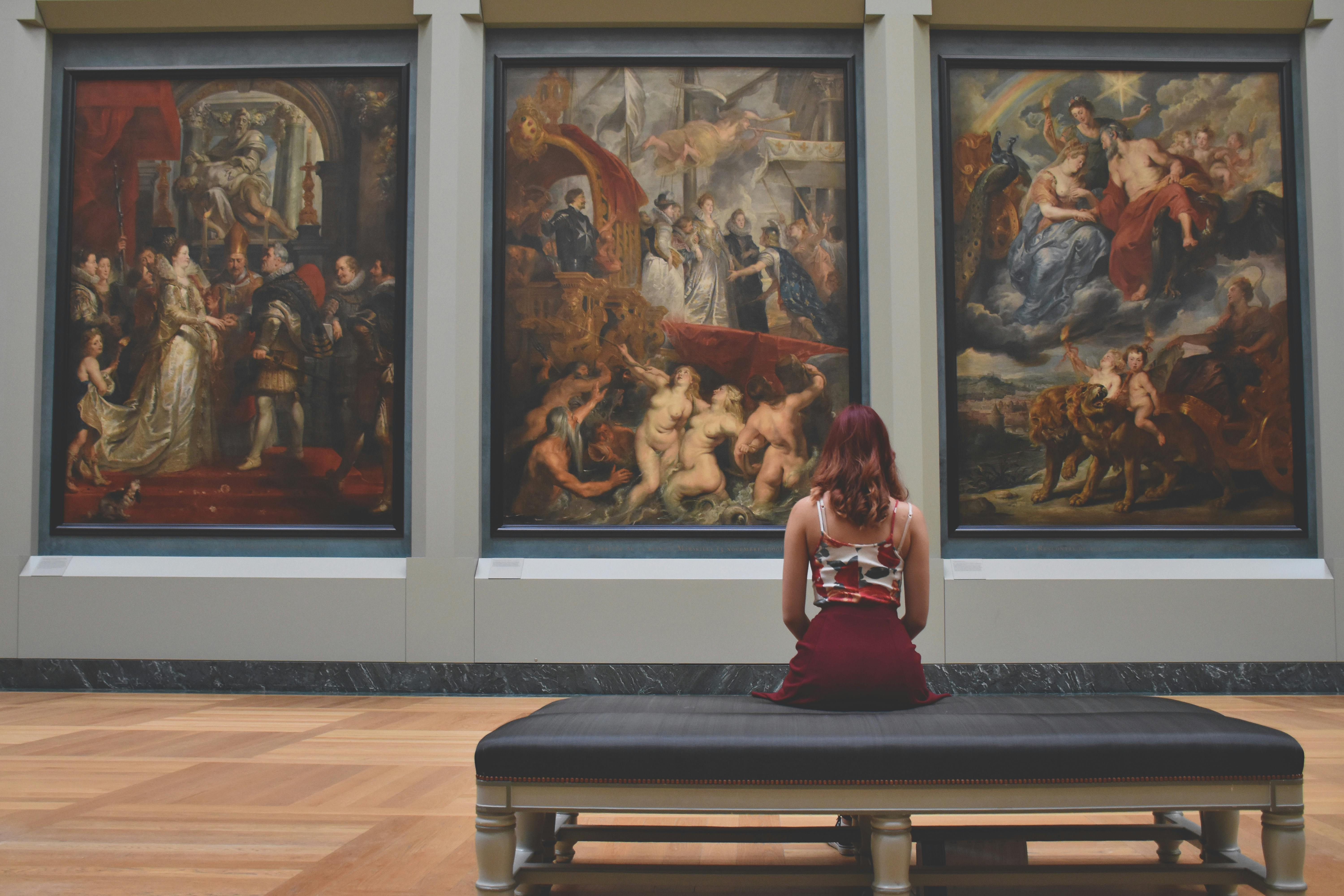
Collector viewing a challenging, non-decorative painting in a private home setting

The Price of Authenticity

Authenticity is a slippery concept in art, but it still matters. We can sense when a painting is made from internal necessity versus external pressure. The former has a density, a strangeness, a sense of discovery. The latter feels designed. It’s the difference between a poem and a jingle.

Collector money, in its current form, incentivizes the jingle. It rewards work that communicates quickly, brands clearly, and offends no one. The result is a lot of very expensive, very empty painting. Walk through any major fair and you’ll see it: technically proficient, conceptually thin, emotionally null. It’s painting as asset class.

But there’s a counter-current. Some collectors are realizing that the most valuable works—in every sense—are the ones that resist easy consumption. They’re seeking out difficult paintings, supporting artists who take risks, and building collections that prioritize depth over breadth. This is a minority position, but it’s an essential one. Without it, painting becomes mere decoration for the ultra-rich.

Frequently Asked Questions

How does collector money actually change what a painting looks like?

Collector preferences create market signals that artists and galleries respond to. When large-scale, brightly colored, highly legible works sell consistently at fairs and auctions, artists—consciously or not—begin to produce more work with those qualities. Galleries reinforce this by selecting such works for their booths. Over time, these aesthetic choices become embedded in artistic training and career strategy, producing a recognizable “market-friendly” style.

Are there painters who successfully resist market pressure?

Yes, but they are exceptions. Artists with strong institutional support, independent wealth, or a particularly stubborn vision can maintain practices that don’t cater to collector tastes. Examples include painters who work in deliberately unfashionable modes, at difficult scales, or with subject matter that resists easy consumption. Their survival often depends on a small number of committed dealers and curators who protect them from market forces.

Does this mean all expensive contemporary painting is compromised?

No. High prices and market success don’t automatically indicate artistic compromise. Some painters produce genuinely challenging, important work that also happens to be in demand. The problem is systemic: the market tends to reward certain qualities and punish others, creating a powerful incentive structure that shapes artistic production over time. The issue is the narrowing of possibilities, not the corruption of every individual painter.

What can collectors do to support more adventurous painting?

Collectors who want to resist these trends can buy work that doesn’t fit the fair-booth template, support artists early in their careers before market pressures intensify, and build relationships with galleries and curators who prioritize artistic risk over financial return. They can also educate themselves to trust their own eyes rather than relying solely on advisors and auction results.


The Brush Goes Where the Money Flows: How Collectors Rewire Contemporary Painting

Walk into Basel, Frieze, the Armory Show—any of the big ones—and before your eyes even adjust to the halogen glare, the pattern hits you. The paintings that own the booths share a family resemblance. Big. Saturated. One conspicuous but legible gesture apiece. These aren’t canvases calibrated for a visual argument. They’re calibrated for the architecture of a specific kind of wealth. Not a conspiracy, just a market mechanism so well-oiled it’s become indecipherable from taste itself.

We tell ourselves painting floats somewhere above the money. The myth of the studio—solitary, monastic, uncompromised—hangs on even while the same canvases flip at auction eighteen months later. Reality’s messier. Collector cash doesn’t just buy paintings; it warps the whole production ecosystem, from the MFA thesis show to the museum retrospective. What gets made, what gets seen, what gets remembered—all of it bends toward the gravitational field of private capital. We’re only starting to tally the aesthetic damage.

The New Patronage: From Medici to Mega-Gallery

Patronage is ancient, sure, but its current form moves at a speed and scale that would’ve stunned the Renaissance court. Today’s Medici isn’t one family but a loose cloud of high-net-worth individuals, family offices, and branded galleries that operate less like dealers and more like talent management firms. Gagosian, Hauser & Wirth, Pace, David Zwirner—these aren’t just sales floors. They’re production houses, PR shops, banks, archivists. They build careers by controlling who gets access to the collector class, and the collector class, in return, dictates what kind of painting gets produced by broadcasting what kind of painting it wants to live beside.

And the signal? Depressingly consistent. Collectors working with seven-, eight-, nine-figure budgets want objects that perform in particular domestic and social theaters. A painting has to hold a wall in a penthouse with eighteen-foot ceilings. It has to photograph—for Instagram, for the catalog raisonné that’ll justify the next auction estimate. It has to be recognizable from across the room as “a [insert artist name].” Brand legibility isn’t a bonus; it’s the skeleton the whole thing hangs on. The result is a flattened formal range. Experimentation that won’t photograph, that refuses the signature style, that’s too small or too quiet or too ugly, finds no market footing and, increasingly, no institutional backup either.

Abstract painting in a bright gallery space

Scale as Spectacle: Why Everything’s So Damn Big

Nothing screams collector influence louder than the sheer square footage. Walk the painting wing of any biennial and you’re met with acre after acre of stretched linen. The eight-by-ten-foot canvas has become the default unit of Serious Ambition. Part of that is architectural—the white cube demands it, and the private museum, that billionaire class status symbol, demands it even louder. When your foundation space in the Hamptons has forty-foot ceilings, a modest easel painting reads like a postage stamp.

But scale’s also a rhetorical trick. A huge painting can’t be ignored. It colonizes your field of vision and declares its own importance through brute physical imposition. For a collector, that translates into instant gravitas. The big canvas mutters “major work” before your eye even registers the image. It photographs like a hero, ruling the double-page auction catalog spread. This locks in a feedback loop: artists who work big get gallery backing, sell well, and earn museum shows that demand even larger work. Artists who work small get tagged as minor, intimate, domestic—adjectives that, right now, function as career-killing slights.

Something’s genuinely lost here. Intimate scale has historically been where painting did its most radical thinking—Morandi’s bottles, Forrest Bess’s visions, those late, shrunken Gustons. Works that ask you to move closer, adjust your body, enter a private space of looking. That kind of encounter is getting rare in a market that thinks physical magnitude equals artistic significance.

The Signature Style: Branding the Brushstroke

If scale’s the most visible symptom, the consolidation of the signature style is the most quietly corrosive one. Galleries and collectors both need artists to be legible. Legibility means a work is instantly attributable, easy to slot into an artist’s development narrative, recognizable in the crowded visual cacophony of an art fair. The pressure to lock down a consistent, marketable look starts early—often in grad school, where students notice the painters getting picked up by blue-chip galleries are the ones with a clear, repeatable gesture.

The economics reinforce it. A young painter signing with a major gallery gets a monthly stipend—often generous—in exchange for exclusive representation. That money’s an advance on sales. The gallery, having invested, needs to recoup. Which means the artist has to produce work that sells, and what sells is more of what already sold. Experimentation becomes a financial liability. Changing direction reads as a breach of contract. The result? A generation of painters who find their mature style at twenty-seven and are still iterating on it at forty-five, the work growing more polished, more expensive, more hollow with each passing season.

None of this is a fresh complaint, but the intensity has spiked as the market globalized and accelerated. When auction houses set the tempo—evening sales as theater, telephone bidders, gasps from the crowd—the pressure to make instantly recognizable, trophy-ready objects becomes suffocating. The painting stops being a site of inquiry and becomes a luxury good, distinguished from a handbag mainly by its claims to depth.

Artist applying paint to a large canvas in a studio

The Flipping Cycle and What It Does to the Work

The most corrosive dynamic might be the sheer velocity of collector money. The old model—buy a piece, live with it, maybe donate it to a museum a few decades later—has been replaced by a flipping culture. A collector grabs a hot young painter’s work at the gallery for $50,000. Eighteen months later, after the artist’s had a museum show and the waiting list has swelled, that same canvas surfaces at auction with a $200,000 estimate. The gallery fumes, the artist feels gutted, but the incentive structure is crystalline: auction houses actively court consignors with guarantees and whispered promises of record numbers.

This churn leaves aesthetic scars. Flipping rewards artists whose work photographs well in catalogs and whose prices climb a steep, clean curve. It penalizes artists whose work is thorny, slow to unfurl, resistant to easy commodification. It also creates a weird temporal warp: the market’s attention span shrinks, and painters who can’t churn out a steady stream of sellable objects risk evaporating from memory. The pressure to feed the auction pipeline encourages overproduction, which leads to work that’s thinner, more formulaic, less considered.

You see the results in the spread of what you could call “zombie abstraction”—paintings that gesture toward the history of gestural abstraction but carry zero urgency or risk. Well-made, handsome, utterly vacant. They exist to be sold, not to be looked at. And they dominate because they’re the rational response to a system that rewards predictability and punishes difficulty.

The Museum as Luxury Brand Extension

Museums, which ought to act as a counterweight, have gotten complicit. The rise of the trustee class—stocked with the same collectors who rule the auction houses—means institutional programming gets shaped by private interest. A trustee sitting on a deep collection of a particular painter has a vested interest in that painter’s historical clout. Museum shows get organized, catalogs get published, and the market value of the collection rises in step. Not corruption in the legal sense; just the way the machine runs now.

The fallout for painting is deep. When museum validation trails market success instead of leading it, the canon becomes a mirror of what sold, not what mattered. Artists working outside the gallery system—or whose work is too conceptual, too political, too formally stubborn to sell smoothly—get excluded from the historical record. The museum, once imagined as a space outside commerce, shifts into a luxury brand extension, gift shop and branded tote bag included.

Exceptions exist, obviously. Some curators fight the tide with brains and backbone. Some collectors actually care about the work, not just the asset. But the structural incentives all tug in one direction, and swimming against them demands constant, draining effort. The default setting of the contemporary art world is to serve the market. Only deliberate intervention can nudge it elsewhere.

Resistance and the Long Game

Is there an exit? The most interesting painting getting made right now often comes from artists who’ve figured out how to work inside the system while quietly gutting its demands. Some deliberately produce unsellable things—installations, performances, digital pieces—alongside their painting practice, using the market to bankroll the work that resists the market. Others slow down on purpose, making so little that the demand curve becomes irrelevant. A tiny handful have enough institutional weight to change direction radically and yank the market along behind them, though that’s a privilege available only to a few established figures.

There’s also a growing counter-market: artist-run spaces, nonprofit galleries, direct-to-collector models that route around the mega-gallery system. These places run on a different economic logic—one that values conversation over transaction, process over product. Small, fragile, perpetually underfunded, but they keep alive the possibility of a painting practice that answers to something besides the checkbook.

The deeper question is whether we even want painting to be a luxury good. The market has answered with a wall-shaking yes, but that answer isn’t final. Art history is littered with moments when the money felt unstoppable—the Dutch Golden Age, the Paris Salon, the 1980s boom—and each time, the art that stuck was the art that found a way to resist the easy seductions of commerce. The painters who matter are the ones who treat the market as a condition to be negotiated, not a goal to be chased.

Person viewing large contemporary paintings in a white gallery

The Viewer’s Responsibility

Which brings us to what we, as viewers, can actually do. The market isn’t some abstraction; it runs on collective attention. Every time we look at a painting, we’re making a choice about what kind of looking we value. Do we scan for the recognizable gesture, the brand signature, the investment-grade surface? Or do we slow down, sit with difficulty, tolerate discomfort, and let a work make demands on us that aren’t instantly legible as status signals?

Collector money is powerful, but it’s not omnipotent. It can’t force us to stare at what doesn’t grip us. It can’t make a hollow painting matter. The ultimate counterweight to market logic is the stubborn, idiosyncratic act of looking—the refusal to let price be the final measure of value. Painting, when it’s working, is a form of thinking that happens in material. Money can buy the material. It can’t buy the thinking. That, for now, stays beyond its reach.

Frequently Asked Questions

How does collector money directly influence what artists paint?

Collector influence works through several channels at once. Galleries offer stipends and representation in return for sellable work, which pushes artists toward a consistent, recognizable style. Collectors signal demand for large, photogenic pieces that fit contemporary architecture and social media. Auction results set price benchmarks that reward certain aesthetic choices and punish others. The effect piles up: over time, the market selects for paintings that are big, branded, and easy to consume, while squeezing out work that’s small, slow, or formally difficult.

Are museums still independent from the art market?

Museum independence has eroded badly. Trustees are often major collectors with financial stakes in the artists their institutions exhibit. Museum shows can pump an artist’s market value, and the prospect of that pump shapes curatorial decisions. Plenty of curators push back, but the structural entanglement of museums with private wealth means institutional programming increasingly echoes market trends instead of challenging them.

Can an artist succeed without catering to collector tastes?

Success outside the market mainstream is possible but rough. Some artists keep a dual practice, selling paintings to fund more experimental work. Others build careers through alternative spaces, grants, and academic jobs that offer a bit of insulation from commercial pressure. A small number get enough critical and institutional recognition that the market has to adapt to them, not the other way around. But for most emerging painters, the path to visibility and financial stability runs through the gallery system, and that system’s demands are hard to dodge entirely.

What can viewers do to support painting beyond market trends?

Viewers can build habits of slow, attentive looking that push back against the market’s preference for instant legibility and brand recognition. Seeking out artist-run spaces, nonprofit venues, and work that challenges instead of pleases can shift the wider cultural conversation. Writing, teaching, and talking about painting in ways that center formal and intellectual engagement over investment value also helps. The market feeds on attention; where we choose to point ours matters.

The Price of Paint: How Collector Cash Warps the Canvas

Money doesn’t crash into the art world. It seeps. A phone call between a dealer and a collector. A nudge at auction. A line item on a foundation’s tax filing. For the contemporary painter, that whisper has become a roar. Collector cash, once a distant patron, now practically sits in the studio, glancing over the easel, deciding what gets made. What we’re left with isn’t just a market—it’s a machine that manufactures taste, careers, and a very particular kind of painting.

We’re decades past the romance of the starving garret genius discovered after death. Discovery now happens in real time, greased by capital. The collector isn’t a passive hoarder of pretty things. They’re a speculator, a brand manager, sometimes a de facto curator. Their cash doesn’t just buy art; it warps the trajectory of painting itself. If you want to understand contemporary painting, you have to follow the money—for better and, often, for worse.

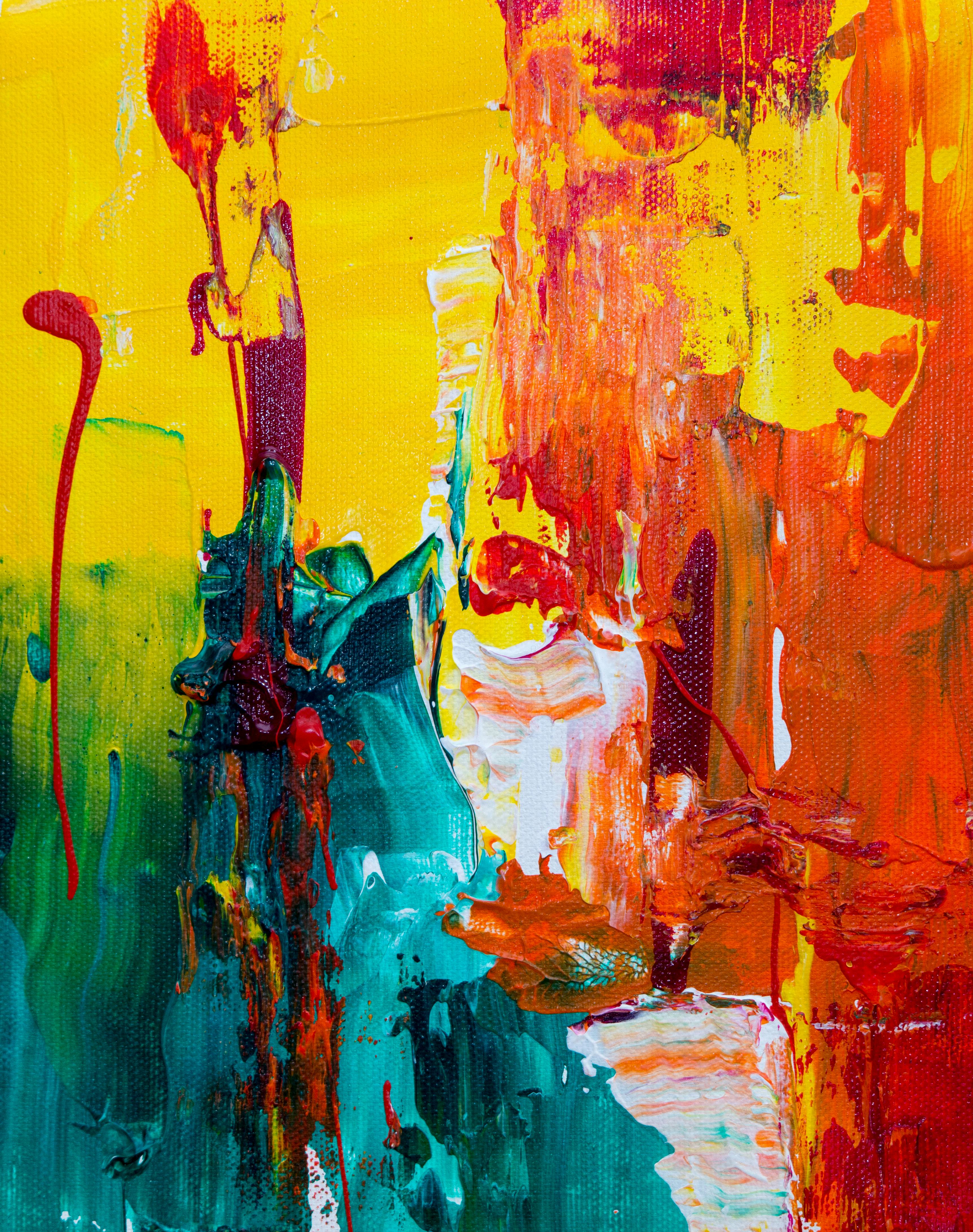
Abstract painting with bold colors and layered textures

The Collector as Kingmaker

Legitimacy used to trickle down from institutions: museums, academies, the slow build of critical consensus. A painter’s work had to marinate for decades. That timeline has collapsed. A young artist with a sharp Instagram presence and a couple of deep-pocketed backers can skip the old gatekeepers entirely. A collector’s purchase isn’t just a transaction; it’s a flare gun. When a known buyer acquires a piece, they’re not just hanging it on a wall. They’re assigning value, spinning a story, and, often, juicing a market.

This turns collectors into kingmakers. Their taste—or the taste of the advisors they hire—becomes a self-fulfilling prophecy. Buy enough canvases from a particular painter, stash them in the right freeports and private museums, loan them to the right biennials, and you’ve manufactured a career. The paintings themselves become secondary to the story of their acquisition. The work stops being just an image. It’s a token of a relationship, proof of insider knowledge, a unit of social currency.

The fallout for painting is real. When a collector’s whim can launch or sink a career, artists—consciously or not—start to internalize those whims. The market doesn’t bark crude orders about subject or style. It works quietly, through rewards and silences. A painter churning out big, immersive, camera-ready canvases that pop in a white-cube living room will find doors swinging open. A painter obsessed with small, thorny, discursive works that demand slow attention may find those doors stay shut, no matter how much critics rave.

The Rise of the Trophy Aesthetic

Walk any major art fair and you’ll clock a certain kind of painting everywhere. It’s big. It’s brash. The surface is flawless, expensive-looking. It photographs like a dream. It shouts for attention across a packed hall. This is the trophy aesthetic, and it’s no accident. It’s the direct output of a market where paintings have to function as luxury goods, status symbols, and assets that are easy to store, ship, and flip.

The trophy painting is built for the collector’s wall, sure, but also for their Instagram grid. It needs to read in a thumbnail, stun in a selfie, and impress as a JPEG forwarded to a wealth manager. This pushes painters toward a kind of spectacular restraint: high production values, a recognizable brand, a calculated mix of novelty and familiarity. The work has to look like an investment, which means it has to look like something already validated. The result is a weird sameness—a global style of pricey abstraction and figuration that’s instantly recognizable and totally interchangeable.

Think of what critic Dean Kissick dubbed “zombie formalism”—that wave of slick, process-driven abstraction that flooded the market in the early 2010s. Those paintings were easy to like, easy to sell, and easy to forget. Perfect product for a market that needed to move inventory fast. The label was cruel but precise: the works were undead, animated by money, not by any inner urgency. The market has shifted since, but the logic holds. Painting is now a luxury good, and luxury goods must be recognizable, repeatable, and scalable.

Gallery visitors viewing large contemporary paintings

The Speculative Turn

Beyond looks, collector cash injects a speculative logic that twists painting’s relationship with time. Art has always been a store of value, but the financialization of the market has cranked the cycle of production, hype, and resale to a breakneck speed. Paintings get flipped like condos, sometimes months after leaving the studio. The auction house has become a primary market, with work by young artists hitting the block before they’ve had a single museum show. This creates a feedback loop: collectors buy emerging painters in bulk, hoping to catch the next flip; galleries push artists to produce more, faster; the work gets thinner, more formulaic, more tuned to the rhythms of the sales calendar.

The painter isn’t just an image-maker anymore. They’re a brand, a production studio, a small-business CEO. Assistants multiply. Output swells. The artist’s hand becomes a managerial hand, directing a team to execute a vision that has to stay consistent enough to be recognizable, yet varied enough to keep a market humming. The pressure to produce can be backbreaking. It leads to burnout, repetition, and a kind of creative hedging—a fear of taking risks that might spook the collector base. The result is a body of work that feels pre-approved, as if it’s already been run through a sales report filter.

This speculative engine also warps how we talk about painting. Critical discourse gets shoved aside by market chatter. “Is it good?” gives way to “Is it hot?” Auction results become the main metric of success. A painter’s relevance gets measured not by the depth of their inquiry but by the steepness of their price curve. This flattens the whole field into a single dimension: value as price. The paintings that don’t fit—the quiet, the difficult, the slow—aren’t necessarily bad; they’re just invisible to the machinery of capital.

The Patronage Paradox

None of this is to say collector money is inherently poison. Patronage has always been part of the ecosystem. The Medici didn’t just buy paintings; they shaped the Renaissance. Peggy Guggenheim’s collecting built a canon. Charles Saatchi’s appetite defined a generation of British art. The difference now is scale, speed, and the near-total absence of counterweights. In the past, the market was balanced by the academy, the church, the state, and a muscular critical culture. Today, the market is the dominant—often the only—arbiter of value.

The paradox is that collector money can also bankroll extraordinary painting. It funds studios, materials, assistants, and the time to experiment. Some of the most ambitious work being made right now would be impossible without the patronage of wealthy individuals and foundations. The problem isn’t the money itself; it’s the lopsided power. When collectors become the primary audience, the primary validator, and the primary income source, the painter-patron relationship gets dangerously unbalanced. The painter ends up serving the collector, not the work.

You see it in the rise of the artist-collector dinner, the studio visit as sales pitch, the artwork conceived as a backdrop for a party. The social circuit of openings, fairs, and biennials isn’t a supplement to the art; it’s the art’s reason for being. Painting becomes a prop in a theater of wealth. The work gets judged not by its internal coherence or its ability to unsettle, but by how well it lubricates social transactions. It’s art as hospitality.

Abstract painting with dynamic brushstrokes and intense color

The Resistance of the Real

Still, painting persists. For all the market’s gravitational pull, there are painters who push back. They make work that’s too strange, too small, too slow, too ugly, or too demanding to slot neatly into a collector’s living room. They refuse the logic of the brand, the pressure to produce, the seduction of the easy sale. Their work isn’t anti-market—that stance is itself a marketable pose—but it’s indifferent to the market’s demands. It follows its own necessity, however obscure.

These painters often work the edges: small galleries, artist-run spaces, cities outside the major art hubs. They’re sustained by teaching, grants, the occasional sale to a collector who values difficulty over decoration. Their work isn’t always successful, but it’s alive in a way that much market-driven painting isn’t. It asks questions instead of handing out answers. It risks failure. It trusts the viewer to do the work of looking, rather than seducing them with instant gratification.

The challenge for anyone who cares about painting is to build structures that support this kind of work—structures not entirely dependent on the whims of the market. That means a strong critical culture that can articulate values beyond price. It means institutions willing to take risks, to show work not already validated by sales. It means collectors who see themselves as custodians rather than speculators, willing to back difficult work without demanding a quick return. And it means a public willing to look, to think, and to be unsettled.

The Future of the Medium

Painting has been declared dead many times, yet it sticks around. It sticks around because it’s a uniquely intimate medium, a direct record of a human hand making decisions on a surface. No amount of market manipulation can fully erase that. The best painting still carries a charge of presence, a sense that someone stood before this canvas and wrestled with something real. That charge can’t be faked, and it can’t be bought—though the market will certainly try.

The question is whether we can create conditions where that charge is valued for its own sake, not for its price tag. This takes a shift in consciousness, a willingness to look past the branding, the hype, the auction results. It takes critics who are willing to say no, collectors who are willing to be patient, and artists who are willing to be poor. It takes, in short, a culture that values painting as an act of inquiry rather than an asset class.

The money won’t vanish. It never has. But its influence can be named, analyzed, and resisted. The first step is to see clearly how collector money reshapes painting—not just its market, but its very form and meaning. The next step is to build alternative structures of value, rooted in looking and thinking rather than in buying and selling. This isn’t nostalgia for some purer past; it’s a practical necessity for a living art. Without it, painting becomes luxury wallpaper, a decorative echo of wealth, a beautiful corpse.

Frequently Asked Questions

How does collector money actually change what painters create?

Collector money shapes painting through a system of incentives and pressures. When certain styles, sizes, or subjects sell more easily, artists—especially emerging ones—may adapt their work to meet market demand. This can lead to a homogenization of aesthetics, with large, visually striking, and easily recognizable works dominating the market. The pressure to produce quickly for fairs and auctions can also result in thinner, more formulaic work. The influence is often indirect but pervasive, shaping not just what gets made but what gets seen and valued.

Is all market-driven painting bad?

Not necessarily. The market can support ambitious, large-scale projects that would be impossible without significant funding. Many historically important works were created under patronage systems. The issue isn’t the presence of money but the balance of power. When the market becomes the sole validator of value, it can crowd out work that is slower, more difficult, or less immediately appealing. The danger is a monoculture where only market-friendly painting survives, while other vital forms of practice get marginalized.

What can collectors do to support painting in a healthier way?

Collectors can act as custodians rather than speculators. This means buying work they genuinely believe in, holding it for the long term, and supporting artists through periods of experimentation and risk. They can also use their influence to advocate for institutional support of non-market-driven work, and they can educate themselves about the broader ecology of painting beyond the auction house and the art fair. A healthy art world requires collectors who see themselves as part of a cultural ecosystem, not just a market.

How can viewers distinguish between market-driven and genuinely compelling painting?

It takes time, attention, and a willingness to look past surface appeal. Market-driven painting often prioritizes immediate impact, recognizability, and a polished finish. Genuinely compelling painting may be slower to reveal itself, more demanding of the viewer, and less concerned with being liked. It often carries a sense of internal necessity—a feeling that the artist had to make this work, not just that they could sell it. Developing the ability to make these distinctions is a matter of looking at a lot of art, reading criticism, and trusting your own responses over market signals.

The money will keep flowing. The question is whether we can hold onto a space for painting that isn’t entirely defined by it—a space where the work answers to something other than the checkbook. That space is shrinking, but it’s not gone. It lives in the margins, in the studios of the stubborn, in the galleries of the committed, in the eyes of those who still believe a painting can be more than a trophy. The fight for that space is the real art war of our time, and it’s waged not with manifestos but with every brushstroke that refuses to flatter.

The Price of Vision: How Collector Money Reshapes Contemporary Painting

The gavel cracks. A smeared canvas of ochre and blurred faces—twelve point three million dollars. The room breathes out, a cocktail of reverence and exhaustion. By the next morning, a dozen young painters in Bushwick, Berlin, and Seoul have already begun to tilt their palettes, not toward some new light, but toward that sound. Nobody planned it. It’s just a market, and markets have gravity. Collector cash doesn’t just reward painting—it rewires the whole thing, from the studio floor to the museum wall. Pretending otherwise is like mistaking the romance of a freezing garret for the reality of a climate-controlled auction hall. The real question isn’t whether money shapes painting. It’s how, and what gets flattened in the process.

”

The Invisible Hand on the Canvas

Walk through any big fair—Basel, Frieze, the Armory Show—and you’ll spot a weird convergence. The same gestures keep cropping up. The loose, confident brushstroke that whispers spontaneity without threatening the furniture. The dusty pinks and sage greens that sing on Instagram. The canvas that’s neither too shy for a foyer nor too loud for a consulting firm’s lobby. These aren’t coincidences of genius. They’re the symptoms of a feedback loop that starts and ends with a cheque.

Collectors, especially the tiny crew of mega-buyers who run the top tier, act as unofficial commissioning bodies. Their tastes—whether massaged by advisors or sharpened at dinner parties—draw the borders of what counts as a “serious” painting. A 2022 study by Art Basel and UBS clocked high-net-worth collectors spending a median of $274,000 on art in just the first half of the year, with painting still the heavyweight. When a handful of wallets can tilt a market, their whims become gravitational. Galleries, gasping for those sales, start nudging artists toward work that fits the template. Critics, hungry for access and ads, swallow their sharper thoughts. And the artist, who isn’t stupid, looks at which peer lands a solo show and which one gets a storage locker.

The Size-and-Scale Imperative

Then there’s the big canvas tyranny. It’s a fair-circuit cliché by now: paintings that stretch twelve, fifteen, twenty feet, demanding not just wall space but architectural surrender. The logic is brutally simple. Giant paintings are harder to ignore, harder to photograph badly, and harder to price modestly. They swagger as major works before you’ve even squinted at a brushstroke. For the collector, a massive painting is a trophy of space and cash conquered. For the painter, it becomes a ticket to relevance.

This has bent artistic growth out of shape. Young painters who, a generation ago, might have spent ten years working intimately on a modest scale are now shoved to produce statement pieces immediately. You get a glut of work that’s big in square footage but thin in conviction—stretched to fill a wall, not a vision. The critic Jerry Saltz once growled that a lot of today’s large-scale paintings are “just small ideas blown up to billboard size.” The money demands spectacle. Spectacle demands square footage.

The Instagram-Optimized Palette

And then there’s colour. Spend ten minutes doom-scrolling the feeds of top galleries and notice how many paintings share a family face: soft cadmiums, muted ceruleans, a polite avoidance of anything too strident or sour. This isn’t a sudden global awakening to gentleness. It’s the Instagram filter made flesh. Collectors, like the rest of us, first meet art through a screen. A painting that pops on a backlit display without frying the retina has a distinct commercial edge. Harsh, clashing, or deeply dark works—the ones that need you to stand in front of them, in silence, for a long time—are at a structural disadvantage.

This has led to a slow bleaching of the contemporary palette, a retreat from the kind of chromatic brawls that defined painters from Goya to Guston. A 2021 piece in The Art Newspaper noted that abstract painting especially has drifted toward “decorative harmony,” with gallerists privately admitting that “aggressive” palettes are a harder sell. Money doesn’t like to be startled. It likes to be soothed. Or at least it likes the room it sits in to feel soothed.

Abstract painting with muted, harmonious colors on a gallery wall

The Death of the Difficult Picture

What really takes a beating isn’t technique. It’s nerve. The paintings that stick around—the ones that outlive their first patrons and talk across centuries—are rarely polite. They’re awkward, too much, wrong for their own moment. Caravaggio’s filthy feet and violent shadows offended his church clients. Goya’s late works were a howl of despair nobody commissioned. Philip Guston’s cartoony Klansmen were reviled long before they were revered. Nobody made those to match a sofa. They were made despite every commercial instinct.

Today’s system, by contrast, rewards the pre-approved disruption. A painter might get a round of applause for “challenging the canon,” but only inside a very narrow band of permitted dissent. The challenge has to be legible, marketable, and above all, buyable. The collector wants to purchase a piece of the revolution, not the revolution itself. So you get a steady stream of paintings that gesture at transgression while staying fundamentally safe: a nude that’s more perfume ad than indictment, an abstraction that suggests chaos without ever leaving the comfort of good composition.

Don Thompson, an economist and critic, laid it out in his book The $12 Million Stuffed Shark: the contemporary art market is basically a luxury-goods market wearing a cultural costume. Paintings act as Veblen goods—their value climbs with their price, and their main job is social signalling. In a market like that, genuine difficulty is a bug, not a feature. A painting that actually unsettles is harder to resell, harder to explain over a cocktail, harder to insure. The market doesn’t censor it. It just shrugs and looks away.

The Advisor as Aesthetic Gatekeeper

Between the collector and the canvas, a figure has swelled in power: the art advisor. Once a quiet helper for the nervous buyer, the advisor now shapes production itself. Advisors juggle portfolios for dozens of clients, and a single recommendation can make or break a gallery’s season. Since their business runs on acquiring works that will gain value, they bet on artists with a track record, a muscular gallery, and a brand you can spot from across the room. Experimentation is a liability. Consistency is an asset.

This freezes mid-career painters. An artist who switches styles dramatically is a risk. The advisor can’t easily explain the new language to a client who bought the old one. The result is a soft pressure to repeat yourself, to turn into a brand rather than a seeker. The painter becomes a manufacturer of signature goods, and the studio starts to feel like a factory floor. The money, flowing through the advisor, demands predictability. Predictability is the enemy of the thing itself.

A person contemplating a large abstract painting in a modern gallery setting

The Regional Consequences

The gravity of collector money doesn’t just bend individual careers. It remaps whole art cities. Berlin, which once wore its rough, anti-commercial heart on its sleeve, has watched its painter communities buckle under the flood of international buyers. Cheap studios evaporate. Galleries that once nurtured prickly, local work give way to branches of global mega-galleries. The same story replays from Los Angeles to Mumbai: money rolls in, and with it comes a sanding-down of local weirdness, a drift toward a globally legible style that can travel from fair to fair without anyone needing a footnote.

Look at the so-called “Zombie Formalists,” a label the critic Walter Robinson slapped on a wave of process-based abstraction that ate the market in the early 2010s. Those paintings, with their squeegeed surfaces and blank materiality, were built for the fair circuit: easy to produce, easy to recognize, easy to slot into any collection. They didn’t bloom because they pushed painting forward. They bloomed because they fit the market’s shopping list. When the market got bored, a lot of their makers were left stranded, prices cratered, galleries dropped them. The money had reshaped painting. Then it reshaped it again.

The Museum as Final Endorsement

Collector money even snakes into the museum, which ought to be the last holdout of independence. In reality, museums lean harder than ever on donations from the same collectors whose holdings they put on the walls. A collector sitting on fifteen works by a given painter has a deep interest in that painter getting a retrospective. The museum, meanwhile, needs the collector’s cash and the promised bequest of the collection. You get a closed loop: the collector buys, the museum blesses, the value swells, the collector buys more.

This isn’t corruption in a courtroom sense. It’s more slippery: a structural alignment of hungers that leaves almost no oxygen for the painter who falls outside the pipeline. The painter who works slowly, who refuses to churn out enough for a market, who makes work too thorny for a boardroom—this painter finds no champion. The system doesn’t reject her. It just never sees her.

Resistance and the Long Game

Is it all hopeless? Not entirely. Markets have always shaped art, and art has always found ways to squirm loose. The painters who end up mattering the most, over the long haul, are often the ones who spent years or decades in the weeds, ignored by the money. Agnes Martin painted her grids in rural New Mexico, a long way from the New York market. Forrest Bess painted his wild, visionary canvases in a bait shack in Texas. Alice Neel painted her raw, unblinking portraits while the art world chased abstraction. These artists are now canon, and their works pull millions. But they were never made for those millions.

The takeaway isn’t that money is evil. It’s that money is a medium, like paint, and it has its own properties. It can enable great work—few major paintings exist without some form of patronage—but it can also warp it. The job for the serious painter is to understand the forces pushing on her practice and to make hard choices about which ones to accept and which to fight. That fight might mean staying small, staying slow, staying strange. It might mean refusing the fair circuit, or using it tactically instead of letting it use you. It might mean, above all, remembering that the ultimate patron isn’t today’s buyer but someone looking at the work fifty years from now, who will judge it by standards no auction house can set.

Artist's studio with paintbrushes and canvases in natural light

Frequently Asked Questions

Does collector influence always harm painting?

Not always. Patronage helped midwife some of the greatest things ever made—think the Sistine Chapel or Velázquez’s court paintings. The damage kicks in when the market’s demands get so loud they drown out everything else, narrowing what gets made and shown. The trouble isn’t money itself. It’s the concentration of it, and the lack of anything pushing back—like serious public funding or independent criticism with teeth.

How can a painter resist market pressure?

Resistance wears a lot of faces. Some painters split their practice down the middle: commercial work that pays the bills, experimental work that keeps the soul alive. Others hunt for non-market spaces—artist-run galleries, residencies, public commissions. But the grittiest resistance is internal: a stubborn loyalty to your own questions, even when the market is asking entirely different ones. That means learning to live with obscurity and refusing to treat auction prices as a report card.

Are there collectors who support genuinely challenging work?

Yes, though they’re a small tribe. A handful of collectors, often the ones who came to art through intellectual hunger rather than an investment spreadsheet, actively chase difficult, uncompromising painting. They’ll buy work that doesn’t flip easily and stick with artists for decades. These collectors are pure gold, but they don’t set the market’s thermostat. The problem is that the system rewards the opposite approach, making it an uphill slog for such collectors to shift the wider weather.

What role do critics play in this ecosystem?

Criticism, at its best, should be the independent eye that judges work on its own terms, not on how it’s trading. In practice, a lot of critics are tangled in the same nets: access, advertising, the fear of getting frozen out. The collapse of staff critic jobs and the rise of freelance gig work make it harder to write without flinching. A critic who needs gallery goodwill for previews and interviews might swallow hard before savaging a gallery’s star. The result is a criticism that too often works as a marketing annex, not a real check on market muscle.


The Price of Paint: How Collector Money Reshapes Contemporary Painting

Somewhere along the way, the conversation flips. It might happen in a studio visit, at a quiet gallery dinner, or in the buzz after an auction. Suddenly nobody’s talking about whether a painting breathes, whether the surface holds, whether the color actually works. They’re talking about waiting lists. Which collections just snagged a piece. What that does for the next body of work. The money has walked in, and it doesn’t slink back out.

A painter's palette with mixed, vibrant oil paints

We pretend art and commerce live in different zip codes—that the studio is a sanctuary, far from the market’s greasy hum. Critics, curators, collectors: they’ve all run this fiction. It lets you talk about a canvas as raw expression while checking its appreciation rate under the table. But the last twenty years of contemporary painting tell a different story. Collector money hasn’t just greased the wheels. It’s changed what gets painted, how it moves, and who gets to keep a practice alive at all.

Don’t mistake this for a sermon about selling out. Patrons have shaped art since Giotto. What’s different now is the speed, the scale, the sheer weight of capital that decides what lands on museum walls and fair booths. When a few mega-collectors, private museums, and branded galleries can set the thermostat for an entire medium, the paintings start showing the strain.

The New Patronage: From Medici to Mega-Gallery

Old-school patronage came with strings, sure, but you could see them. The Church wanted altarpieces. Aristocrats wanted flattering portraits. The modern gallery system, whatever its sins, at least pushed a story of critical distance: dealers stuck with artists they believed in, often for years, before the market noticed. That ecosystem still exists, but it’s been swallowed by a parallel machine that runs on luxury-brand logic.

Now a fat slice of contemporary painting gets bought by a global class of ultra-wealthy individuals. For them, art is a store of value, a social signal, a tax play. Private museums—the Broad in L.A., the Rubell in Miami, the anonymous freeport warehouses—become the final stop for work the public may never see. The collector isn’t a quiet buyer anymore. They’re an active curator, a tastemaker whose choices echo backward into the studio. An artist who once spent years on a knotty, difficult language suddenly finds the market wants a signature style—something that photographs well on Instagram and registers instantly across a packed fair aisle.

It’s subtle. Few collectors phone in a commission. The pressure is systemic. The mega-galleries that now rule the primary market know what moves. During studio visits, a casual remark slips out: certain sizes sell, certain palettes pop under fair lights, a consistent, recognizable “brand” props up secondary-market confidence. Push back, and you risk losing representation to someone more flexible. Go along, and you might not even notice the bargain—the market logic has already seeped into your bones.

Scale, Surface, and the Hunger for Spectacle

Walk Art Basel, Frieze, the Armory Show. The evidence is physical. Paintings have swollen. Not because every artist’s vision aches for monumentality, but because the booths demand it. One fifteen-foot canvas dominating a wall signals confidence, investment, museum-scale ambition. The loft-like spaces where these works end up—a Tribeca penthouse, a Berlin factory conversion—just keep pushing the dimensions.

A large abstract painting hanging in a modern art gallery

Surface has warped under the same weight. The obsession with process-heavy, materially seductive painting—thick impasto, visible brushwork, odd materials—is partly a reaction to screens. A painting has to justify its physical existence when every image gets flattened online. Collectors pay for the object, and they want to feel it. But the appetite for texture and scale can curdle into self-parody when it becomes a checklist. The gestural mark that once meant existential struggle now reads as investment-grade authenticity.

None of this means all big or luscious painting is hollow. Julie Mehretu, Mark Bradford—artists where scale is baked into the meaning, not a nod to spectacle. But for every painter who genuinely needs those feet of canvas, a dozen inflate their work to meet market expectations, surfaces juiced with medium to catch the light just right. What you get is a weird strain of contemporary painting: it looks radical but feels gutless. Big, loud, empty.

The Primary Market as Trend Accelerator

Collector money doesn’t just buy existing work. It steers the conversation about what’s worth painting next. The primary market moves at a clip that would have been science fiction thirty years ago. A young painter pops out of an MFA, gets a few sharp group shows, and before they’ve built a real body of work, speculative buying inflates their prices. Waiting lists bloom. Flipping starts—collectors buy at primary and immediately resell at auction, pocketing the gap while the artist watches their market go haywire.

This churn lands right on the paintings. An artist who fears their auction prices might dip if they change direction gets conservative. Experimentation becomes a financial risk. The pressure to crank out recognizable, salable objects can starve the curiosity that makes painting worth a damn. Careers burn bright and fast, fed by collector expectation, not inner need. The work left behind looks dated before its time.

Look at the recent fever for young figurative painters—bodies reworked through surrealism and identity politics. The work is often strong. But market speed turns a viable aesthetic into a factory. Collectors buy the theme, not the painting. Galleries, smelling demand, scout artists who fit the profile. What should be a deeply personal way of making images gets homogenized. The money, hunting the next thing, snuffs out the novelty it claims to love.

What Gets Left Behind

If collector money reshapes what gets painted, it also picks what doesn’t. The artists who suffer most aren’t the refuseniks—some of them find a niche, a loyal patron, a teaching job. The real loss is the mid-career painter who built a practice in a slower era, before the market got so efficient at filtering for fashion. Their work might be rigorous, strange, slow. It might need you to sit with it, read an essay, track a decade of wrong turns. That kind of painting doesn’t translate to a JPEG on a fair preview list.

Private museums, with all their tax-smart philanthropy, rarely gamble on difficult mid-career artists. They want the blue-chip names that anchor their collection’s value or the hot new thing that telegraphs relevance. The painter who’s sixty, who never quite broke through but is doing the most urgent work of their life, is invisible. Their paintings gather dust while fair booths fill with the latest MFA grad whose every brushstroke looks calculated for a collector’s spreadsheet.

An artist's studio with canvases leaning against the wall

We’re losing something: the slow burn, the career made of dead ends and recoveries, the vision that doesn’t announce itself in one room. The market’s time horizon has shrunk to where five years feels like a full arc. Collectors who buy and immediately warehouse have no stake in an artist’s long thinking. They have a stake in the name, the brand, the asset. The painting is just the token.

Can the Painting Survive Its Patrons?

It’d be easy to end with a call for purity—artists retreating into heroic obscurity. That’s never been real for most. Paint costs money. Studios cost money. Life costs money. The question isn’t whether to engage the market, but how to do it without being digested.

Some artists have found exits. They run a commercial practice that bankrolls an experimental one under a pseudonym or in a separate space. They seek out collectors who are curious, not just acquisitive—rare, but they exist. They build through institutions and curators who can buffer against market pressure, though institutional taste brings its own distortions.

The harder problem is structural. As long as the art market runs as an unregulated luxury sector—zero transparency, conflicts of interest everywhere, a tax system that rewards hoarding over sharing—collector money will keep twisting the medium. The paintings we see are symptoms of a system that treats art as a financial instrument first, a cultural object second. Until we face that, we’ll keep getting the paintings we deserve: big, shiny, forgettable.

There are still painters making work that pushes back. You’ll find them in smaller galleries, artist-run spaces, the odd museum survey curated by someone ignoring the auction results. Their paintings don’t always photograph well. They ask for time. They might even be ugly in ways that unsettle a collector who wants something that looks good above the sofa. These painters are the medium’s immune system. They need support the market, by its nature, won’t give. The question is whether enough of us—critics, curators, and yeah, collectors—can look past the price tag long enough to see what painting might still become.

Frequently Asked Questions

How exactly does collector money influence what artists paint?

It works through indirect channels. Galleries, knowing what sells, may drop hints about sizes, palettes, or stylistic moves during studio visits. The art fair setup rewards work that reads fast and photographs well. Speculative buying on the primary market pushes artists to repeat winning formulas instead of risking something new. It’s a systemic squeeze—no collector has to pick up the phone and give orders.

Are private museums good or bad for contemporary painting?

Mixed bag. They can offer resources and visibility for artists who’d otherwise get skipped, and some genuinely try to engage the public. But because they’re bankrolled by individual collectors, the programming often tracks the collector’s taste and investments. That can mean a conservative, brand-first approach favoring blue-chip names and market darlings over tougher, mid-career artists without a strong secondary market.

Can an artist reject the market and still sustain a career?

Total rejection rarely works—paint, studio, rent all cost money. But plenty of artists find workarounds: teaching, grants, residencies, smaller galleries that play a long game, or a commercial practice that funds more experimental work. Building ties with curators and institutions can also help, though that world has its own pressures.

What should collectors do if they want to support painting in a more meaningful way?

Get deep. Engage with an artist’s practice over time. Buy work at different career stages, not just the “hot” moment. Visit studios. Talk about ideas, not prices. Be willing to acquire pieces that are difficult, unresolved, unfashionable. Support institutions that take risks on under-recognized artists. And push for more transparency and regulation in the art market itself—that’s a concrete step, too.

The Price of Paint: How Collector Money Warps the Canvas

The cheque clears, the gallery sends its clipped confirmation, and somewhere in a sunlit studio, a canvas gains a destiny. Not a meaning—a destiny. The patron’s wire transfer, often six or seven figures, lands not merely on a desk but inside the work itself, altering its chemical composition before the varnish has dried. We talk endlessly about the artists, the critics, the curators. We whisper less about the collector, whose capital acts as an invisible pigment, saturating every brushstroke with a question the work was never meant to answer: What will this be worth?

Contemporary painting is deep in a transaction it rarely admits. Money does not just buy paintings; it builds them. It determines scale, palette, subject, and ultimately, the tempo of an entire career. To pretend otherwise is the greatest fiction the art world sells—more elaborate than any canvas hanging in a white cube.

The Collector as Co-Author

Walk through any major fair—Art Basel, Frieze, the Armory Show—and you will spot the signature of collector influence before you read a single wall label. There is the oversized canvas, scaled not for a domestic wall but for the soaring atrium of a Miami compound. There is the inoffensive abstraction, chromatically harmonious enough to match a sofa yet sufficiently gestural to signal risk. There is the series, repeated ad nauseam, because a single buyer acquired the first three and now wants the fourth, fifth, sixth—completism as creative direction.

This is not patronage in the Renaissance sense, where a Medici commissioned a chapel and left the genius to its devices. Today’s collector, particularly the ultra-high-net-worth individual parking capital in art as an alternative asset class, often functions as an uncredited co-author. Their preferences become briefs. Their acquisitions become endorsements that rewrite an artist’s market category overnight. An emerging painter who sells to a respected European collection suddenly finds their next studio visit booked by curators who previously wouldn’t return an email. The work hasn’t changed. The provenance has.

Consider the phenomenon of the “flippable” painting. Auction houses have perfected the alchemy of turning a two-year-old canvas into a trophy, provided it ticks certain boxes: recognisable style, medium dimensions, a clear lineage from the artist’s most Instagram-friendly period. Artists, consciously or not, begin producing for that secondary-market window. They paint with one eye on the gallery wall and the other on the Christie’s catalogue, crafting objects that photograph well as thumbnails and hold their value like a bond.

Scale and the Architecture of Wealth

Size is the most visible symptom of collector-driven production. In an era where art must compete with the architecture of the 1%, painting has swelled. A modest canvas does not command a room, let alone a portfolio. It cannot anchor the double-height living space or assert the owner’s cultural seriousness to a visiting hedge fund manager. So studios become factories of the monumental, churning out meters of linen that demand a freight elevator and a team of riggers just to leave the building.

This inflation has consequences. Young painters, hungry for representation and the financial oxygen it brings, stretch canvases they can barely afford, tackling surfaces so vast that content thins into decorative gesture. The intimate, the peculiar, the slow-burning—all shrivel under the imperative of the wall-filling statement piece. Galleries reinforce the cycle: they know a large work is harder to sell to a private collector but easier to place with an institution or a brand-conscious foundation, which in turn validates the painter’s price point. The collector who does bite gets a trophy that announces its importance in square feet.

A large abstract painting in a modern gallery space with a viewer

The Chromatics of Consensus

Palette, too, bends toward capital. Certain hues are simply more collectable. The muted terracottas and dusty pinks that dominated fairs in the late 2010s were not a spontaneous eruption of collective sensibility; they were the aesthetic equivalent of a safe harbour, colours that soothe without challenging, that complement the beige minimalism of the collector’s interior designer. A painter working in acid greens or bilious yellows faces a steeper climb, their work deemed “difficult”—code for hard to place above a B&B Italia sectional.

This chromatics of consensus extends to content. Figuration is back, but it is a particular kind of figuration: legible, often identity-driven, marketable as a story. The artist’s biography becomes a selling point, their ethnicity or gender a shorthand for authenticity that a collector can feel virtuous acquiring. This is not to dismiss the genuine urgency of much identity-based work, but to note how quickly the market metabolises radicality into product. A painting about displacement becomes a conversation piece for a penthouse whose owner has investments in the very industries causing that displacement. The irony is not lost on the painter, but the rent is due.

Abstraction, meanwhile, has been rebranded as “process-based” or “material-led” to give it a narrative spine that collectors can recount at dinner. A canvas of layered pigment becomes a record of the artist’s physical engagement, a relic of labour. The collector buys not just the object but the performance it implies—the studio video, the monograph essay, the Instagram reel of the artist dragging a squeegee across the surface. The painting becomes a souvenir of authenticity in a world of financial abstraction.

The Gallery as Gatekeeper and Accelerant

Galleries are the essential intermediaries in this economy, and their role has mutated. The old model—discover, nurture, place in museums, build a slow-burning reputation—is increasingly a luxury reserved for the few dealers with deep pockets and deeper patience. For many, the gallery is a brokerage, matching pre-vetted product with pre-qualified buyers. The artist is a supplier, and the supplier must deliver consistency.

This breeds a career arc that is less a trajectory than a spike. A painter debuts in a group show, gets picked up by a mid-tier gallery, produces a sell-out solo booth at a satellite fair, and is suddenly on the radar of collectors who buy not with their eyes but with their ears. Prices quadruple in eighteen months. The artist, still developing, is now trapped by the very style that launched them—to deviate is to risk the wrath of collectors who bought at a peak and see their asset wobble. Experimentation becomes a liability. Maturity, in the artistic sense, is deferred indefinitely.

The gallery system also enforces a relentless exhibition calendar. A painter used to show every two or three years, the interval filled with research, failure, regeneration. Now, the expectation is annual, timed to the art fair cycle. The work thins. Ideas that needed years to ferment are harvested prematurely, bottled, and shipped before they’ve settled. The collector, accustomed to instant gratification, demands new product. The gallery, protecting its roster’s market share, complies.

An artist's studio with large colorful canvases in progress

The Speculator’s Gaze

At the furthest edge of this ecosystem stand the speculators, for whom painting is not a cultural object but a financial instrument. They operate with a coldness that would be admirable in any other market. They track auction results like stock tickers. They buy in bulk, seeking discounts for volume. They flip ruthlessly, often consigning a work to auction before the artist’s solo show has even closed. Their involvement can inflate a painter’s market to dizzying heights, only to abandon it when the next hot name surfaces, leaving the artist with a collapsed price structure and a reputation tainted by the stench of speculation.

Artists are not passive victims here. Many play the game with skill, managing their output to sustain scarcity, cultivating relationships with “serious” collectors while quietly freezing out the flippers. But the asymmetry of power is stark. A collector can walk away. An artist cannot walk away from their own career. The psychological toll is considerable: the constant performance of market-appropriate selfhood, the suppression of impulses that might alienate buyers, the slow calcification of a once-restless practice into a trademark.

Some painters have internalised the speculator’s gaze so thoroughly that it becomes their own. They speak of “protecting the market” and “managing inventory” with the fluency of a brand manager. They produce editions and multiples to satisfy demand without diluting the unique works. They reserve the best canvases for museum trustees and the merely good ones for lesser buyers. The language is one of luxury goods, not of art. And why wouldn’t it be? The tuition for an MFA is astronomical. The cost of living in the cities where art careers are made is punishing. The market is not a distortion of the calling; it is the condition of survival.

What Gets Lost: The Unmonetisable Impulse

The greatest casualty of this system is not a particular style or movement but a disposition: the willingness to make work that has no immediate market logic. The ugly painting. The politically awkward painting. The painting that takes ten years and fails. The painting that is too small, too strange, too quiet for the fair booth. Such work still exists, made in the margins by artists who have either opted out of the commercial system or been expelled from it. But it struggles to find an audience, let alone a discourse, in a culture that equates visibility with value.

Critics, too, are implicated. A review in a major publication can move a market more effectively than a gallery’s press release. The critic who champions a painter is, wittingly or not, providing a service to collectors. The line between evaluation and promotion blurs. The artist who receives sustained critical attention sees their prices rise; the collector who bought early sees their discernment validated. A feedback loop tightens around the neck of the art world, and breathing becomes shallow.

Museums, those supposed bastions of disinterest, are hardly exempt. Acquisition budgets are dwarfed by the market, so curators rely on donors—who are, of course, collectors. A collector who donates a major work to a museum enhances its prestige and, by extension, the value of the rest of their holdings. The museum becomes a showroom for private taste, its walls a testament to the tax-efficient generosity of the wealthy. The public, filing through, believes it is seeing the canon. It is seeing a portfolio.

A gallery visitor contemplates a large abstract painting on a white wall

The Painter’s Dilemma

What is a painter to do? The answers are as varied as the painters themselves, but they tend to cluster around a few strategies. Some embrace the market entirely, becoming adept at managing their brand and output, treating the commercial apparatus as a medium in its own right. They produce the large, desirable canvases and reserve a smaller, weirder practice for themselves—a secret garden of artistic integrity that never leaves the studio. Others reject the gallery system, selling directly to a small circle of committed patrons, building a sustainable practice at a lower altitude. A few achieve the rare synthesis: work that satisfies both the market and the deeper currents of their inquiry, though this usually requires a market that has been educated to their sensibility over decades, not seasons.

The dilemma is not new. Patronage has always shaped art, from the Counter-Reformation altarpieces to the Dutch burgher portraits to the Abstract Expressionist canvases funded by Cold War cultural diplomacy. What feels new is the speed, the scale, and the nakedness of the transaction. The globalised art market, lubricated by freeports and art-secured loans, operates with a transparency that is its own kind of opacity. Everyone can see the price tags. Few can see the cost.

The Unsettled Canvas

Stand in front of a painting that has been bought and sold, its provenance a chain of wealth transfers, and ask yourself: what are you actually looking at? The artist’s labour is there, visible in the drag of the brush, the decision to leave a passage unresolved. But so is the collector’s desire, the gallerist’s strategy, the auctioneer’s hammer. The canvas is a palimpsest of forces, and the paint is only the top layer.

To see clearly is to acknowledge all of them. The collector’s money is not an external contaminant; it is a material condition, as real as the gesso ground. The paintings that emerge from this condition are not necessarily lesser for it—some of the most vital work of our time is made in full awareness of its own commodification. But they are different from what they would have been in a quieter economy. They are louder, faster, more anxious. They carry the weight of their own price.

The art world is adept at mystifying all this, wrapping the transaction in the language of passion and vision. The collector professes love, the gallerist belief, the artist vocation. And sometimes, genuinely, these things coexist with the money. But they coexist uneasily, and the friction leaves marks. The next time you encounter a painting that moves you, ask not just what it means, but what it cost—and who paid.

Frequently Asked Questions

How does collector influence actually change what a painter paints?

Collector influence operates through multiple channels. Directly, a patron may commission works with specific dimensions, colour schemes, or themes. Indirectly, the market signals which work sells—large abstractions, legible figuration, series that build a recognisable brand—and artists, needing to sustain a studio, adjust their output accordingly. Galleries further mediate this by advising artists on what will “move” at upcoming fairs. Over time, these pressures can steer an entire practice away from experimentation and toward predictable, market-ready production.

Is speculative buying always damaging to an artist’s career?

Not always, but it introduces volatility that most artists are ill-equipped to manage. A wave of speculative buying can inflate prices rapidly, giving an artist financial freedom and visibility. The risk arrives when speculators exit, dumping work at auction and depressing the market. This can leave an artist with a stigmatised price history, making galleries and serious collectors wary. Some artists weather this by carefully placing work with known long-term collectors and refusing to sell to flippers, but such gatekeeping requires influence that emerging painters rarely possess.

Can a painter reject the market entirely and still sustain a practice?

It is possible, though difficult. Some artists choose to work outside the gallery system, selling directly from the studio, operating through artist-run spaces, or relying on non-commercial grants and residencies. This path often means lower visibility and a more modest income, but it can preserve a space for uncompromised work. Historically, many significant artists have followed this route for years before the market caught up with them—though the current cost of living in art capitals makes it harder than ever to sustain such a waiting game.

What role do museums play in this economy?

Museums are deeply entangled with collector money. Acquisition budgets are limited, so institutions depend on donations from wealthy patrons, who often donate work by artists they also collect. This can inflate an artist’s reputation and market value while aligning museum programming with private taste. Curators may find themselves exhibiting not the most challenging or historically significant work but the work that donors are willing to fund. The museum, in theory a space of public trust, becomes a semi-private gallery for the collector class.

The Machine in the Monograph: What an AI Book Generator Teaches Us About Automated Taste

Open the book generator and you are not looking at a tool. You are looking at a curriculum. Chapter templates, genre presets, stylistic suggestions—all of it promising to turn a handful of prompts into a finished manuscript. The interface is clean. The options are legible. The friction is minimal. That is the problem. What this generator actually delivers is not neutral infrastructure. It’s a value system with a user interface. A curatorial hand nobody hired, automating a specific vision of what a book should be, what a chapter should do, what an argument should sound like. For art writing—criticism, monographs, exhibition catalogs—this matters enormously. The defaults baked into these tools are already training the next generation of texts. And the defaults are not neutral.

The Unsloppy tool makes a useful case study because it makes explicit what most AI writing tools obscure. It offers structure. It offers genre. It offers tone. Click through its options and you are selecting from a menu of pre-approved literary forms. The chapter templates don’t emerge from the ether. They’re trained on a corpus of existing books—predominantly Anglophone, predominantly commercially successful, predominantly adhering to the narrative arcs that Western publishing markets reward. Ask the tool to generate a monograph on the post-war Polish avant-garde. It won’t consult the archives of Warsaw’s Foksal Gallery. It consults a statistical model of what monographs look like. And what monographs look like, in that model, is a problem.

Consider the genre presets. The tool offers categories like ‘non-fiction,’ ‘memoir,’ ‘how-to,’ ‘academic.’ Each comes with an implicit architecture. A non-fiction preset assumes a problem-solution structure: introduce a crisis, examine its dimensions, propose a resolution. An academic preset assumes a literature review, a methodology section, a findings chapter, a discussion. These are not natural forms. They are conventions. And conventions are arguments about what knowledge looks like. When an AI tool automates them, it doesn’t just save labor. It naturalizes those conventions. It makes them feel inevitable. The young curator using a book generator to draft an exhibition catalog may not realize she’s importing the epistemological assumptions of a mid-tier American university press. But she is.

The stylistic suggestions are worse. Ask for a ‘scholarly’ tone. You get sentences thick with passive voice, nominalizations, the hedging that tenure-track academics mistake for rigor. Ask for an ‘accessible’ tone. Complexity gets flattened into short declarative sentences that sound like a TED talk transcript. Neither mode serves art criticism. The scholarly mode erases the critic’s voice—the specific sensibility that makes a T.J. Clark or a Rosalind Krauss worth reading. The accessible mode erases the difficulty of the art itself, pretending a Laura Owens painting or a Hito Steyerl video essay can be digested like a business book. What’s missing from both is friction. Unresolved tension. The sense that the writer is thinking through the work rather than summarizing it.

This isn’t a Luddite complaint. The technology is impressive. The problem isn’t that AI can generate text. It’s that the text it generates carries a hidden curriculum. And that curriculum is aggressively Anglophone. The narrative arcs embedded in these tools—three-act structures, hero’s journeys, problem-solution frameworks—are not universal. They are culturally specific. They emerged from Aristotle via Hollywood via the American creative writing workshop. When a book generator applies them to an exhibition catalog for a Southeast Asian contemporary art survey, it does violence to the material. It forces a polycentric, non-linear, often deliberately fragmented artistic tradition into a narrative shape designed for linear, individualist, resolution-driven stories. The result is a synthetic ‘international style’ of art-historical reasoning. It sounds plausible. It reads as professional. It erases the very regional specificity that makes the art worth examining.

Be concrete. The chapter templates in the Unsloppy tool include options like ‘Introduction: Setting the Stage,’ ‘The Problem,’ ‘The Solution,’ ‘Conclusion: Looking Forward.’ These are not benign labels. They encode a teleological view of history. They assume art movements progress toward solutions. That exhibitions resolve problems. That curatorial projects have tidy endings. But the most important art writing of the last century—Walter Benjamin’s Arcades Project, Okwui Enwezor’s Documenta 11 catalog—refuses this structure. It accumulates. It juxtaposes. It leaves gaps. It trusts the reader to navigate complexity without a tour guide. The AI template cannot do this because its training data rewards coherence. And coherence, in art writing, is often the enemy of truth.

The market assumptions are equally troubling. The genre presets are designed to produce books that sell—or at least books that resemble books that have sold. This means privileging certain subjects, certain artists, certain historical narratives. A monograph on Gerhard Richter will generate smoothly. The corpus is vast. A monograph on the Ethiopian modernist Gebre Kristos Desta will struggle. The source material is sparse. The existing English-language literature doesn’t conform to the template. The tool doesn’t announce this bias. It simply underperforms, producing a text that reads as thin or generic. The user, unaware of the mechanism, may conclude that Desta is not ‘book-worthy.’ The bias is laundered through the interface.

The implications for art criticism are dire. We’re already living through a crisis of art writing. Museum publications have become luxury objects—heavy, glossy, unread. Exhibition catalogs are increasingly written by the same handful of approved authors trading in the same references (Deleuze, Haraway, Benjamin—always Benjamin) and producing the same cadences. Art magazines have abandoned the long-form negative review because it threatens advertising revenue. Into this vacuum steps the AI book generator, offering speed, consistency, an end to writer’s block. The result will be a flood of texts that are competent, readable, and utterly interchangeable. The machine will not produce the next Ways of Seeing. It will produce the next 500 museum shop paperbacks that no one reads but everyone cites.

What can be done? The Authors Guild has published AI Best Practices for Authors that emphasize transparency and the preservation of authorial voice. Their guidance is a start. They recognize—rightly—that AI isn’t going away and that the fight is over the terms of its use, not its existence. But transparency alone is insufficient. We need a critical literacy about these tools. Curators, critics, art historians must learn to read the defaults. They must ask: What chapter structure is this tool offering me, and what does that structure assume about my subject? What stylistic register is it defaulting to, and whose voice does that register erase? What corpus was this model trained on, and what traditions does that corpus exclude?

The Purdue OWL’s Creative Writing Introduction reminds us that creative writing instruction has long debated the value of formal constraints. The workshop model, with its emphasis on conflict, character arc, and resolution, has been criticized for producing homogenous fiction. The same critique applies, magnified, to AI-generated structures. The difference: a workshop is a social space where norms can be challenged. An AI tool is a black box that presents its norms as features. When you select ‘Academic Tone’ from a dropdown menu, you’re not making a stylistic choice. You’re accepting a definition of academic writing that has been statistically derived from a narrow slice of English-language scholarship. That definition excludes the essayistic tradition of John Berger, the aphoristic density of Anne Carson, the polemical fury of Dave Hickey. It excludes most of what makes art writing worth reading.

The regional dimension deserves special attention. Art scenes outside the North Atlantic are already forced to translate their practices into a discursive framework not their own. Artists from Jakarta to Lagos to Tbilisi learn to write artist statements that sound like they were drafted in a Chelsea gallery office. Curators from these regions learn to pitch exhibitions using the language of ‘intervention,’ ‘discourse,’ ‘negotiation’ because that’s what international funders and biennale directors expect. The AI book generator accelerates this homogenization. It provides a shortcut to the approved language. It makes it easier than ever to produce a catalog that sounds exactly like every other catalog from the last decade. What it cannot do—what no current AI can do—is capture the specific texture of a local art scene: the gossip, the informal economies, the way an artist’s work responds to a particular building or a particular political moment. The machine trades in generalities. Art lives in specifics.

There’s a deeper irony here. The art world prides itself on challenging norms, subverting expectations, ‘problematizing’ everything. Yet the tools it is adopting—and it will adopt them, because the economics of publishing are brutal—are norm-enforcement machines. They are conservative by design. They predict the most likely next word, the most probable chapter structure, the most common stylistic register. They are, in a precise sense, anti-experimental. An artist who spends a career resisting easy legibility will find their work processed by a tool that insists on it. The catalog will be clear. It will be structured. It will be dead wrong.

What would a better tool look like? It would expose its own assumptions. It would offer templates that include non-Western narrative structures: the spiral, the fragment, the call-and-response. It would include stylistic registers beyond ‘scholarly’ and ‘accessible’—perhaps ‘polemical,’ ‘elliptical,’ ‘lyrical,’ ‘forensic.’ It would tag its training data so users could see what voices are amplified and which are absent. It would treat its own architecture as a political artifact rather than a neutral convenience. This isn’t a utopian demand. It’s a design challenge. And it’s one that no current AI book generator—Unsloppy included—has even begun to address.

The art world has a choice. It can treat these tools as harmless productivity aids, using them to generate catalog drafts and wall texts without examining their embedded values. Or it can treat them as a new front in the long struggle over who gets to shape art-historical discourse. The first path leads to a monoculture of art writing—smooth, professional, forgettable. The second path demands a critical vigilance that the art world has rarely mustered for technology. It demands that we read the defaults as closely as we read the text they produce. It demands that we ask, every time we open a book generator: What is being automated here, and whose taste is doing the automating?

The answer, right now, is a taste for the middle. A taste for resolution. A taste for the Anglophone narrative arc that flattens the world into a problem and a solution. That taste is not neutral. It is not universal. It’s a cultural artifact as specific and contingent as a Gothic cathedral or a Mughal miniature. And it’s being built into the infrastructure of the next generation of art writing with no public debate, no critical scrutiny, no acknowledgment that anything of value is being lost. The machine in the monograph is not coming. It’s already here, humming quietly in the cloud, waiting for a prompt. The question is whether we’ll notice what it’s doing before it’s too late to do anything about it.

The Price of the New: How Collector Money Reshapes Contemporary Painting

There’s a quiet architecture propping up the contemporary painting world—a frame built not from stone or steel but from checkbooks, dinner parties, and whispers traded between booths at art fairs. It’s not the critic steering painting’s direction now, nor the curator, nor even the artist. It’s the collector. More precisely, it’s the collector’s cash—liquid, impatient, and pooled inside a tiny circle of a few hundred individuals and family offices. Pretend that’s not how it works and you’ll miss the actual texture of the paintings being made right now.

Walk any serious gallery strip or biennial and the evidence hits you immediately. Scale has ballooned. Surfaces shine with a finish tuned for the phone camera and the auction catalogue. The work that gets traction tends to be expansive, instantly readable, emotionally wide open. These are paintings that announce their own value without a shred of doubt—work that plays perfectly against a white-cube backdrop or a tight Instagram grid. They are, in a single damning word, investable. That word alone should rattle anyone who believes painting exists to poke, to unsettle, to keep the viewer suspended in a state of productive unease.

A contemporary gallery interior with large-scale abstract paintings on white walls
A gallery space designed for the trophy-hunter’s eye: scale, polish, and immediate legibility.

The Collector as Unacknowledged Curator

For most of the twentieth century, the chain of influence ran along a predictable track. Artists made the work. Critics and curators picked it apart, framed it, wrote it into some version of history. Collectors bought what had already been stamped by the machinery of cultural authority. That order has flipped. Now collectors regularly scoop up work straight from the studio, sometimes while the paint is still tacky, and the market’s verdict lands long before any museum gets a word in. Galleries, playing gatekeeper, increasingly tilt their programs toward the appetites of their top ten clients rather than toward critical argument. The result loops back on itself: the collector’s hunger becomes the de facto curatorial voice.

This isn’t simply a case of power swapping pockets. It reshapes the formal and conceptual DNA of the paintings themselves. When a few mega-collectors—tech founders, hedge-fund operators, heirs to industrial piles—can make or wreck a young painter’s career with a single buy, the incentives bend hard. The pressure to produce work that photographs beautifully, that slots onto a domestic trophy wall or into a private museum’s atrium, that signals sophistication without asking for much intellectual friction, becomes crushing. The paintings that flourish in this tank tend to be declarative rather than searching, radiant rather than recalcitrant.

The Death of Difficulty

Look at what’s happened to difficulty in painting. Historically, difficulty was a site of productive friction—think of the hermetic density of late Guston, the abrasive materiality of early Kiefer, the slow, almost monastic hush of Morandi. Those painters expected the viewer to do some work, to earn meaning across time. The collector-driven market rewards the opposite: instantaneity. A painting you can’t wrap your head around in the first five seconds is a painting that flops in the auction room and, more and more, in the white cube too. What we get instead is a flood of work that’s optically dazzling but semantically starved—paintings that hand over their meanings too quickly and leave nothing behind.

This isn’t a whine for some vanished golden age. Market influence has always been part of the picture. What’s new is the speed and the concentration. The top slice of the market now moves at a pace that leaves critical reflection completely in the dust. An artist’s auction record can be set before a single serious essay about their work has been written. The painting becomes a financial instrument first and a cultural object second. That financialization leaves real marks on the object itself: an emphasis on repeatable signatures, on identifiable brands, on the kind of visual consistency that comforts a buyer that their asset will keep its shape.

An artist's studio filled with large colorful canvases in progress
The studio as production site: pressure to maintain a recognizable brand seeps into the very process of making.

The New Geography of Taste

Collector money doesn’t just tilt what kind of painting gets made; it dictates where painting gets taken seriously. The gravitational yank of cities like New York, London, and Hong Kong isn’t solely a function of critical mass or artistic community. It’s a function of nearness to capital. A painter in Leipzig or Lahore or Lima knows their work will be treated as serious only if it circulates through the auction houses and fair booths of the global north. The upshot is a creeping sameness—a transnational style that travels easily because it’s been scrubbed of local friction, of idiomatic texture, of anything that might not translate smoothly into the glossy Esperanto of the global market.

This isn’t some romance about the provincial. But there’s a gap between work that grows out of a specific material and intellectual ground and work that’s reverse-engineered to charm a deterritorialized collector class. The latter slides toward a kind of international pastiche, borrowing the signifiers of various traditions without ever committing to their substance. It’s painting as luxury good, built to look equally at ease in a Berlin penthouse, a Shanghai gallery, or a Miami beachfront.

The Trophy Economy

What collectors are buying, a lot of the time, isn’t a painting but a position. Owning a specific artist’s work gets you into a club—access to dinners, studio visits, a chair at the table where insider knowledge circulates. The painting itself becomes a token of belonging. This dynamic has always run through the upper tiers, but it’s now seeped down into mid-career and even emerging markets. Young painters get told, sometimes outright, to develop a signature style that can work as a brand. Variation is risk. Consistency is value. The market rewards painters who turn themselves into reliable producers of a recognizable product.

The private-museum boom cranks this trophy logic even higher. When a collector builds a personal institution, they’re not just showing art—they’re shaping its story. The private museum’s collection turns into a self-portrait of the collector’s discernment, and the paintings inside are arranged to flatter that portrait. The artist’s work gets swallowed by a larger project of personal myth-making. That’s a profound flip of the old relationship, where the collector served the work. Now the work serves the collector’s identity.

Visitors viewing large abstract paintings in a bright modern private museum space
The private museum: where paintings become props in the theater of collector identity.

Resistant Practices and the Limits of Critique

It would be tidy to conclude that all painting has rolled over for the market, but the truth is rougher. Some painters refuse the demand for legibility outright—they make work that’s slow, odd, stubbornly unphotogenic. These practitioners often scrape by on the edges of the gallery system, kept afloat by teaching gigs, residencies, the occasional institutional grant. Their work moves outside the market’s express lane, and for that reason it stays mostly invisible to the collector class. The tragedy isn’t that this kind of work exists—it always has—but that the critical and curatorial infrastructure that used to amplify it has withered. Without strong counter-institutions, the market’s version of value becomes the only version that registers.

Some painters try to needle the system from inside, turning out work that calls out commodification, wealth concentration, the absurdities of the art market. The hazard is that such critique can congeal into just another sellable genre—a flavor of dissent that collectors snap up as proof of their own sophistication and self-awareness. A painting that skewers the excesses of the one percent, sold to a member of the one percent for six figures, doesn’t crack the system; it greases it. Irony gets absorbed, resistance gets monetized, and the machine grinds forward.

What Gets Lost

The deepest cost of the collector-driven model isn’t financial or even cultural. It’s existential. Painting, when it’s fully alive, is a mode of inquiry. It’s a way of thinking through material, of holding complexity in suspension, of saying what can’t be said any other way. When the market insists that painting be legible, liquid, and branded, it strips the practice of its ability to function as genuine research. The painter becomes a content provider, and the painting becomes a unit of content. The loss isn’t just to artists—it’s to anyone who believes visual culture should do something more than decorate the lives of the wealthy.

Where Does This Leave the Viewer?

For those of us who look at paintings without buying them—and that’s most of us—the collector-driven market manufactures a peculiar kind of spectatorship. We’re invited to consume the spectacle of value, to gawk at the prices, to participate from a distance in the glamour of the auction floor. What we’re rarely invited to do is sit with a painting long enough to let it do its work on us. The market feeds on speed and turnover. Contemplation is inefficient. A viewer who wants something beyond a branded encounter has to hunt out spaces—public museums, small non-profit galleries, artist-run projects—where the market’s grip loosens, even if just a little.

The real question is whether those spaces can survive the broader hollowing-out of public funding and the creep of market logic into every pocket of cultural life. The collector’s money isn’t evil in itself. Patronage has always been stitched into art’s ecology. But when that money becomes the single arbiter of value, when it dictates not just what gets bought but what gets made, painting loses its nerve. It turns into a mirror of wealth instead of a window onto something harder and more true.

Frequently Asked Questions

How exactly does collector money influence what artists paint?

Collectors exert influence through direct buys, often early in a painter’s career, which signals market validation. Galleries, leaning heavily on major clients, build their rosters around collector tastes. Artists, aware that consistency and recognizability drive sales, may—consciously or not—tailor what they make to fit those expectations: bigger scales, slicker surfaces, imagery that reads fast and photographs well in domestic and digital settings.

Is this phenomenon limited to ultra-contemporary painting?

The speed and concentration hit hardest in the contemporary sector, but the effects ripple backward. Historical works get judged more and more through the lens of current market performance. The auction hammer price starts to stand in for art-historical weight, warping scholarship and public understanding. The financialization of art touches the whole value chain.

Can painting still be a site of resistance under these conditions?

Yes, but resistance takes deliberate positioning. Painters who work slowly, who refuse the signature style, who root their practice in local materials and contexts far from the global circuit, can and do produce work that matters. The problem is that such work often lacks the amplification machinery of the market. Support from public institutions, independent curators, and sharp critical writing becomes essential to keep these practices from being drowned out by the sheer noise of commercial success.

Are private museums harmful to painting’s development?

Private museums are complicated. They can offer resources and visibility to artists who’d otherwise lack institutional backing. But they also concentrate narrative power in the hands of individuals whose main qualification is wealth. When the collector’s taste becomes the curatorial principle, the public role of the museum—to hold art in trust for a wider community—gets hollowed out. The paintings inside risk turning into props in a vanity project rather than objects of sustained collective inquiry.

The collector’s money isn’t vanishing. The question is whether we can build counterweights sturdy enough to keep painting from shrinking into a luxury asset class. That takes critics willing to be adversarial, curators who resist the market’s seductions, and viewers who ask more from the work than a quick hit of optical pleasure. Painting is too important to be left to the buyers.

The Price of Paint: How Collector Cash Is Quietly Rewriting the Rules of Contemporary Art

Walk through any major art fair these days and you’ll feel it before you see it: a gravitational pull toward sheer size. Paintings that eat entire walls. Colors fine-tuned for a smartphone screen. Names that surface in hushed, seven-figure-auction gossip. The contemporary painting market is drowning in money, and that money has never been more bossy. The real question isn’t whether collectors shape what gets painted—they always have. It’s how deep that influence now cuts, reworking scale, subject matter, and even the speed of an artist’s whole career.

What’s happening is a quiet gutting of artistic agency. We still nurse the myth of the lone genius in the studio, but behind that fantasy sits a machinery of private museums, branded residencies, and guaranteed-purchase deals that feel less like patronage and more like product development. This isn’t a simple morality play about corruption. It’s a structural shift in who names value, and what kind of painting survives the handshake.

The New Patronage: From Medici to Mega-Collector

Patronage has always had its thumb on the scale. The Medici didn’t just buy Botticelli—they ordered the work, picked the size, nudged the allegories. But there’s a canyon between a Renaissance patron who breathed the same symbolic air as the art and a contemporary collector whose main relationship to a painting is as an asset class. Today’s mega-collectors are often hedge-fund managers, tech founders, real-estate sharks who apply portfolio logic to their acquisitions. They diversify across emerging, mid-career, and blue-chip names. They track market signals like stock tickers. And they don’t just buy what’s available—they help decide what gets made in the first place.

Large abstract painting hanging in a modern white gallery space with polished concrete floors

Look at the rise of the “collector-advised” studio visit. A generation ago, a gallerist might bring a serious buyer around to see works in progress. Now, some collectors have standing arrangements where they eyeball sketches, offer thoughts on palette and composition, and flag what they’d be willing to snap up before paint hits canvas. The language stays soft—”I’d love to see you push this direction a little more”—but the financial undertow is unmistakable. When a single collector covers 40% of an artist’s annual income, that suggestion lands like a commission.

Bigger Walls, Bigger Checks

One of the loudest effects is the tyranny of scale. Walk the booths at Art Basel or Frieze and you’ll notice that modestly scaled paintings have become practically extinct. The reason is architectural: serious collectors are building serious houses, often with double-height living rooms and walls begging for 12-foot canvases. Worse, private museums—those vanity projects of the ultra-rich—demand monumental works to fill their cavernous halls. A 24-by-18-inch painting simply evaporates in a room designed to flex on the Tate Modern.

Artists adapt. A painter who once worked intimately, at arm’s length, now hires fabricators to stretch canvases she can’t physically span alone. Compositions that once rewarded close looking get blown up to billboard proportions, their internal tension thinning out in the expansion. Some artists make the leap brilliantly. Others produce work that looks like a small painting inflated with a bicycle pump—all gesture, no guts.

Artist in a studio standing beside a massive oversized canvas covered in expressive brushstrokes

The Aesthetic of Acquirability

Beyond scale, there’s a more slippery drift toward what you might call the aesthetic of acquirability: paintings that photograph beautifully, that read instantly on a screen, that don’t make difficult demands on a viewer who might spend 90 seconds with them during a cocktail party. The colors lean decorative—saturated but unchallenging, harmonious but safe. The content stays legible: abstract but never truly opaque, figurative but never genuinely unsettling. It’s painting that knows damn well it’s going to live above a sofa, even if that sofa sits in a $40 million penthouse.

This isn’t some grand conspiracy. It’s a feedback loop. Galleries, hooked on sales, nudge artists toward work that moves. Collectors, twitchy about resale value, drift toward pieces unlikely to spook future buyers. Curators, keeping trustees sweet, include work that flatters the spaces it fills. And critics, usually late to the party, write catalog essays that retrofit intellectual scaffolding onto what is essentially luxury décor.

The Speed of Production

Money warps tempo, too. A young painter who signs with a major gallery can lurch from a two-year production cycle for a show to an annual schedule, plus fair commitments, plus commissioned works for specific clients. The pressure to keep cranking is relentless, and it’s not malicious—the gallery has overhead, the market has appetite, and the artist has a window of attention that could slam shut any minute. But painting isn’t content. It doesn’t get better with a release schedule. When the market demands quantity, artists develop shortcuts: signature gestures that can be deployed fast, compositional templates that can be tweaked just enough, assistants who handle the less expressive passages.

The result is a recognizable flattening. You can spot it across mid-career painters whose early work crackled with risk and whose recent output has settled into polished professionalism. They’re not phoning it in—they’re just responding rationally to a system that rewards consistency over disruption. Every market hates volatility. The art market is no different.

Close-up of colorful oil paint on palette knives and brushes in an artist's studio

Who Gets Funded, Who Gets Forgotten

The collector-driven model also warps which painters even get a seat at the table. The fairy tale says talent rises, that the market is a pure meritocracy of vision. Reality is stickier. Access to the right MFA program, the right early-career residency, the right first collector—these gateways are molded by existing networks of wealth and taste. A painter from a working-class background without social capital faces a radically different trajectory than one whose family friends include museum trustees. The market doesn’t just buy art; it buys artists, and it prefers to invest in people who already feel like club members.

This has demographic consequences. For all the institutional chatter about diversity, the upper echelons of the painting market remain jarringly homogeneous. The collectors driving the biggest purchases are overwhelmingly clustered in a handful of global cities and share eerily similar educational and professional backgrounds. They collect what hums in tune with their experience, and that hum has a distinct shape. Art that speaks to different lived realities can break through, but it often does so by getting framed as exotic or “urgent”—a category that can feel as confining as it is profitable.

Private Museums and the Illusion of Public Good

The private museum boom deserves its own hard stare. When a billionaire opens a personal museum, often in a tax-sweetened location, the public gets free or cheap access to work that would otherwise sit in storage. That’s a real plus. But these institutions also act as value-generating engines for their founders’ collections. A painting shown in a handsomely designed private museum, wrapped in a glossy catalog and a symposium, soaks up cultural credibility that converts directly into market value. The collector morphs into a tastemaker, and their holdings fatten accordingly.

Artists play along because the alternative is often invisibility. A solo show at a private museum can make a career; refusing that shot on principle is a luxury most can’t afford. But the dynamic is one of dependency. When the same tiny group of collectors funds exhibitions, sits on museum boards, and controls big chunks of an artist’s market, the line between cultural production and brand management simply melts away.

Where Does Resistance Live?

None of this means interesting painting has stopped dead. It means interesting painting increasingly happens in the cracks—in artist-run spaces, in smaller cities with lower costs of living, in practices that deliberately refuse the market’s rhythms. Some established artists run a clever double game, maintaining a commercially steady line of work that funds a more experimental, less sellable practice. Others just opt out of the fair-and-auction circus entirely, selling quietly through trusted dealers to collectors they’ve vetted for patience and genuine curiosity.

There are also collectors who resist the currents they’re helping to stir up. The sharpest among them understand that their money can be either a distorting wrecking ball or a protective shield. They buy difficult work and sit with it for decades. They fund residencies with no output demands. They commission pieces without specifying anything beyond their faith in the artist’s process. This kind of patronage still breathes, but it’s quieter than the auction-room spectacle, and it’s hopelessly outnumbered by the grab-and-flip logic that rules the market.

The queasy truth is that contemporary painting has always been shaped by money. The Sistine Chapel ceiling was a paid gig. The Dutch Golden Age was a merchant-class phenomenon. What’s different right now is the speed and concentration of the influence. A handful of collectors, operating globally and moving sums that rival the GDP of small nations, can yank an entire genre’s evolution in a few seasons. The question for artists is whether they can still hear their own instincts over the noise of that money. The question for the rest of us is whether we can tell the difference anymore.

Frequently Asked Questions

How exactly do collectors influence what artists paint?

Collectors nudge artists through several channels: direct feedback during studio visits, commission requests that carry built-in aesthetic expectations, and the market signals sent by what sells briskly versus what gathers dust. When a collector who has bought multiple works gets enthusiastic about a particular direction, the artist—and their gallery—pays attention. Over time, this bends an artist’s output toward what the market will stomach.

Are art fairs making paintings more formulaic?

Art fairs reward work that telegraphs instantly in a loud, elbow-to-elbow environment. This pushes bold scale, high-contrast palettes, and instantly legible imagery. Quieter, slower paintings get lost in the visual racket. The fair format also squashes the buying process into a few frantic days, which favors decisive, easily appraised pieces over work that demands real time to sink in.

Can an artist succeed today without catering to collector tastes?

Possible, but the path narrows sharply. Artists who refuse market logic usually lean on academic posts, grants, or alternative income streams. Some build careers through institutional recognition—museum shows, biennials, critical buzz—that eventually lures collectors willing to take a gamble. Others cultivate small, loyal packs of patrons who put artistic integrity above investment potential. The trade-off is often financial precarity, especially early and mid-career.

What should a new collector consider if they want to support artists responsibly?

Responsible collecting starts with genuine engagement with the work, beyond its flip potential. Spend time understanding an artist’s wider practice before you buy. Avoid flipping works quickly for a profit. If you commission a piece, hand the artist as much creative rope as possible. Think about supporting artists through grants, residencies, or purchases of work that isn’t obviously “commercial.” The aim is to be a steward of an artist’s growth, not just a consumer of their output.

The Price of a Palette: How Collector Money Is Quietly Rewriting the Rules of Contemporary Painting

Walk into any major art fair this year—Frieze, Art Basel, The Armory Show—and something feels off. The paintings aren’t necessarily better. They’re bigger. Emptier, too. Engineered with a frictionless precision that leaves you feeling nothing and everything at once, a hollow grandiosity that fits perfectly above a designer sofa. This isn’t a coincidence. It’s a feedback loop, and the signal starts not in the studio, but in the bank accounts of a handful of ultra-wealthy patrons who have decided what painting should look like, feel like, and cost.

For decades, the artist-collector dynamic was fraught but functional. A patron bought a work because it unsettled, challenged, or confirmed something about their own existence. The transaction was secondary to the encounter. That equation has flipped. Today, the collector class doesn’t just acquire painting; it actively shapes its production, accelerating a crisis of nerve that has turned too many canvases into decorative assets and too many painters into middle managers of their own mythologies.

The sums are staggering. A single hedge-fund manager can, with two or three phone calls, redirect the entire career trajectory of a promising painter. They don’t attend studio visits to understand the work; they attend to see if the artist is “biddable,” if the production can scale, if the narrative can be tightened like a pitch deck. The result is a contemporary painting ecosystem that increasingly resembles a luxury goods market, complete with seasonal drops, waitlists, and the quiet blacklisting of anyone who refuses to play along.

Abstract painting in a bright modern gallery space

From Patron to Portfolio Manager

The old model of patronage—think Medici, Guggenheim, even Saatchi—had its own pathologies, but it generally operated on a timeline that allowed for failure, evolution, and genuine risk. A painter could spend five years doing strange, unsellable work and still eat. That buffer is gone. Today’s mega-collectors often operate through art advisors who treat paintings like stock options, demanding consistent output, recognizable branding, and a clear upward trajectory in both size and price per square inch.

The mechanics are grimly efficient. A collector spots an emerging painter, often through Instagram or a graduate exhibition. They buy heavily and early, sometimes cornering the market on an artist’s primary works. Then they lend those works to institutional shows—museums lean hard on private loans these days—which inflates the artist’s CV and validates the collector’s taste. The auction houses take note, and within three to four years, a painter who was selling small works for five figures now has seven-figure lots at Phillips. The artist, if they’re smart, has already adjusted their practice to fit the new economics: larger canvases, faster production, safer themes.

The aesthetic consequences are everywhere. Walk through the painting section of any blue-chip gallery and you’ll see a procession of works that share a common DNA: large-scale abstraction with a single quirky gesture, figurative work that mimics the flat affect of scrolling through a feed, installations that photograph beautifully but disintegrate under sustained viewing. These are paintings designed to be consumed quickly, recognized instantly, and slotted into a diversified portfolio. The problem isn’t that they’re bad—many are technically proficient. The problem is that they’re safe, and safety is the enemy of any art form that claims to matter.

The Scale-Equals-Value Fallacy

One of the most corrosive assumptions the collector class has injected into painting is the idea that bigger is inherently better. This isn’t a new prejudice—history has plenty of monumental canvases—but it’s reached a point of absurdity where scale has become a blunt proxy for ambition. I’ve stood in front of 12-foot paintings that said less than a 12-inch drawing, their surfaces immaculate and empty, their gestures repeated like a factory stamp.

Why does this happen? Simple economics. A large painting commands a higher price, takes up more wall space in a collector’s home, and photographs more dramatically at the annual gala. It also justifies the shipping costs, the storage fees, and the insurance premiums that make the whole machine churn. Artists internalize this logic. They start working on multiple oversized canvases at once, hiring assistants to fill in the backgrounds, and before long, the studio becomes a production facility. The intimate act of painting—the brush touching the surface, the decision made in real time—gets outsourced to a workflow.

I recall a conversation with a painter who had just been picked up by a major gallery. Within six months, his work had tripled in size and halved in density. When I asked why, he shrugged and said, “They told me 8-foot minimum. Anything smaller doesn’t get shown.” He wasn’t bitter. He was pragmatic. And that pragmatism, that quiet capitulation, is the real victory of collector money.

Artist's studio with large canvases in progress

The Algorithm and the Easel

The digital layer complicates things further. Most collectors now discover artists through Instagram or Artsy, platforms that flatten every painting into a uniform rectangle of light. A work that relies on subtle texture, shifting opacity, or the physical presence of the brushstroke gets reduced to a JPEG competing with vacation photos and food shots. The painters who thrive in this environment are those who design for the screen: high-contrast compositions, recognizable palettes, instant legibility at thumbnail size.

Collector money amplifies this bias. A collector scrolling through their feed doesn’t have time for ambiguity. They want a painting that announces itself in a split second, that reads clearly in a group show photograph, that looks like an investment because it looks like other investments. The result is a flattening not just of the image, but of the thinking behind it. Painters begin to self-edit before the brush even hits the canvas, anticipating the double-tap, the share, the sale.

I’ve visited studios where the artist keeps an iPad next to the easel, checking how each stage of the painting will photograph. This isn’t vanity; it’s survival. If a painting doesn’t look good on a screen, it won’t sell. If it doesn’t sell, the gallery drops you. If the gallery drops you, the collectors flee. The chain of dependencies is absolute, and it leads straight back to the phone in the collector’s pocket.

The Myth of the Maverick Collector

There’s a persistent fantasy that the best collectors are wild-eyed visionaries who buy what they love regardless of market trends. That species still exists, but it’s endangered. Most major collectors today are deeply networked, deeply informed, and deeply risk-averse. They attend the same dinners, read the same advisors’ newsletters, and chase the same handful of artists who have been pre-vetted by the system. The result is a monoculture where a few dozen painters dominate the conversation, not because their work is the most vital, but because their work is the most liquid.

Liquidity is the unspoken obsession of the current market. A collector wants to know that if they need to sell a painting in three years, there will be a buyer. That means buying artists with auction records, institutional backing, and a recognizable brand. It means avoiding the messy, the difficult, the genuinely new. The secondary market becomes a self-fulfilling prophecy: the artists who sell well at auction attract more collector money, which inflates their primary prices, which makes them more attractive to auction houses. The circle closes, and anyone outside it struggles to breathe.

I think of a painter I knew years ago who refused to play this game. She worked slowly, on a small scale, with materials that degraded over time. Her work was extraordinary—haunted, precise, utterly indifferent to market demands. She had a few loyal collectors, none of them wealthy. She never got a gallery, never got a fair, never got the validation that the system doles out like candy. She’s still painting. But she’s invisible to the world that matters, the world where money and meaning are presumed to overlap. Her invisibility is a verdict, and it’s wrong.

Small intimate painting hanging in a quiet space

The Institutional Complicity

Museums and biennials, supposedly the counterweights to market logic, have largely abdicated their role. When a museum’s board includes several mega-collectors, and when those collectors are lending works from their personal holdings, curatorial independence becomes a polite fiction. I’ve seen curators build entire shows around the contents of a single collection, not because the works were thematically coherent, but because the collector’s money helped fund the exhibition. The museum gets a show. The collector gets a validation of their holdings. The public gets a flattened, partial view of what painting can be.

This isn’t corruption in the legal sense. It’s corruption in the intellectual sense. The museum becomes a showroom, the curator becomes a stylist, and the paintings become props in a narrative of wealth and taste that has nothing to do with painting’s actual capacities. The medium shrinks. It stops asking hard questions. It stops being a place where you can encounter something that resists your understanding.

The biennial circuit is no better. The same artists, the same curators, the same collectors fly around the world, touching down in Venice, São Paulo, Sharjah, and generating a consensus that feels global but is actually extremely narrow. A painter who gets into a biennial sees their market spike. The collector who owns five of their works sees a return. The system reproduces itself with the efficiency of a virus, and the host—the art—gets progressively weaker.

What Gets Lost

In all this machinery, what actually gets lost? First, the slow painting. The work that takes years, that sits in the studio unsold, that refuses to announce its meaning. The market has no patience for slowness. It wants quarterly productivity, annual shows, a steady drip of content. A painter who spends four years on a single canvas is a liability.

Second, the ugly painting. Not ugly in a strategic, marketable way—the calculated ugliness that gets called “transgressive” in a press release—but genuinely difficult painting that doesn’t resolve into a brand. The kind of work that makes a collector’s advisor nervous, that doesn’t fit over the fireplace, that raises questions the collector doesn’t want to answer at dinner parties.

Third, and most importantly, the uncomfortable painting. Art that disturbs, that implicates the viewer, that refuses to be a passive object of consumption. The collector class has a low tolerance for discomfort. They want paintings that affirm their identity, not paintings that interrogate it. They want beauty without cost, emotion without risk, depth without danger. They want, in other words, decoration. And the market is happy to provide it.

Resistance in the Margins

There are painters who refuse all of this. They work small, slow, and strange. They sell through word of mouth, through artist-run spaces, through the kind of dealers who still believe that a gallery is a place of argument rather than transaction. They aren’t famous. They won’t be at the fair. Their work won’t appear in the auction results that get reported breathlessly by the art press. But their paintings are alive in a way that the market’s darlings often aren’t.

The question is whether this resistance can survive. The collector class is voracious. It co-opts every gesture, commodifies every rebellion, turns every refusal into a marketing hook. The painter who rejects the market becomes, eventually, the painter whose rejection of the market is a selling point. The cycle is exhausting and nearly inescapable.

But not quite. There are pockets—geographic, economic, psychological—where painting still happens for its own sake. Where the exchange is between the artist and the canvas, not the artist and the portfolio. These pockets are small and fragile, but they exist. They remind us that painting is older than the market, older than the collector, older than the money that now tries to swallow it whole. And they suggest, quietly, that the money might not have the last word.

Frequently Asked Questions

How exactly do collectors influence what painters create?

Collectors influence painting through multiple channels: direct studio visits where they communicate preferences, gallery directives that filter back to artists, and market signals like auction results and fair placements. When a collector buys a certain kind of work, galleries take note and push similar work from their other artists. The message is rarely explicit—”paint bigger, paint brighter”—but it’s absorbed through the economics of survival.

Is this phenomenon new, or has the art market always worked this way?

Patronage has always shaped art, but the speed, scale, and financialization of today’s market are unprecedented. The Medici influenced Florentine painting, but they didn’t trade artists like derivatives or demand quarterly productivity. The difference now is the sheer concentration of wealth and the efficiency with which collector preferences ripple through the global system, leaving little room for artists who operate outside the logic of asset accumulation.

Can a painter ignore the market and still have a career?

Yes, but with significant constraints. A painter can ignore the market if they have alternative income, live cheaply, or find a small group of committed patrons who don’t treat their work as an investment. The trade-off is visibility and institutional access. You won’t see their work at major fairs or museums, but you might see it in a storefront gallery in a small city, and it might be more honest than anything on the auction block.

What should I look for when I see contemporary painting in a gallery or fair?

Look for work that resists easy consumption. Does the painting reveal more over time, or does it exhaust itself in the first glance? Does it seem designed for a wall, or designed for the artist’s own necessity? Pay attention to scale—not as a value judgment, but as a question: does the size serve the content, or does it serve the market? And trust your unease. If a painting makes you uncomfortable, sit with that discomfort. It’s often a sign that something real is happening.

The next time you’re at a fair, surrounded by immaculate canvases that all seem to whisper the same thing—”buy me, I’m valuable, I’ll behave”—remember that painting has other modes. It can be messy, small, slow, and unphotogenic. It can refuse to cooperate. It can insist on its own terms. That version of painting is still out there, waiting for a different kind of attention, a different kind of exchange, a different kind of money that might not be money at all.


