Money has always lurked in the studio, a silent partner in the creative act. But lately, it’s stopped whispering. It shouts. Across art fairs, biennials, and the pristine white cubes of mega-galleries, the sheer weight of collector capital isn’t just influencing the market—it’s starting to dictate the very texture, size, and soul of contemporary painting. The question isn’t whether cash shapes art anymore. It’s whether the art we see has become little more than a mirror reflecting that cash back at us.
I’ve watched this shift accelerate for over a decade. What began as a trickle of private equity chasing established names has become a flood that determines scale, palette, and even subject matter. The result? A generation of painting that often feels less like a conversation with art history and more like a product designed for a very specific wall: the one behind a billionaire’s velvet rope in Miami Beach.
The New Patronage: From Medici to Mega-Collector
Patronage is as old as art itself. The Medici didn’t just buy Botticellis; their commissions shaped the Florentine Renaissance. But today’s collector class operates on a different model. They don’t just commission single works—they aggregate entire careers. Their taste is broadcast through buying patterns, Instagram visibility, and the quiet, relentless pressure they put on galleries to deliver “museum-scale” works that photograph like a dream. A feedback loop emerges: certain aesthetics get rewarded, endlessly reproduced, and eventually harden into a house style that feels inescapable.
Take what I’ve come to call the “fair booth painting.” You know it instantly. Large, immediately legible canvases that read perfectly in a JPEG thumbnail. They lean on high-key color, glossy surfaces, and a compositional symmetry that flatters the iPhone camera. They’re not necessarily bad—some are genuinely sharp—but they share a genetic code. They’re built to stop a scrolling thumb, not to unsettle a viewer who sits with them for an hour.
This isn’t some shadowy conspiracy. It’s market ecology, pure and simple. Galleries, dependent on a handful of mega-collectors for survival, nudge artists toward work that moves. Artists, staring down studio rent, internalize those nudges until they feel like their own ideas. Critics, wary of alienating the institutions that sign their checks, soften their language. The whole thing becomes a closed loop of taste that mistakes consensus for quality.
The Scale Game: Bigger, Shinier, Pricier
Walk through any major fair and you’ll notice a physical pattern before you notice any individual work. Paintings are getting larger. Not just a little larger—aggressively larger. Ten-foot canvases are now standard booth fare, the baseline expectation. This isn’t some organic artistic evolution toward the monumental. It’s a direct response to the architecture of wealth. Collector homes have ballooned, with double-height great rooms and entrance halls that demand spectacle. Galleries, paying booth fees by the square meter, need work that justifies the price per inch. A modestly scaled painting, no matter how exquisite, struggles to command attention—or a six-figure price tag—in a room full of giants.
Scale also signals ambition, and ambition signals value. But when scale becomes a default setting, it stops being a choice and starts being a requirement. I’ve talked to painters who admit, with a kind of quiet frustration, that they now work larger than their ideas demand, simply because their dealers insist. The result is a lot of big, empty painting. Surface without depth. Spectacle without argument.
This isn’t a new problem. Abstract Expressionism faced similar pressures once the market realized bigger canvases photographed better in Life magazine. But today’s market is faster, more global, and far less forgiving. A painter who resists the scale imperative risks not just obscurity, but professional invisibility.
The Aesthetic of Safe Radicalism
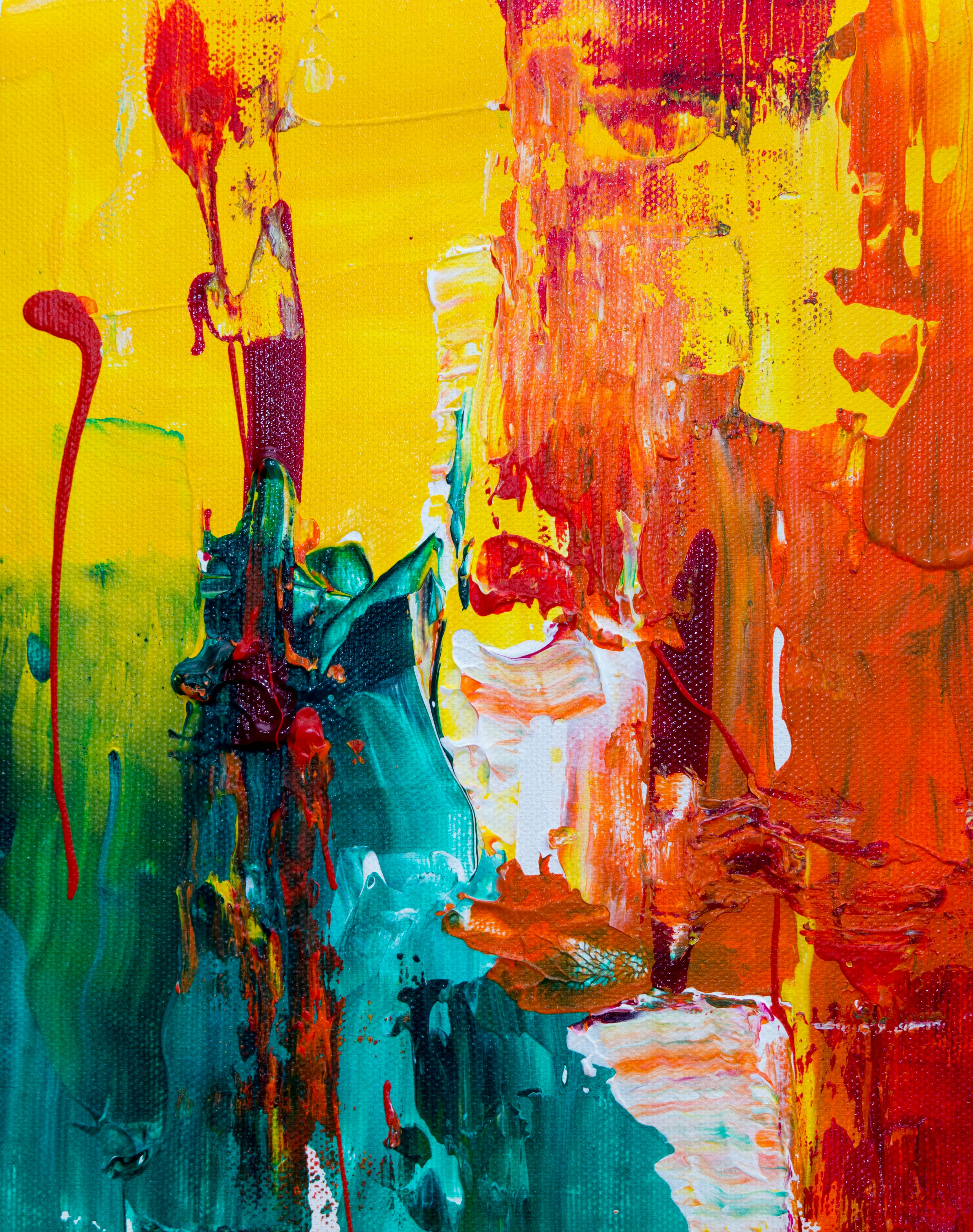
There’s a particular look that dominates the high end right now. I think of it as “processed abstraction.” It borrows the gestures of mid-century radicalism—the drip, the smear, the raw canvas—but filters them through a digital sensibility. Edges are too clean. Palettes are too harmonious. The chaos is choreographed within an inch of its life. It’s abstraction that’s been run through Photoshop, then painstakingly reproduced by hand. Radicalism with the risk surgically removed.
Why does this sell? Because it offers collectors a double promise: the frisson of avant-garde credibility, without the actual difficulty of living with a difficult painting. A truly confrontational work—say, a Dana Schutz painting that makes you flinch, or a Peter Doig canvas that refuses to resolve—demands something from its owner. It asks questions. The processed abstraction answers them before they’re asked. It’s decorative, but with a pedigree.
This isn’t a critique of beauty. Beauty is a legitimate artistic goal, one of the oldest. The problem is when market forces make a particular kind of beauty mandatory, and then rebrand it as radicalism. That’s not art. That’s interior design with a thesis statement attached.
The Instagram Optic: Painting for the Screen
Most collectors first encounter a painting on a screen. They scroll through PDF previews, JPEGs sent by WhatsApp, or—most importantly—Instagram posts from galleries and advisors. The painting that wins is the one that survives compression. It needs to be legible at thumbnail size, striking in a square crop, and memorable enough to stop a thumb mid-scroll.
This has produced a specific visual vocabulary. High contrast. Saturated color. Strong graphic silhouettes. Compositions that center the image’s “hero” element. It’s a language borrowed from graphic design and advertising, and it’s increasingly the default mode for young painters who’ve grown up in this ecosystem. They’re not necessarily cynical. They’re just fluent in the visual dialect that gets rewarded.
The tragedy is that painting’s greatest pleasures are often slow and subtle. The way a brush drags across linen. The faint pentimento of a changed decision. The physical presence of paint as stuff. These qualities don’t transmit on a screen. So they’re being bred out of the gene pool, generation by generation.
The Rise of the Advisor and the Fall of the Eye
Once, collectors bought with their eyes. They spent time in studios, argued with dealers, and developed a personal visual intelligence over years of looking. Today, many of the biggest buyers outsource their taste to a new class of art advisors. These advisors—often former curators or critics—are paid to build collections that function as financial instruments. Their job is to minimize risk and maximize return. That means buying names, not paintings. It means favoring artists with strong auction records, institutional validation, and a clear upward trajectory.
The result is a market that rewards consensus. An advisor who recommends a challenging, unproven painter risks their reputation—and their client’s capital. So they stick to the safe bets. The same twenty names circulate through the same fairs, the same biennials, the same museum group shows. The market becomes a closed loop, and painting becomes a product category.
This has a chilling effect on artists. If you know that your survival depends on being one of those twenty names, you start to paint toward that slot. You study what’s selling. You adjust your palette, your scale, your subject matter. You become a brand.

The Auction House as Curator
Auction houses were once secondary markets—places where art went after its primary life in galleries and museums. Now, they’re increasingly primary tastemakers. Evening sales are curated like museum exhibitions, complete with catalog essays and VIP previews. Young artists are fast-tracked from studio to auction block, sometimes within two years of their first solo show. The message is clear: speed matters. Long, slow development is a liability.
This has produced a particular kind of painting career—one that burns hot and fast. Artists produce a signature style, ride it through a few seasons of fairs and auctions, and then either evolve or fade. But evolution is risky. A new direction might confuse the market. So many artists stick with what works, repeating themselves until the market tires of them. It’s a brutal cycle, and it produces a lot of paintings that look like product lines.
The auction houses, of course, are just responding to demand. Their collector clients want trophies—instantly recognizable works by branded names. The auction format, with its public spectacle and competitive bidding, is perfectly suited to this. A painting becomes a prize, and its value is confirmed by the number of paddles raised. The work itself becomes almost incidental.
What Survives the Money Storm?
Despite all this, strong painting persists. There are artists who refuse the logic of the market, who paint slowly and strangely, who make work that doesn’t photograph well and doesn’t fit above the sofa. They survive because a handful of dealers, curators, and collectors still believe in the long game. They survive because some paintings are so good they force the market to adapt to them, rather than the reverse.
Think of painters like Amy Sillman, whose work is too smart and too slippery to be reduced to a brand. Or Michael Armitage, whose paintings on bark cloth resist easy commodification. These artists have found audiences and buyers, but on their own terms. They’re exceptions, not the rule—and their existence proves that the rule can be broken.
The real question is whether the system can sustain enough of these exceptions to keep painting alive as a vital art form. Or whether the collector-driven machine will gradually squeeze out everything that doesn’t fit its template. I don’t have a clear answer. But I know that the paintings that matter most to me—the ones I return to, the ones that change each time I see them—were not made to satisfy a market. They were made because someone had to make them.
The Geography of Taste
Collector money doesn’t just shape what gets painted—it shapes where painting happens. Global fairs create a kind of placeless international style. A painting made in Berlin looks increasingly like one made in Beijing or Brooklyn, because all three are aimed at the same booths, the same collectors, the same Instagram feeds. Regional traditions and local visual languages get sanded down into a universal aesthetic of polite, photogenic abstraction.
This is a loss. The great strength of painting has always been its ability to carry the texture of a specific place and time—the light of a particular city, the political tensions of a particular moment, the physical materials available in a particular market. When those specificities are erased in favor of a globalized look, painting loses its connection to the world. It becomes a luxury good, like a handbag, produced in many places but indistinguishable in form.
Some artists resist this by doubling down on the local. They use indigenous materials, reference regional histories, or engage with community-specific concerns. But this work often struggles to find a market outside its place of origin, precisely because it refuses to speak the globalized visual language. The market punishes specificity and rewards sameness.
The Collector as Co-Author
In the current system, collectors are not passive recipients of art. They are active participants in its creation. Through their buying choices, they shape what gets made. Through their influence on galleries and institutions, they shape what gets shown. Through their control of the secondary market, they shape what gets remembered. They are, in effect, co-authors of the paintings they buy.
This is not entirely new. Patrons have always influenced art. But the scale and speed of contemporary collecting make this influence qualitatively different. A single collector, armed with a billion-dollar fund and a team of advisors, can effectively create a market for a particular kind of painting. Artists, dealers, and even critics will respond to that signal. The collector’s taste becomes the taste of the age.
What’s lost is the friction between artist and audience. Great art often emerges from resistance—to a patron’s demands, to a market’s expectations, to a culture’s assumptions. When the patron and the market are the same entity, that friction disappears. The result is a smooth, frictionless art that pleases everyone and challenges no one.
The Price of Authenticity
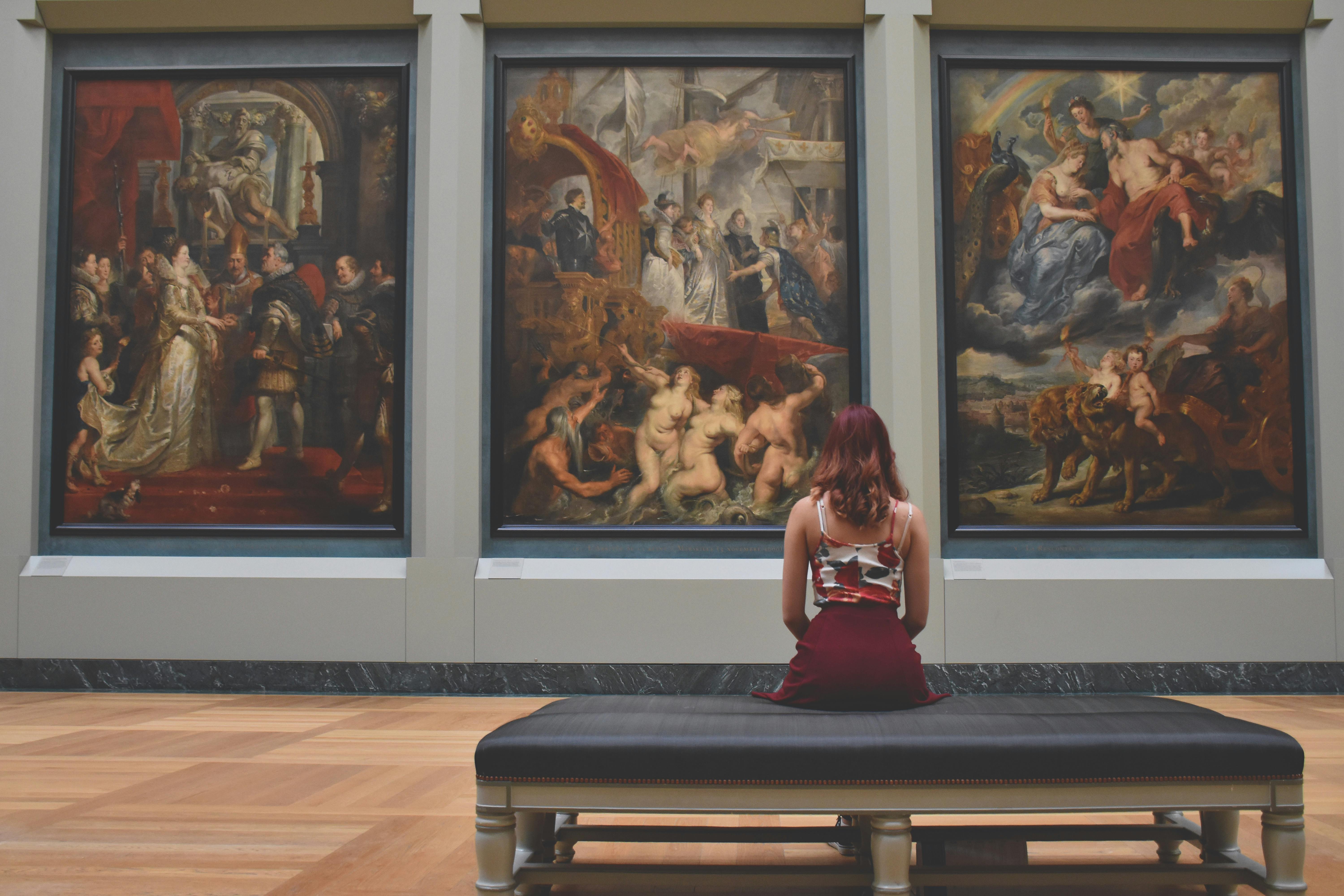
Authenticity is a slippery concept in art, but it still matters. We can sense when a painting is made from internal necessity versus external pressure. The former has a density, a strangeness, a sense of discovery. The latter feels designed. It’s the difference between a poem and a jingle.
Collector money, in its current form, incentivizes the jingle. It rewards work that communicates quickly, brands clearly, and offends no one. The result is a lot of very expensive, very empty painting. Walk through any major fair and you’ll see it: technically proficient, conceptually thin, emotionally null. It’s painting as asset class.
But there’s a counter-current. Some collectors are realizing that the most valuable works—in every sense—are the ones that resist easy consumption. They’re seeking out difficult paintings, supporting artists who take risks, and building collections that prioritize depth over breadth. This is a minority position, but it’s an essential one. Without it, painting becomes mere decoration for the ultra-rich.
Frequently Asked Questions
How does collector money actually change what a painting looks like?
Collector preferences create market signals that artists and galleries respond to. When large-scale, brightly colored, highly legible works sell consistently at fairs and auctions, artists—consciously or not—begin to produce more work with those qualities. Galleries reinforce this by selecting such works for their booths. Over time, these aesthetic choices become embedded in artistic training and career strategy, producing a recognizable “market-friendly” style.
Are there painters who successfully resist market pressure?
Yes, but they are exceptions. Artists with strong institutional support, independent wealth, or a particularly stubborn vision can maintain practices that don’t cater to collector tastes. Examples include painters who work in deliberately unfashionable modes, at difficult scales, or with subject matter that resists easy consumption. Their survival often depends on a small number of committed dealers and curators who protect them from market forces.
Does this mean all expensive contemporary painting is compromised?
No. High prices and market success don’t automatically indicate artistic compromise. Some painters produce genuinely challenging, important work that also happens to be in demand. The problem is systemic: the market tends to reward certain qualities and punish others, creating a powerful incentive structure that shapes artistic production over time. The issue is the narrowing of possibilities, not the corruption of every individual painter.
What can collectors do to support more adventurous painting?
Collectors who want to resist these trends can buy work that doesn’t fit the fair-booth template, support artists early in their careers before market pressures intensify, and build relationships with galleries and curators who prioritize artistic risk over financial return. They can also educate themselves to trust their own eyes rather than relying solely on advisors and auction results.