
The 88-Year-Old Who Just Proved Nobody Understands Digital Art
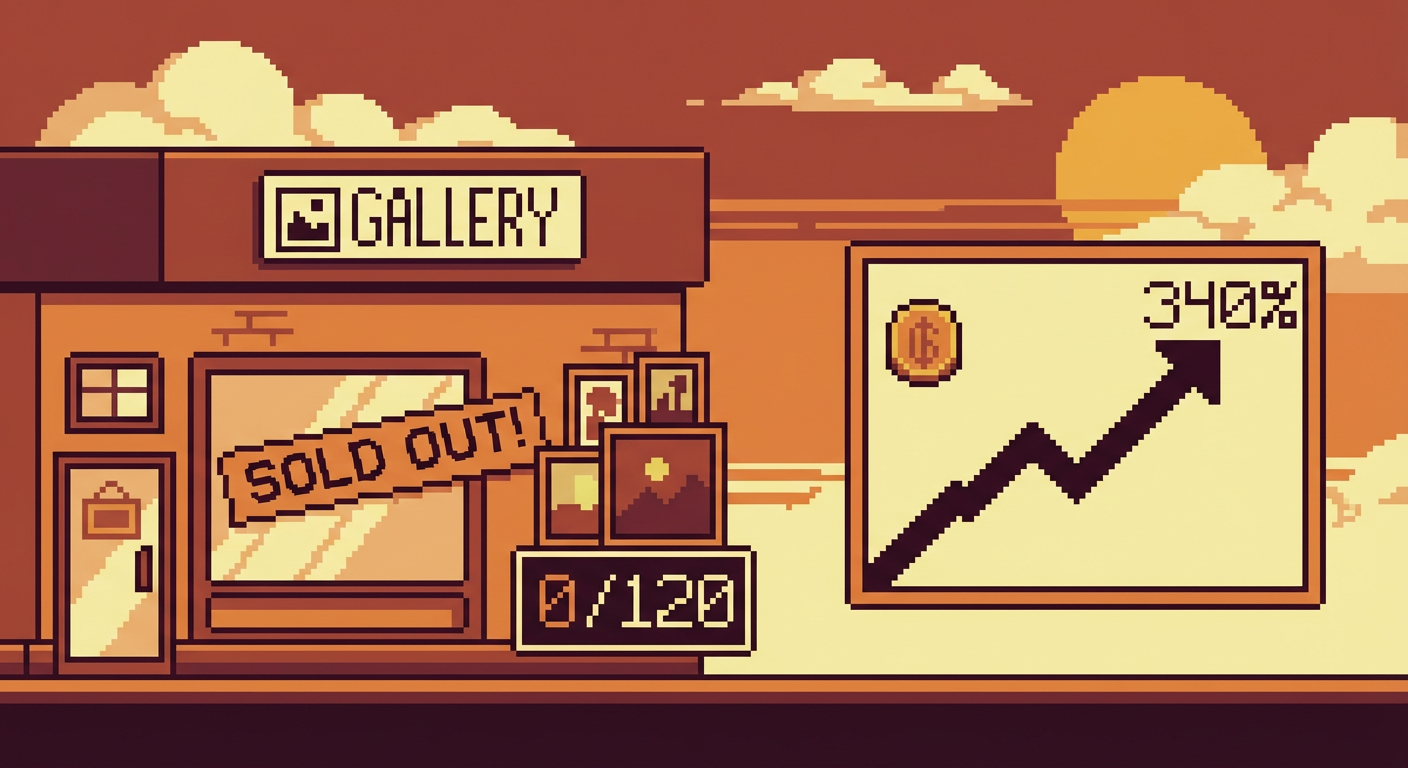
David Hockney sold out an entire exhibition in seventy-two hours. Not the opening reception. Not the first week. Seventy-two hours, with secondary market prices climbing to three and a half times their original value within seven days. The 2025 show “My Window” at Pace Gallery David Hockney featured forty large-scale prints created entirely on an iPad Pro M4, each one arriving as a monumental physical object despite its digital genesis. The largest prints stretched to nearly two meters tall. The response wasn’t just commerce. It was a collective reckoning with a question the art world has been ducking for nearly two decades: what happens when a master of twentieth-century painting decides the future of painting looks like a glass screen?

This matters more than the sales numbers, more than the gallery gossip, more than whether collectors are buying Hockneys or buying concepts. What matters is that nobody expected this outcome, which tells you everything about how thoroughly the art establishment has failed to understand what digital tools actually are. We’ve spent years arguing about whether iPad paintings are “real art,” wrestling with authenticity in a way that feels exhaustingly late to the conversation. Hockney just demonstrated that authenticity was never the question. Competence was.
Sixteen Years of Accumulation, One Moment of Reckoning
Hockney didn’t wake up in 2025 and decide to make iPad paintings. He’s been documenting his daily visual life on tablets since 2009, building an archive of over two thousand digital drawings that he has consistently described as the most democratic art tool ever made. Think about that phrase. Not the most sophisticated. Not the most precious. The most democratic. That’s a specific argument about accessibility and intention, and it suggests Hockney understands something fundamental about what these devices actually enable.
That archive exists in a peculiar space between exhibition and documentation. These weren’t pieces made for markets. They were pieces made for looking, for learning, for the daily practice of seeing. The discipline is what matters here. When someone has been working consistently with a tool for sixteen years, accumulating thousands of studies and experiments and refinements, they’ve moved beyond novelty into something resembling mastery. A painterly education conducted on glass instead of linen, but the rigor remains identical.
What changed in 2025 wasn’t Hockney’s process. What changed was the M4 chip’s rendering capacity, Apple’s printing partnerships, and the art market’s collective readiness to stop treating digital work as a subcategory. The technology caught up to the artist’s intentions. That’s always how these transitions happen. The artist was ready years ago.
Why Apple Needed Hockney and What That Actually Means
Apple featured Hockney directly in their September 2025 iPad Pro M4 keynote. Twenty-three million people watched a living painter become a tech evangelist, which sounds absurd until you recognize it as exactly the right move by a company trying to position computational devices as creative instruments rather than consumption platforms. This wasn’t a celebrity endorsement. This was intellectual alignment.
The optics matter. For years, galleries and institutions have treated digital art as something to be defended, explained, legitimized. Apple simply presented it as inevitable. They showed Hockney’s work not as proof of concept but as evidence of practice. That distinction collapsed the entire defensive posture critics have been rehearsing for a decade. You can’t argue about whether something is “real art” when the world’s largest technology company is presenting it to tens of millions of people as the obvious next chapter in how an eighty-eight-year-old master continues his life’s work.
The Shift Happening in Art Schools Right Now
A 2025 study from the Royal College of Art Research documenting shifts in fine art pedagogy found that sixty-one percent of UK graduates now use tablet-based digital tools as their primary medium, compared to twenty-nine percent just six years earlier. That’s not a trend. That’s a transformation. In one generation of art students, digital tools have become the default, not the experiment.
What’s fascinating is how this happened without permission from the critical establishment. Art schools recognized something that galleries are still processing: the tool doesn’t determine artistic validity. The intention and competence of the artist does. When young painters saw Hockney treating the iPad as a serious creative instrument rather than a novelty, they stopped waiting for institutional validation and started working. The institutions followed because they had to.
This generational shift is already producing work that operates from different aesthetic assumptions than painting made on physical surfaces. Artists born into digital tools don’t have the same relationship to the object, to preciousness, to scarcity. That’s not better or worse. It’s different. And that difference is producing visual thinking that wouldn’t have existed otherwise.
The Conversation We Actually Need to Have
The sales velocity of “My Window” tells us that the market has resolved the authenticity question. The artist’s involvement, the critical recognition, the institutional support, the technological maturity of the tools involved — all of that was already established. What the seventy-two-hour sellout really revealed is that collectors understood something before critics finished their arguments. They understood that the work itself is what matters, and that Hockney’s engagement with these tools is serious, sustained, and produced through the same intentional discipline that governed his earlier practice.
But the conversation we should actually be having is about what happens to visual culture when the primary creative tool is a networked, constantly updating device rather than a static object. What does painting mean when every work exists as a digital file before it exists as a print? What does scale mean when size becomes a decision made at the printing stage rather than during the actual creation? How do we think about the artist’s hand and gesture when that gesture is recorded in code and gesture mathematics rather than paint density?
These aren’t questions about whether digital art is legitimate. They’re questions about how artistic intention manifests through genuinely new technological circumstances. Hockney has been asking these questions for sixteen years, quietly accumulating answers. The market just caught up. The institutions will follow. The critical vocabulary is still being written, and that’s where the real work remains undone.
What do you think the next genuine shift in how we evaluate digital art will look like? Are we still arguing about the wrong things?