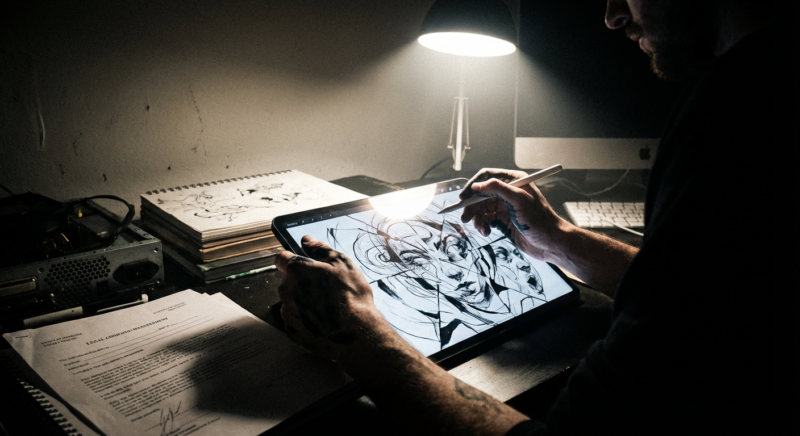
The Court Has Spoken, and the Line Is Drawn (Sort Of)
Here is what just happened: in early 2025, the U.S. Court of Appeals affirmed something that should feel clarifying but somehow feels murkier than ever. AI-generated images cannot hold copyright protection under the 1976 Copyright Act. Full stop. This builds directly on the Thaler v. Perlmutter precedent, and now we have a binding appeals court decision backing it up. This matters because roughly 15,000 pending copyright applications are suddenly in limbo, and the people who filed them are discovering that their carefully generated algorithms produced legally orphaned work.
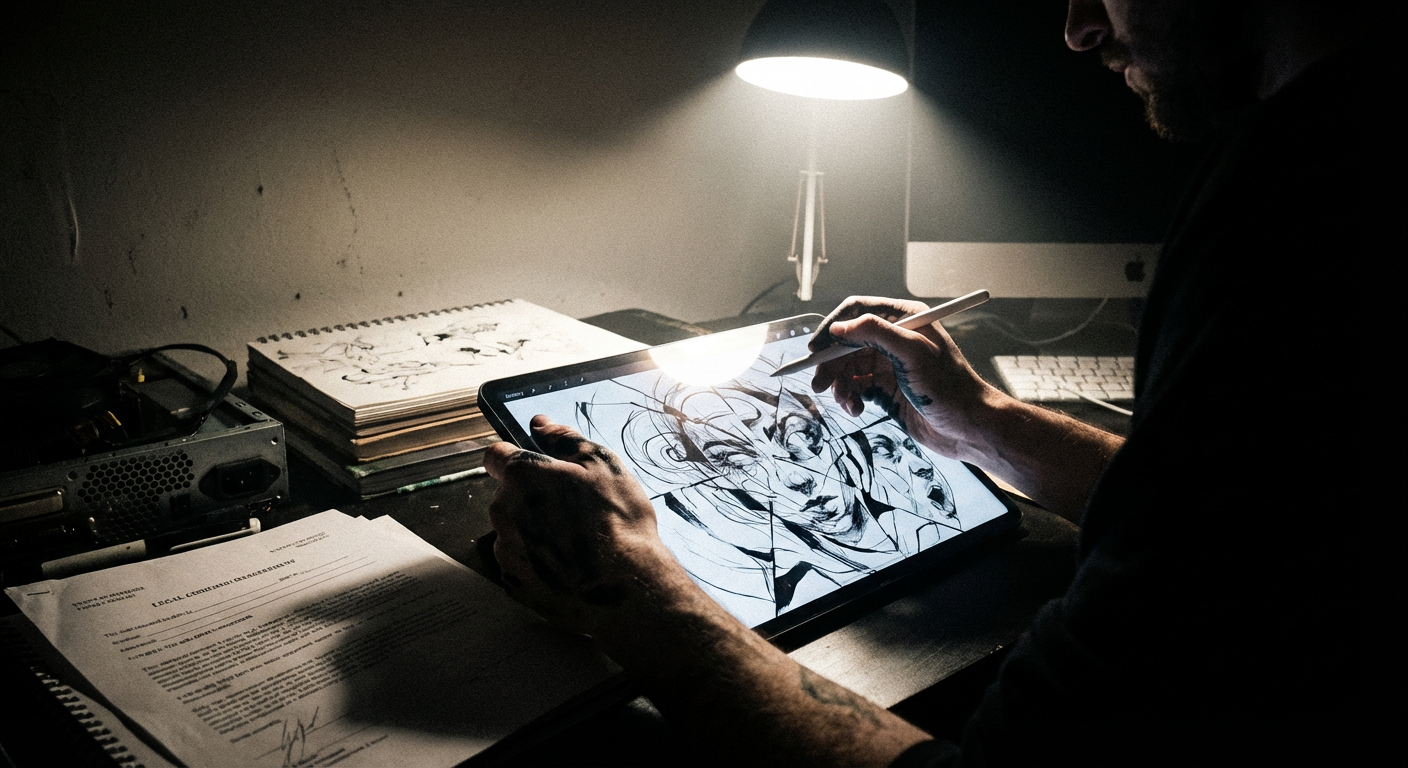
But here is where it gets genuinely interesting instead of just legally tedious: the Copyright Office released guidance in February 2025 that creates an entirely new fault line. Works requiring more than minimal human authorship remain protectable. Minimal. That word is carrying the weight of the entire future of creative practice right now. The question is no longer whether AI art gets copyright. The question is how much human fingerprint you need in the process before the law sees your work as authentically yours.
The Gray Zone Is Where Most of Us Actually Work
Walk into any digital art studio in 2025 and you will not find a clean division between human artists and AI systems. You will find something far more complicated. Adobe released its 2025 Creative Trends report and the numbers are staggering: 58% of professional illustrators now use some form of AI-assisted tool in their workflow. Two years ago that number was 31%. This is not a fringe conversation about experimental practitioners anymore. This is the mainstream of creative work, moving so fast that legal structures cannot keep pace.
Think about what that means practically. A concept artist uses AI to generate five base compositions, then spends eight hours hand-painting, revising, and fundamentally transforming three of them into something unrecognizable from the source material. Is that protected? The court says yes, probably, if the human contribution is substantial enough. But “substantial” is doing some very heavy lifting in that sentence. No one has defined it. The Copyright Office guidance gestures toward it without pinning it down. This is exactly the kind of legal ambiguity that should make you uncomfortable, because ambiguity favors whoever has the most expensive lawyers.
Congress Is Starting to Pay Attention, Finally
The Artists Rights Alliance, representing over 12,000 visual artists, did not wait around to see how the courts would feel about their concerns. In January 2025, they filed a formal petition to Congress requesting a dedicated legislative framework specifically for generative AI and art. This is not angry tweets or gallery manifestos. This is institutional pressure from organized creative professionals asking the government to actually write rules instead of letting lawyers argue about Copyright Act language from 1976.
What they are asking for is straightforward but radical: clarity. They want Congress to acknowledge that generative AI occupies a genuinely new category of creative production that does not fit cleanly into existing copyright law. They want protection for human artists whose work was used to train these systems without permission or compensation. They want transparency requirements. They want auction houses and galleries to disclose when AI assisted in creation. You can disagree with their specific asks without missing their deeper point: the current system is broken, and fixing it requires legislative action, not just judicial interpretation.
The Auction House Reality Check
In March 2025, Christie’s sold its first AI-assisted artwork under a new disclosure framework. The price tag was 2.1 million dollars. Yes, you read that correctly. The market is moving faster than the law, which means the market is essentially writing the rules as it goes. This particular sale reignited something important: the debate about auction house accountability and whether disclosure without regulation is actually meaningful reform.
What we learned from that sale is that collectors will pay serious money for AI-assisted work if they know what they are getting. That is useful information. What we did not learn is whether that price reflects genuine aesthetic value or simply novelty and speculation. The art market has a long history of inflating prices for things that are fashionable but not meaningful. We need more data, more sales, more time to see whether this represents actual valuation or temporary hype. But we also need to acknowledge that the market’s enthusiasm for AI work is putting real pressure on human artists, especially emerging illustrators and digital creators competing for gallery representation and commissions.
What This Means for You, Right Now
If you are an artist, you need to understand the current legal landscape. Check the U.S. Copyright Office AI Policy updates and bookmark them. Document your process obsessively if you use any AI tools. Take screenshots. Save drafts. Preserve evidence of your human decision-making and revision. This is not paranoia. This is basic professional practice in an environment where copyright claims might be challenged.
If you are a collector or someone interested in how AI art fits into art history, the moment is genuinely wide open. Visit the Artists Rights Alliance website and understand what organized visual artists are actually fighting for. It is not a blanket ban on AI. It is a demand for transparency and fairness. That distinction matters. The question we should be asking is not whether AI tools belong in creative practice. The question is whether human creativity remains valued, compensated, and protected while those tools proliferate.
The Thaler v. Vidal decision did not solve anything. It clarified one piece while creating ten new uncertainties. That discomfort you feel reading this is appropriate. We are watching legal structures strain under the weight of technological change they were never designed to address. The conversation is just beginning. What do you think the rules should be?