Beyond the Algorithm: Understanding True Underground Networks
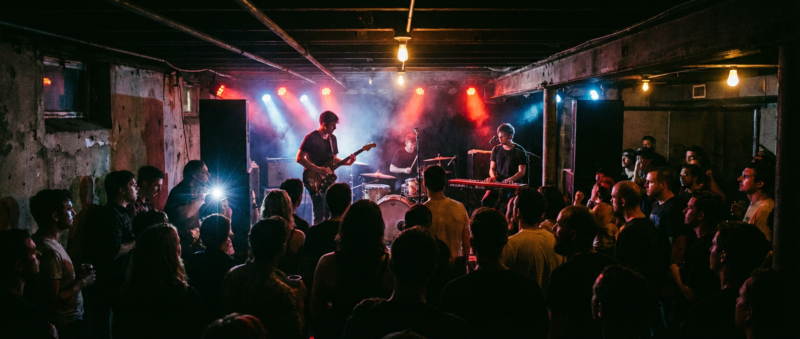
The term “underground” has been so completely hijacked by streaming platforms and music blogs that we’ve lost sight of what genuine underground networks actually look like. Real underground scenes don’t operate through carefully curated playlists or influencer endorsements. They work like phantom networks, invisible webs of connection that skip traditional gatekeepers entirely. I’m talking about cassette trading circles in Eastern European basements, field recording collectives documenting disappearing soundscapes in rural America, and modular synthesizer communities building their own instruments in abandoned warehouses.
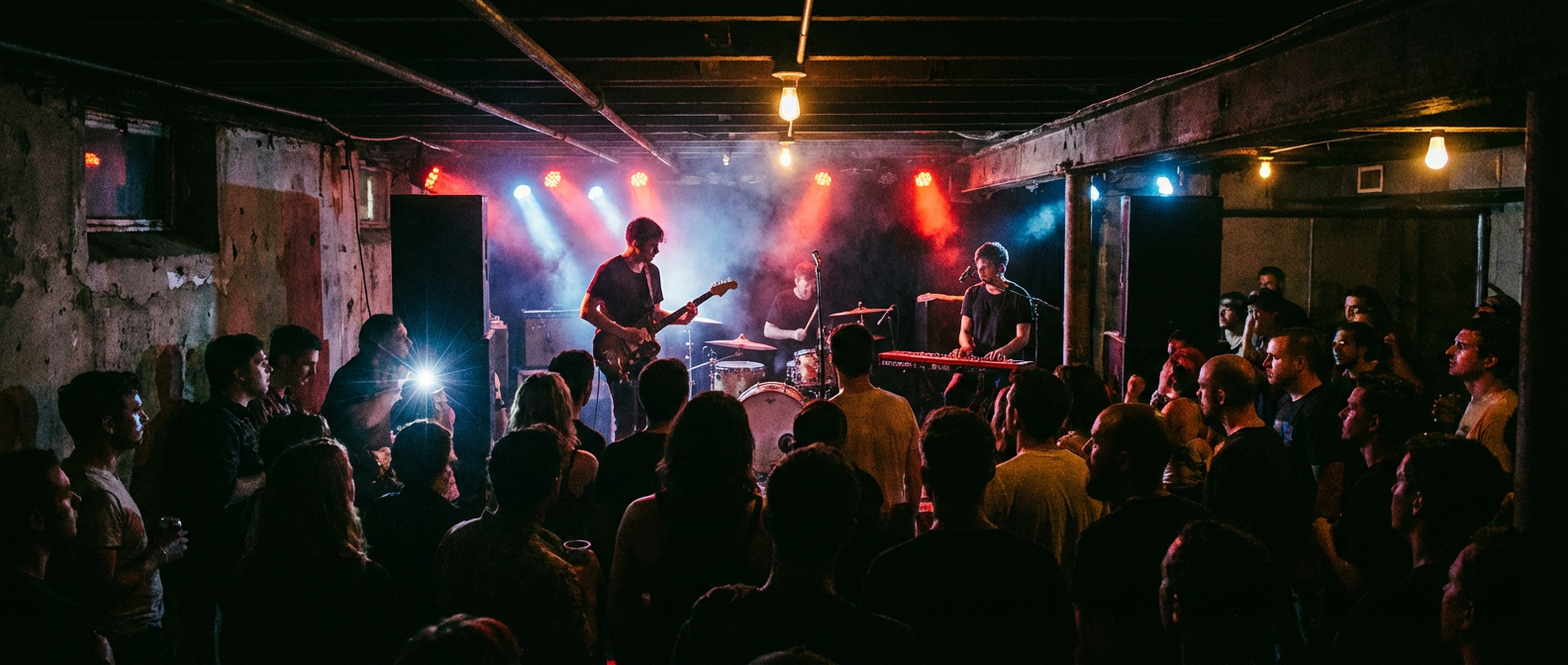
Consider the work of Seattle-based collective Sige Records, which has spent the past decade documenting the intersection of experimental noise and traditional folk forms. Their releases don’t chart on Billboard or rack up millions of Spotify plays. Instead, they circulate through a network of record stores, house shows, and academic conferences, creating a parallel economy of cultural exchange that operates completely outside mainstream metrics of success. This isn’t obscurity for its own sake. It’s a deliberate construction of alternative value systems.
What makes these networks particularly fascinating is their rejection of the attention economy that dominates contemporary culture. Unlike the performative underground posturing we see on social media, these scenes care about depth of engagement over breadth of reach. They get that true innovation requires sustained community investment, not viral moments.

The Technology of Intimacy: Tools Creating New Sounds
The most compelling developments in underground music right now aren’t happening in professional studios or expensive software environments. They’re emerging from the creative misuse of everyday technology. Artists are circuit-bending children’s toys, running traditional instruments through broken amplifiers, and using obsolete software to create textures that would be impossible to achieve with modern tools. This isn’t some nostalgic fetish for analog warmth, but a sophisticated understanding of how technological constraints can generate aesthetic possibilities.
Take the growing movement of artists working with contact microphones and hydrophones to capture the sonic environments of urban decay and natural systems. Musicians like Jefre Cantu-Ledesma and Christina Vantzou aren’t just field recording for ambient texture. They’re developing new compositional strategies based on the acoustic properties of specific architectural spaces and ecological systems. Their work suggests that the most radical sounds might emerge not from pushing technology forward, but from listening more carefully to the world that already surrounds us.
The rise of modular synthesis communities represents another fascinating development. These aren’t gear fetishists collecting expensive toys, but communities of makers who understand electronic music as applied philosophy. They’re building instruments that embody specific theoretical approaches to time, randomness, and control. The patches they create become temporary architectures, existing only for the duration of a performance before being dismantled and rebuilt.
Genre Erosion: When Categories Become Meaningless
The most exciting underground scenes right now have completely abandoned genre categories as organizing principles. We’re seeing the emergence of what might be called “post-genre” communities that organize around methodology rather than style. These artists share approaches to improvisation, recording techniques, or collaborative processes rather than sticking to established musical forms.
The American Primitive Guitar movement, initially associated with John Fahey’s solo acoustic explorations, has evolved into something far more complex and polyglot. Contemporary practitioners like Yasmin Williams and Daniel Bachman incorporate elements of West African kora techniques, Indian classical ragas, and electronic processing into their work. They’re not trying to create fusion music in the traditional sense, but rather developing new languages that draw from multiple traditions without being bound by any of them.
Similarly, the international network of artists working in what gets loosely called “ambient music” has moved far beyond the new age associations of that term. Musicians like Klein, Gazelle Twin, and Forest Management are using ambient techniques to address urgent political and social questions, creating soundscapes that are simultaneously meditative and deeply unsettling. Their work demonstrates how experimental sound can work as cultural criticism.
The Economics of Refusal: Alternative Models of Success
Perhaps the most radical aspect of contemporary underground scenes is their development of alternative economic models that prioritize sustainability over growth. These communities understand that the attention economy is fundamentally incompatible with the kind of deep, sustained creative work they’re trying to support. Instead of competing for market share, they’re creating mutual aid networks and resource-sharing systems.
The emergence of artist-run venues, tool libraries, and recording cooperatives represents a return to the community organizing principles that powered earlier underground movements. But unlike the punk DIY ethos of previous decades, these contemporary efforts are informed by sophisticated analyses of how cultural production relates to housing policy, gentrification, and economic inequality. They’re building infrastructure rather than just staging events.
Labels like Orange Milk Records and Deathbomb Arc have developed distribution models that prioritize direct relationships with listeners over algorithmic discovery. They understand their releases as cultural objects rather than content, creating physical artifacts that reward close attention and repeated listening. This isn’t market nostalgia, but recognition that certain forms of artistic experience require different kinds of economic support.
Mapping the Unmappable: Future Trajectories
The underground scenes that will matter in the coming decade are those that understand cultural production as inherently political work. They’re developing new models of creative collaboration that challenge the individualistic mythology of the artist genius. They’re creating spaces for experimentation that exist outside the cycle of hype and backlash that drives mainstream cultural discourse.
These movements remind us that the most important cultural work often happens in spaces that resist documentation and commodification. They operate according to different timelines, developing ideas over years or decades rather than responding to the accelerated pace of social media attention cycles. They understand that true innovation requires the kind of sustained commitment that can only flourish in communities organized around shared values rather than market opportunities.
What specific underground scenes have you encountered that challenge conventional assumptions about how music should circulate and be valued? The phantom networks are always there, waiting for those willing to listen beyond the surface noise of promotional culture.